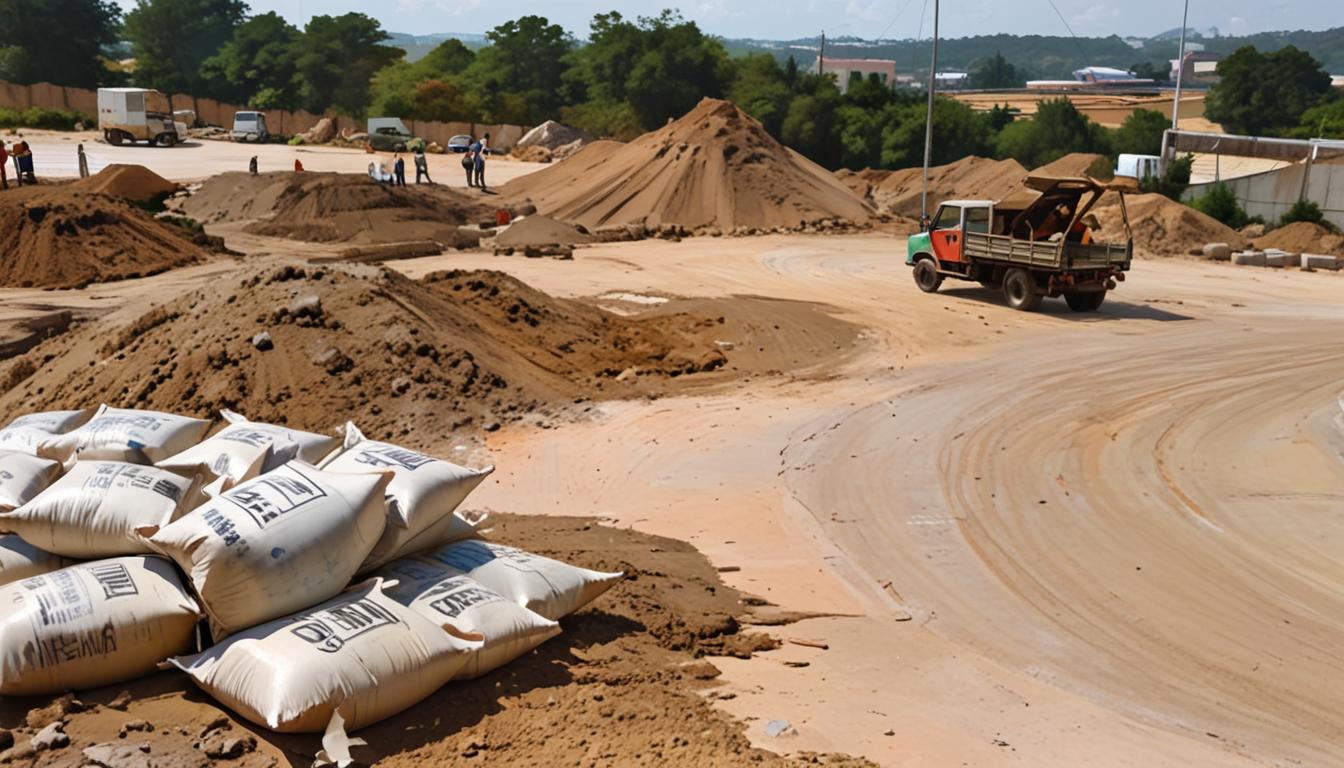
Ghana: A significant shortage of cement is raising alarms among retailers and customers, largely due to limited clinker supplies. With rising prices and production challenges, the ongoing situation threatens to disrupt numerous construction projects across the country.
Ghana is facing a pronounced shortage of cement, prompting retailers and customers to express escalating concerns over the dwindling availability of essential brands. This shortage has emerged as a pressing issue across the country, largely due to limited supplies of clinker, a critical component in cement production required for grinding.
Cement dealers have voiced their frustrations regarding the situation, highlighting its detrimental impact on their operations and, consequently, on their revenue streams. Many retailers have reported that they have made advance payments to suppliers, yet they continue to encounter significant delays in receiving the necessary stock. The shortage of clinker has severely hampered production levels among manufacturers, leading to substantial supply gaps nationwide.
In addition to the supply issues, cement prices have seen a notable increase, rising by GHS9 (approximately US$0.58) per bag across various brands. Industry insiders have pointed to a combination of factors for this price hike, mainly attributed to increased port charges and the difficulties associated with sourcing clinker. The African Business Insider reports that these escalating costs are compounding the challenges faced by both dealers and consumers in the construction sector.
With uncertainty surrounding when these supply issues might be resolved, many construction projects, as well as retailers, find themselves in a state of limbo. Experts anticipate that unless the supply of clinker stabilises promptly, the cement shortage will continue, potentially leading to further disruptions throughout the construction industry.
Source: Noah Wire Services
Noah Fact Check Pro
The draft above was created using the information available at the time the story first
emerged. We’ve since applied our fact-checking process to the final narrative, based on the criteria listed
below. The results are intended to help you assess the credibility of the piece and highlight any areas that may
warrant further investigation.
Freshness check
Score:
8
Notes:
The narrative does not reference specific older events and seems to address a current issue, indicating recent relevance. However, without specific dates or comparisons to other recent news, it's challenging to determine its absolute freshness.
Quotes check
Score:
0
Notes:
There are no direct quotes provided in the narrative.
Source reliability
Score:
6
Notes:
The narrative originates from CemNet, a specialized industry publication, which adds credibility specific to the sector. However, it is not a widely recognized mainstream news source.
Plausibility check
Score:
9
Notes:
The adverse effects of clinker shortages on cement production and prices are plausible and consistent with typical supply chain disruptions. The narrative outlines common consequences such as stock delays and price increases.
Overall assessment
Verdict (FAIL, OPEN, PASS): PASS
Confidence (LOW, MEDIUM, HIGH): MEDIUM
Summary:
The narrative appears to address a current issue, lacks specific quotes, and originates from a specialized but not widely recognized publication. The scenario described is plausible given standard economic and industrial conditions. Overall, it seems to be a current and realistic scenario, but additional verification would boost confidence.