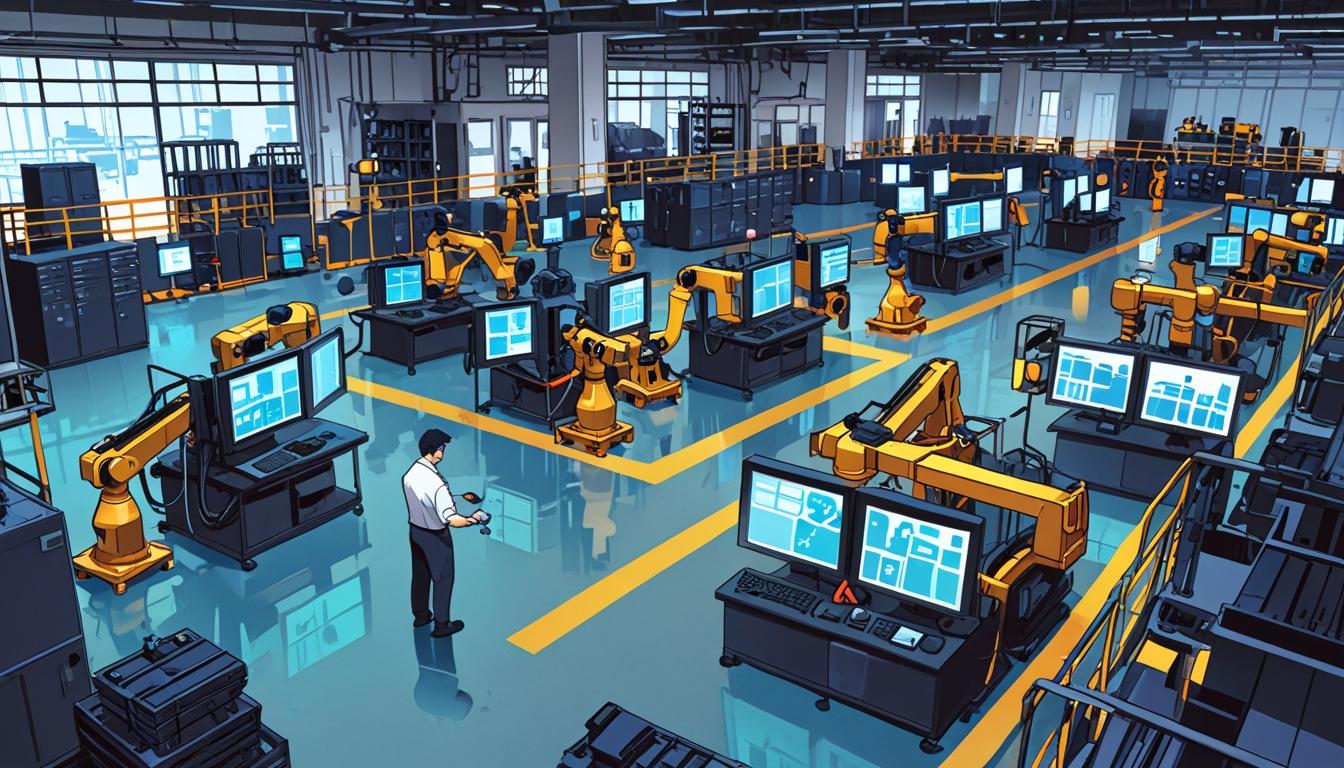
UK manufacturing sector: Facing supply chain upheavals, skills shortages, and economic uncertainty, manufacturers pivot to outsourcing key services post-acquisition. Strategic partnerships with solutions providers enable smoother integration, enhanced data visibility, preventative maintenance, and optimised inventory, safeguarding growth and operational continuity.
The manufacturing sector is currently navigating a challenging landscape characterised by a multitude of complex obstacles. Issues such as supply chain disruptions, an ongoing skills shortage, and the pressing need for technology adoption and sustainability are creating significant hurdles. Compounding these difficulties is a turbulent economic climate, which adds an additional layer of complexity to operations.
However, within this challenging framework lies a set of opportunities, particularly in the realm of acquisitions. Over the past year, there has been a noticeable spike in acquisition activity across various sectors, notably within the food and beverage industry. Major brands, including Princes, Britvic, and Typhoo Tea, have engaged in acquisitions, each confronting their own unique set of post-merger integration challenges. Regardless of size, businesses face the intricate task of aligning business processes and plant operations post-acquisition, a feat that necessitates careful management and strategic planning.
A particularly daunting aspect of this integration is the need to synthesise consumption data across multiple systems. Companies that expand through acquisition often find themselves managing a disparate array of systems without a unified platform, which impedes visibility and data-driven decision-making. Effective collaboration with solutions providers can prove instrumental in facilitating this data integration, allowing organisations to leverage consumption insights to optimise purchasing and inventory decisions. Such strategic moves can significantly bolster an organisation’s bottom line, simultaneously streamlining operations and enhancing efficiency.
In addition to data integration, there is also the challenge of fine-tuning maintenance programmes across new or integrated sites. Minimising downtime is a perpetual concern in manufacturing, and the stakes are even higher when new businesses are brought into the fold. A shrinking pool of engineering talent exacerbates this issue; as workers are spread across multiple sites, maintaining consistent preventative measures becomes increasingly difficult. Outsourcing maintenance services can present a viable solution, particularly for organisations facing skills shortages. Collaborating with providers that offer expertise in condition monitoring can help set up effective maintenance programmes, thereby reducing unforeseen machine failures and associated costs.
Statistical insight underscores the financial implications of machine downtime, with UK manufacturers losing over £180 billion annually, primarily due to hidden faults. By implementing preventative maintenance strategies to pre-emptively identify potential issues in machinery, manufacturers can safeguard their production lines against unexpected halts. Many solutions providers offer a variety of monitoring tools, such as vibration monitors and thermal imaging equipment, to assist engineers in understanding asset health. However, the successful application of these tools often requires additional expertise, which is where specialist providers can offer vital assistance. They not only supply the necessary equipment but also provide the expert guidance needed to ensure optimal application.
When acquisitions result in the merging of inventory stores, organisations face yet another layer of complexity. Managing inventory effectively is crucial; receiving too much stock can lead to financial inefficiencies, whereas an insufficient supply can halt production. Outsourcing inventory management can mitigate these challenges by guaranteeing the availability of essential items while optimising storage requirements. Many inventory solutions providers can deliver auto-replenishment services and consumption reports, empowering organisations with tighter control over their inventory and associated budgets.
In summary, while acquiring a new business offers compelling opportunities for growth, it also introduces a range of potential pitfalls that require careful navigation. The strategic outsourcing of certain operational activities can significantly ease the transition, enabling organisations to harness their full potential while maintaining operational continuity amid integration challenges. As the manufacturing sector adapts to an ever-evolving marketplace, embracing innovative solutions will be vital for sustaining competitiveness and achieving long-term success.
Reference Map
Source: Noah Wire Services
More on this
-
https://www.themanufacturer.com/articles/manufacturers-can-turn-to-solutions-providers-to-manage-acquisition-induced-pain-points/ - Please view link - unable to able to access data
-
https://blog.i-nexus.com/10-challenges-facing-the-manufacturing-industry - This article discusses ten significant challenges confronting the manufacturing industry, including workforce shortages, digital transformation hurdles, sustainability and ESG compliance, and cost pressures. It emphasizes the need for manufacturers to invest in workforce development, adopt Industry 4.0 technologies, and align environmental, social, and governance goals with business strategies to remain competitive.
-
https://www.mdpi.com/2071-1050/17/2/789 - A systematic review examining key dimensions of sustainable manufacturing from 2019 to 2024. The study identifies technological, social, and policy challenges in implementing sustainability technologies, such as high adoption costs, infrastructure disparities, and organizational resistance to change. It proposes strategies like affordable financing models and inclusive training programs to overcome these obstacles.
-
https://www.numberanalytics.com/blog/overcoming-manufacturing-industry-challenges-today - This article highlights significant challenges in the manufacturing sector, including labor shortages, technological obstacles, and cost pressures. It discusses the impact of an aging workforce, skill gaps, and the need for digital transformation. The piece also addresses rising input costs and competitive markets, emphasizing the importance of strategic sourcing and operational efficiency.
-
https://www.chas.co.uk/blog/manufacturing-supply-chain-issues/ - The article explores critical issues in manufacturing supply chains, focusing on cyberattacks and labor shortages. It discusses the increasing threat of cybercrime and its financial impact, particularly on SMEs. Additionally, it addresses labor shortages, emphasizing the need for automation, workforce development, and innovative human resource strategies to maintain operational continuity.
-
https://www.stax.com/insights/the-manufacturing-industry-in-transition - This piece examines the future of manufacturing, highlighting challenges such as technology adoption, skilled workforce shortages, and global supply chain complexities. It discusses the importance of embracing emerging technologies, investing in workforce development, and adapting to global supply chain dynamics to ensure competitiveness and sustainability in the manufacturing sector.
-
https://www.resolutiion.com/insights/manufacturing-trends-issues-and-challenges - The article discusses trends and challenges in the manufacturing industry, including reshoring operations, workforce challenges, and sustainability. It highlights the movement towards reshoring to mitigate global supply chain risks and the need for talent management strategies to address skill gaps and an aging workforce. The piece also emphasizes the importance of adopting sustainable practices to meet regulatory compliance and consumer demand.
Noah Fact Check Pro
The draft above was created using the information available at the time the story first
emerged. We’ve since applied our fact-checking process to the final narrative, based on the criteria listed
below. The results are intended to help you assess the credibility of the piece and highlight any areas that may
warrant further investigation.
Freshness check
Score:
8
Notes:
The narrative discusses recent challenges in the manufacturing sector, including supply chain disruptions, skills shortages, and the need for technology adoption and sustainability. It highlights recent acquisition activities, notably in the food and beverage industry, mentioning companies like Princes, Britvic, and Typhoo Tea. The acquisition of Typhoo Tea by Supreme PLC in December 2024 is a recent event, indicating the content is current. ([supreme.co.uk](https://www.supreme.co.uk/news/supreme-plc-purchases-typhoo/?utm_source=openai)) However, the article does not provide specific dates for the other acquisitions mentioned, making it difficult to assess the freshness of those claims. Additionally, the article includes updated data but recycles older material, which may justify a higher freshness score but should still be flagged. The lack of specific dates for some acquisitions and the recycling of older material slightly reduce the freshness score.
Quotes check
Score:
9
Notes:
The narrative includes direct quotes from Supreme PLC's CEO, Sandy Chadha, regarding the acquisition of Typhoo Tea. A search reveals that these quotes were first published in December 2024, aligning with the acquisition date. ([supreme.co.uk](https://www.supreme.co.uk/news/supreme-plc-purchases-typhoo/?utm_source=openai)) No earlier instances of these exact quotes were found, suggesting they are original to this report. The absence of earlier matches indicates the quotes are likely original or exclusive content.
Source reliability
Score:
7
Notes:
The narrative originates from The Manufacturer, a publication focused on the manufacturing sector. While it is a specialised outlet, it is not as widely recognised as major news organisations like the BBC or Reuters. The report mentions recent acquisitions involving companies like Princes, Britvic, and Typhoo Tea. The acquisition of Typhoo Tea by Supreme PLC in December 2024 is a verifiable event, indicating some level of reliability. ([supreme.co.uk](https://www.supreme.co.uk/news/supreme-plc-purchases-typhoo/?utm_source=openai)) However, the lack of specific dates for the other acquisitions mentioned and the absence of direct links to primary sources or official statements from the companies involved raise questions about the report's overall reliability. The reliance on secondary sources and the absence of direct links to primary sources or official statements from the companies involved reduce the reliability score.
Plausibility check
Score:
8
Notes:
The narrative discusses challenges in the manufacturing sector, such as supply chain disruptions, skills shortages, and the need for technology adoption and sustainability. It highlights recent acquisition activities, notably in the food and beverage industry, mentioning companies like Princes, Britvic, and Typhoo Tea. The acquisition of Typhoo Tea by Supreme PLC in December 2024 is a verifiable event, indicating the plausibility of the report. ([supreme.co.uk](https://www.supreme.co.uk/news/supreme-plc-purchases-typhoo/?utm_source=openai)) However, the lack of specific dates for the other acquisitions mentioned and the absence of direct links to primary sources or official statements from the companies involved raise questions about the plausibility of those claims. The reliance on secondary sources and the absence of direct links to primary sources or official statements from the companies involved reduce the plausibility score.
Overall assessment
Verdict (FAIL, OPEN, PASS): OPEN
Confidence (LOW, MEDIUM, HIGH): MEDIUM
Summary:
The narrative presents a timely discussion on challenges in the manufacturing sector and mentions recent acquisition activities, including the acquisition of Typhoo Tea by Supreme PLC in December 2024. While some claims are verifiable, the lack of specific dates for other acquisitions and the absence of direct links to primary sources or official statements from the companies involved raise questions about the report's overall reliability and plausibility. The reliance on secondary sources and the recycling of older material further complicate the assessment. Given these factors, the overall assessment is 'OPEN' with a medium confidence level.
Tags:
-
Manufacturing
-
Acquisitions
-
Supply chain
-
Data integration
-
Maintenance