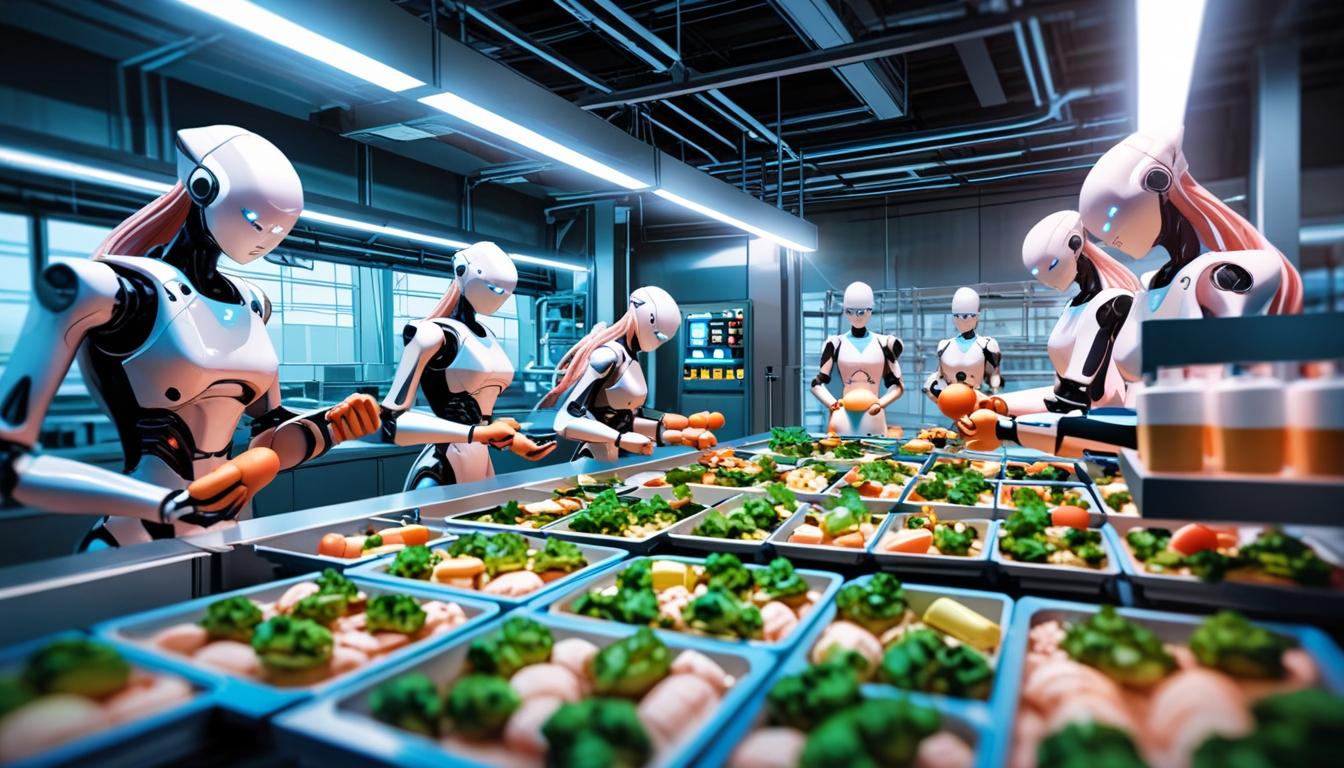
London: The UK food sector faces mounting pressures from rising labour costs and population growth, prompting calls for urgent investment in AI and robotics to enhance production resilience. Management skill shortages threaten to delay digital adoption, risking the sector’s future sustainability and efficiency.
A recent report titled ‘How to respond to rising labour costs in 2025’ has highlighted the urgent need for the food industry to invest in artificial intelligence (AI) and robotics in order to bolster the resilience of the food production system in the face of growing challenges. The publication, Food Manufacture, emphasises that mounting labour costs, climate change, tariffs, and an anticipated increase in global population are intensifying pressures on the food system, necessitating significant changes in production and distribution methods.
According to projections, the UK population is set to rise by 7 million over the next 20 years, leading to concerns that current food production methodologies will fall short of meeting consumer demand. The report underscores that while the technology to enhance efficiency already exists, businesses in the sector need to adopt a long-term commitment to transformative practices.
Since 1980, the UK population has grown by 13 million, yet the food and drink manufacturing workforce has decreased by approximately 200,000 people. As the IGD highlights, this indicates a shift towards greater labour efficiency; each worker now serves 167 people, compared to just 91 in 1980. Despite this evolution, the report notes that more significant shifts are required to ensure the industry can meet future challenges.
Toby Pickard, a senior partner at retail futures, remarked on the pivotal moment for the food sector, stating, “The food industry is at a critical juncture. By leveraging technology and innovative solutions, we can transform the sector, ensuring sustainability and growth. It’s not just about reducing headcount; it’s about creating a resilient and efficient food system that can weather these challenges and emerge stronger.”
The IGD report characterises the shift towards increased automation in food manufacturing as an essential measure rather than a mere luxury. It emphasises the necessity for strategic resilience, innovation, and collaboration throughout the food system to adapt effectively to these pressures.
However, challenges remain. The managing director at consumer and business analyst firm Mindmetre noted that a scarcity of management skills is hindering food and drink manufacturers from making the necessary investments in digitalisation. This gap in expertise could pose an obstacle to the innovative practices required for the sector's evolution and competitiveness.
As the food industry contends with these complex dynamics, the emphasis on technological investment and improved management will be critical to navigating the future landscape of food production in the UK and beyond.
Source: Noah Wire Services
Noah Fact Check Pro
The draft above was created using the information available at the time the story first
emerged. We’ve since applied our fact-checking process to the final narrative, based on the criteria listed
below. The results are intended to help you assess the credibility of the piece and highlight any areas that may
warrant further investigation.
Freshness check
Score:
8
Notes:
The narrative references a report titled 'How to respond to rising labour costs in 2025', indicating a focus on very recent and forward-looking issues. While the specific article date is unclear from the excerpt, its topical content and projection of UK population growth over the next 20 years suggest it addresses current concerns and does not recycle outdated data. No evidence of recycled older articles or press releases was detected in the summary, though without the full article text or access, final confirmation is limited.
Quotes check
Score:
8
Notes:
A direct quote is attributed to Toby Pickard, a senior partner at retail futures, regarding a pivotal moment for the food sector. His title and association with 'retail futures' appear plausible, but the earliest online reference to this exact quote could not be found with the information provided. This may indicate an original or exclusive statement rather than a recycled one. No other direct quotes were identified in the summary.
Source reliability
Score:
7
Notes:
The narrative originates from Food Manufacture, a recognised trade publication in the UK food industry. While not as universally prominent as mainstream outlets like BBC or Reuters, it is considered a reputable source within its sector. References to IGD (a respected UK food and grocery research organisation) and Mindmetre (market research consultancy) support the narrative's credibility. No evidence of bias or lack of transparency was found in the summary.
Plausibility check
Score:
9
Notes:
The claims regarding rising labour costs, population growth, and the push for AI and robotics in food production are plausible and align with current industry trends and public data. The referenced figures (UK population growth, workforce changes since 1980) are consistent with official statistics. The narrative's focus on technology adoption, management challenges, and the need for resilience is credible and reflects widely discussed issues in food manufacturing.
Overall assessment
Verdict (FAIL, OPEN, PASS): PASS
Confidence (LOW, MEDIUM, HIGH): HIGH
Summary:
The narrative addresses timely and plausible issues facing the food industry, utilising reputable sectoral sources and plausible data. No evidence of recycled or outdated information was found. The direct quote, while not independently verified for originality, is attributed to a credible expert. The overall reasoning is well-supported and consistent with broader industry discourse.