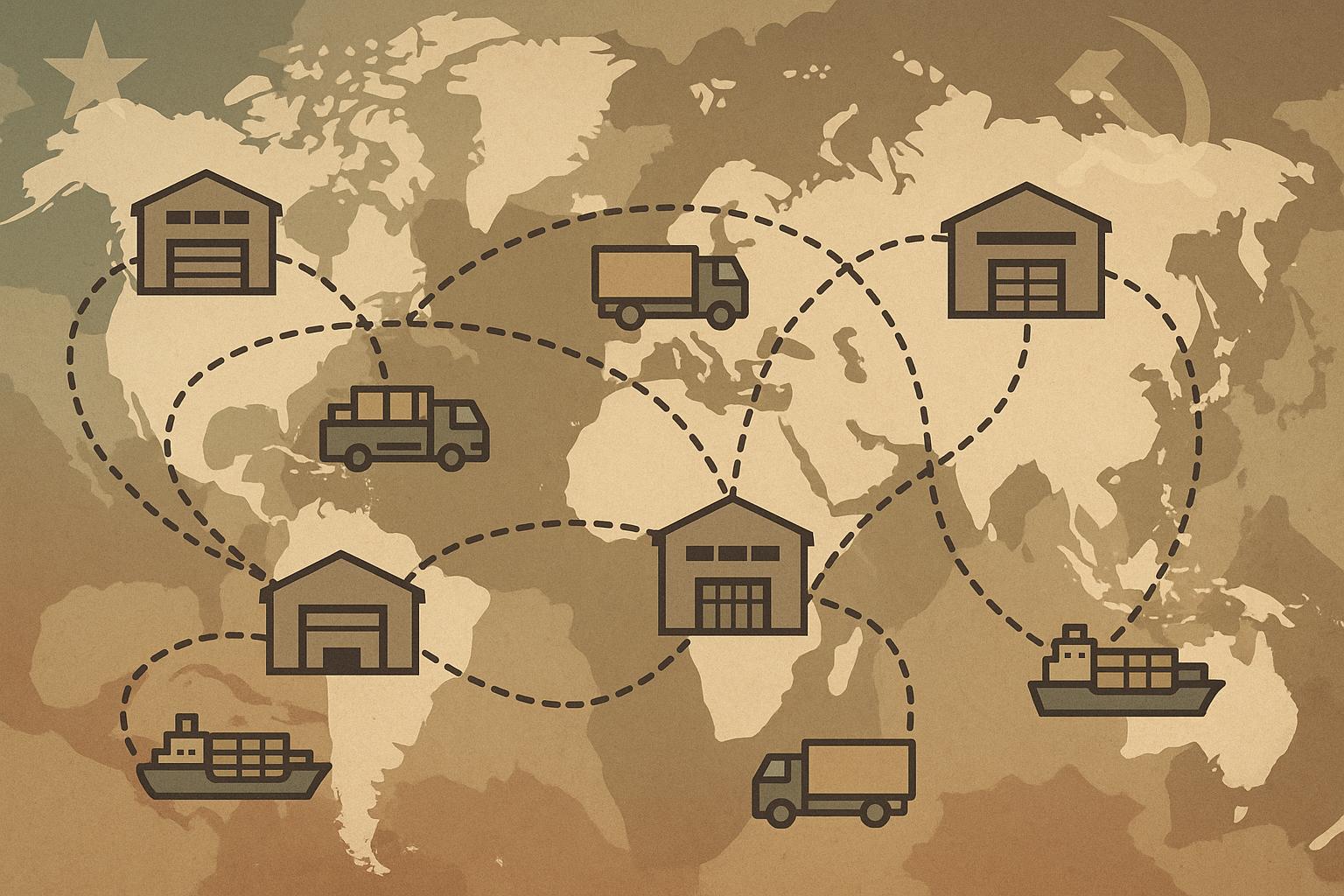
Global supply chains have long been built on the promise of efficiency: wider sourcing, lower costs and faster access to markets. But as recent years have shown, the same interdependence that made those networks leaner has also made them more exposed. Trade disputes, sanctions, export controls, regional conflicts and sudden regulatory shifts have turned supply chain resilience from a back-office concern into a boardroom priority.
The central problem is no longer simply whether goods can move cheaply, but whether they can move at all when conditions change. In an environment shaped by geopolitical fragmentation and persistent volatility, companies are being forced to rethink where they buy, where they make and how much visibility they have beyond their immediate suppliers.
A recurring theme across industry and advisory commentary is that resilience cannot be bolted on after a disruption has already begun. Supply Chain Dive has argued that businesses need to embed resilience into everyday operations by improving visibility, sharpening processes and using technology to anticipate problems before they spread. That means dismantling internal silos so procurement, logistics, finance and risk teams are working from the same live information rather than operating in isolation.
Diversifying suppliers remains one of the most practical ways to reduce exposure. Depending too heavily on a single country, factory or logistics route can leave a company vulnerable to everything from component shortages to political instability. By spreading sourcing across multiple regions, firms can preserve continuity when one part of the network falters. The trade-off is that diversification often raises near-term costs, but many companies now view that premium as insurance against far more expensive interruptions later on.
Regionalisation and nearshoring are also gaining traction as firms seek shorter, more controllable supply lines. KPMG has said companies facing geopolitical shifts and climate disruption should adopt a more localised model that aligns supply and demand more closely. Moving production nearer to end markets can reduce transport risk, shorten lead times and make it easier to respond when conditions change. It also reduces dependence on far-flung suppliers whose operating environment may be harder to predict.
Technology is increasingly the connective tissue of resilient supply chains. Digital tracking, advanced analytics and artificial intelligence can give companies a clearer view of inventory, shipment status and supplier health. That visibility matters because many of today’s disruptions emerge first as small signals: a delayed shipment, a change in credit quality, an unexpected regulatory filing or a problem deep in the tier-two or tier-three network. BSI has noted that firms now need insight well beyond their immediate suppliers if they want to understand where shock points may arise.
The financial dimension is becoming harder to ignore too. S&P Global has highlighted how tightening export controls, renewed sanctions and broader fragmentation are reshaping trade flows and sourcing decisions, while also increasing the importance of credit and counterparty assessment. In practice, this means supply chain resilience is no longer just about logistics. It also involves financial due diligence, supplier stability and the ability to reassess counterparties quickly when macroeconomic conditions deteriorate.
Risk management and scenario planning are part of that wider shift. Forbes has pointed to the value of recognising both known and unknown risks, and of building a culture that expects disruption rather than treating it as an exception. Companies that regularly test contingency plans, hold safety stock where appropriate and maintain backup logistics options are better placed to absorb shocks when they arrive.
Governments, too, are paying closer attention. The OECD has warned that geopolitical tensions, natural disasters and regulatory uncertainty are placing mounting pressure on global supply chains, while also underlining the tension between economic security and open markets. That balance is increasingly central to policy debates, especially in sectors deemed critical to national interest.
The lesson for business is clear. Resilience now carries a cost, but so does fragility. In a world of recurring uncertainty, the companies most likely to cope are those that treat supply chain design not as a static efficiency exercise, but as a strategic capability that must evolve with the risks around it.
Source: Noah Wire Services