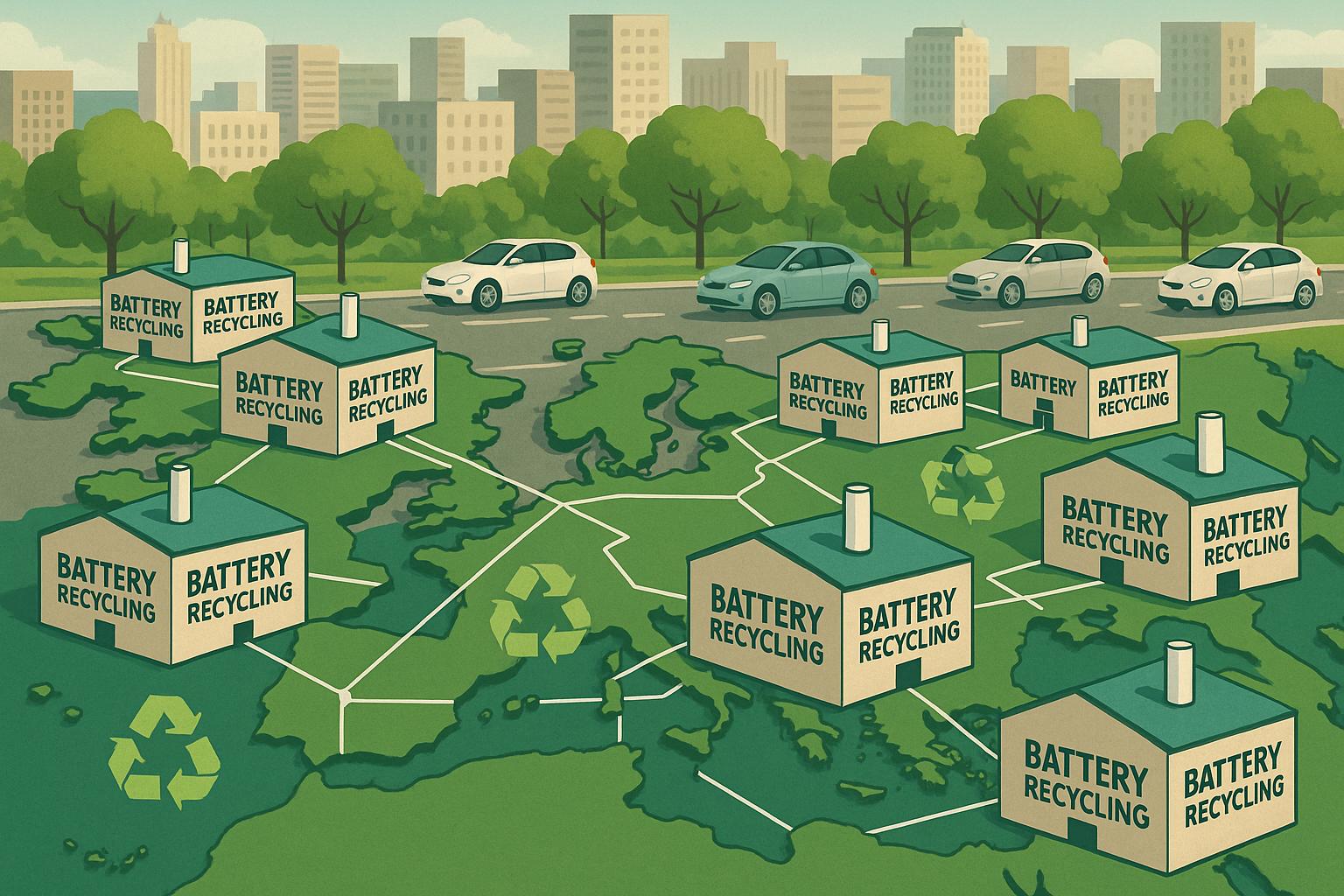
TSR Group and BASF have agreed to build out a wider European battery-recycling network as the bloc’s electric-vehicle market continues to mature and the problem of end-of-life batteries becomes more urgent.
According to BASF, the collaboration covers the dismantling and safe discharging of spent EV batteries, the conversion of recovered material into black mass and possible further joint work across the battery-recycling chain. TSR Group will contribute its Europe-wide logistics and waste-handling footprint, which BASF says includes more than 190 approved sites, while BASF brings its black mass recycling plant in Schwarzheide, Germany, into the partnership.
The agreement is designed to connect the early, physically difficult stages of battery recycling with downstream refining and materials production. Dismantling and discharging are widely seen as one of the most complicated parts of the process because battery packs vary in design and chemistry and can still pose safety risks even after use. TSR Group has already been building capability in this area through BLC, its investment company developed with Rhenus Automotive, giving the new arrangement an operational base upstream of the recycling chain.
Black mass sits at the centre of the model. The material, formed after batteries are shredded and processed, contains valuable metals that can be recovered and fed back into industrial supply chains. BASF’s Schwarzheide site is intended to serve as a hub for that stage of the process, linking recycling more directly with the company’s cathode active materials business.
The companies are positioning the deal as part of a broader effort to strengthen Europe’s circular economy in electromobility. With demand for battery-grade metals expected to keep rising, regional recycling capacity is becoming strategically important for manufacturers seeking to reduce dependence on imported raw materials and improve supply security.
At the same time, the economics remain challenging. Battery recycling is still constrained by high energy use, uneven feedstock quality and the need to produce recycled materials that meet strict purity standards. That makes scale, logistics and integration across the value chain essential if the sector is to compete with virgin materials over the long term.
For BASF, the arrangement extends its presence beyond refining into a wider recycling network. For TSR Group, it gives the company a route to connect collection, dismantling and transport more closely with industrial processing. Together, the firms are betting that Europe’s battery waste stream can become a more reliable source of critical materials just as the continent’s EV fleet enters a more complex phase of growth.
Source: Noah Wire Services