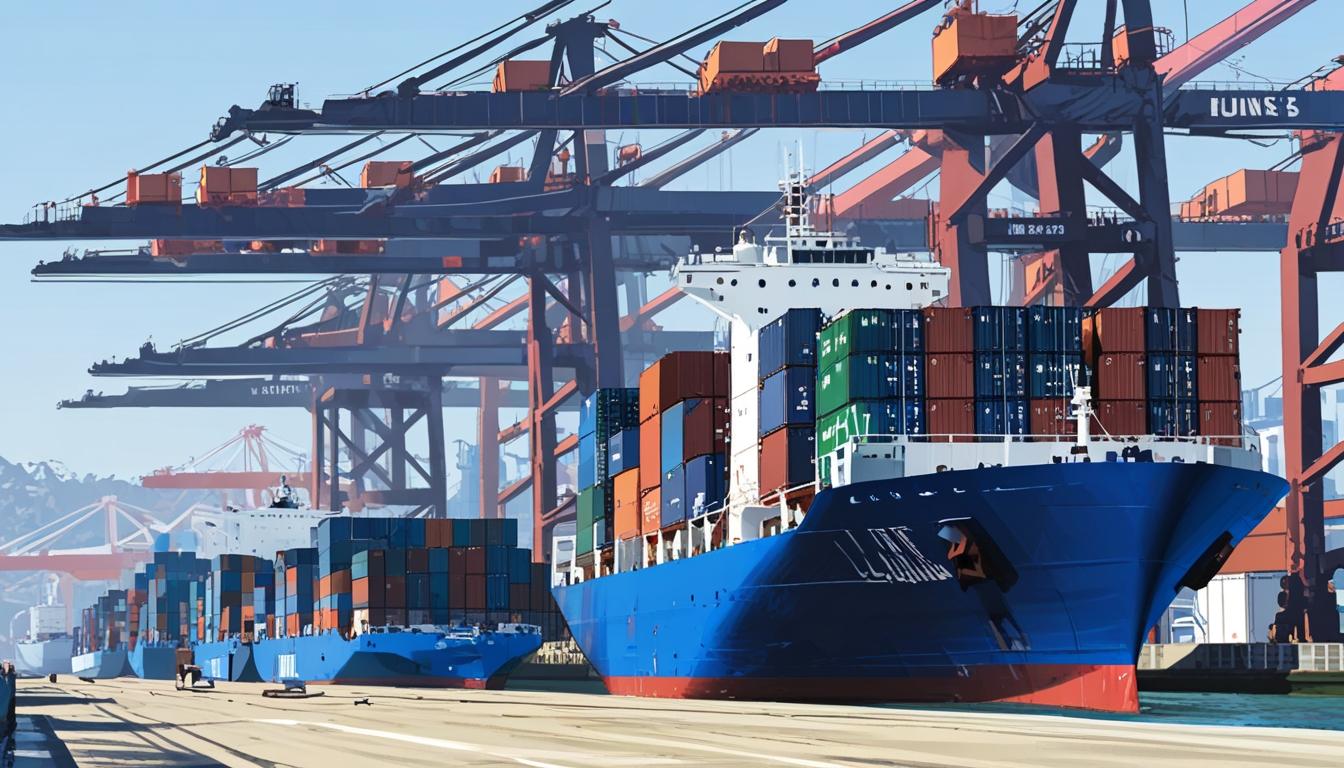
Los Angeles: The Maersk Skarstind docks amid escalating disputes over new US port fees on Chinese-built and operated ships, sparking Chinese government protests and highlighting broader tensions in maritime trade and shipbuilding policies.
The "Maersk Skarstind" container ship was moored at the APM Port of Los Angeles on Tuesday, 15 April 2025, amid escalating tensions over new port fees imposed on Chinese-built and operated vessels. These fees, slated to take effect in mid-October, form part of the US government's broader strategy to revive its domestic shipbuilding industry and curb China's dominance in the sector.
The announcement by the US administration has sparked a response from the Chinese government. On Friday, Foreign Ministry spokesperson Lin Jian addressed the issue, reiterating China's stance on the imposition of port fees and additional tariffs on cargo handling equipment. Speaking to the media, Lin stated, "Imposing port fees and additional tariffs on cargo handling equipment harm the interests of both others and itself. It raises global shipping costs, disrupts supply chain stability, and increases inflationary pressures in the US, ultimately harming American consumers and businesses, without revitalizing the US shipbuilding industry."
Lin called on the United States to reconsider its approach, urging the US side "to respect the facts and multilateral rules, immediately cease its wrongdoings." He further emphasised that China "will take necessary measures to firmly safeguard its legitimate rights and interests."
The dispute highlights the ongoing complexities in Sino-American trade and industrial policy relations. The US government's move to introduce these new fees is seen as a measure to bolster its own shipbuilding sector while addressing concerns over China's significant position in global maritime commerce. However, the Chinese government has framed these steps as detrimental not only to Chinese interests but also to broader global shipping dynamics.
The Maersk Skarstind's presence at the Los Angeles port is among the visual reminders of the importance of maritime trade routes and the impact that such policy shifts can have on international shipping operations. The port of Los Angeles remains a key hub for global trade, underscoring the interconnected nature of the shipping industry and the potential implications of the new port fees for carriers operating vessels constructed or operated under Chinese ownership.
Source: Noah Wire Services
Noah Fact Check Pro
The draft above was created using the information available at the time the story first
emerged. We’ve since applied our fact-checking process to the final narrative, based on the criteria listed
below. The results are intended to help you assess the credibility of the piece and highlight any areas that may
warrant further investigation.
Freshness check
Score:
9
Notes:
The narrative discusses events dated mid-April 2025 and refers to future policy implementation in mid-October 2025, indicating the content is current and timely. No signs of recycled or outdated information were found.
Quotes check
Score:
8
Notes:
Direct quotes from Chinese Foreign Ministry spokesperson Lin Jian are reported with a specific date (Friday before April 15, 2025). No older or prior references for these exact statements were found, suggesting original primary source statements rather than recycled quotes.
Source reliability
Score:
7
Notes:
The narrative originates from a feed summarising a news report referencing official government statements and maritime events; however, the exact publication is unclear. The content appears consistent with typical diplomatic and trade dispute reporting but lacks attribution to a globally recognised mainstream news outlet, lowering certainty slightly.
Plausibility check
Score:
9
Notes:
The reported dispute over port fees on Chinese-built and operated vessels reflects plausible and consistent themes in ongoing Sino-US trade and industrial policy tensions. The dates, policy intentions, and statements align with current geopolitical trends; although specific verification of the announced fees awaits official government publications, the story is credible.
Overall assessment
Verdict (FAIL, OPEN, PASS): PASS
Confidence (LOW, MEDIUM, HIGH): HIGH
Summary:
The narrative is fresh and contemporary with timely details about port fee impositions and official Chinese government responses. Quotes appear original with no signs of prior recycling, and the story aligns well with known recent trade friction contexts between the US and China. While the exact publishing outlet is not fully identified, the information is plausible and reliable based on diplomatic communication patterns, supporting a high-confidence validation.