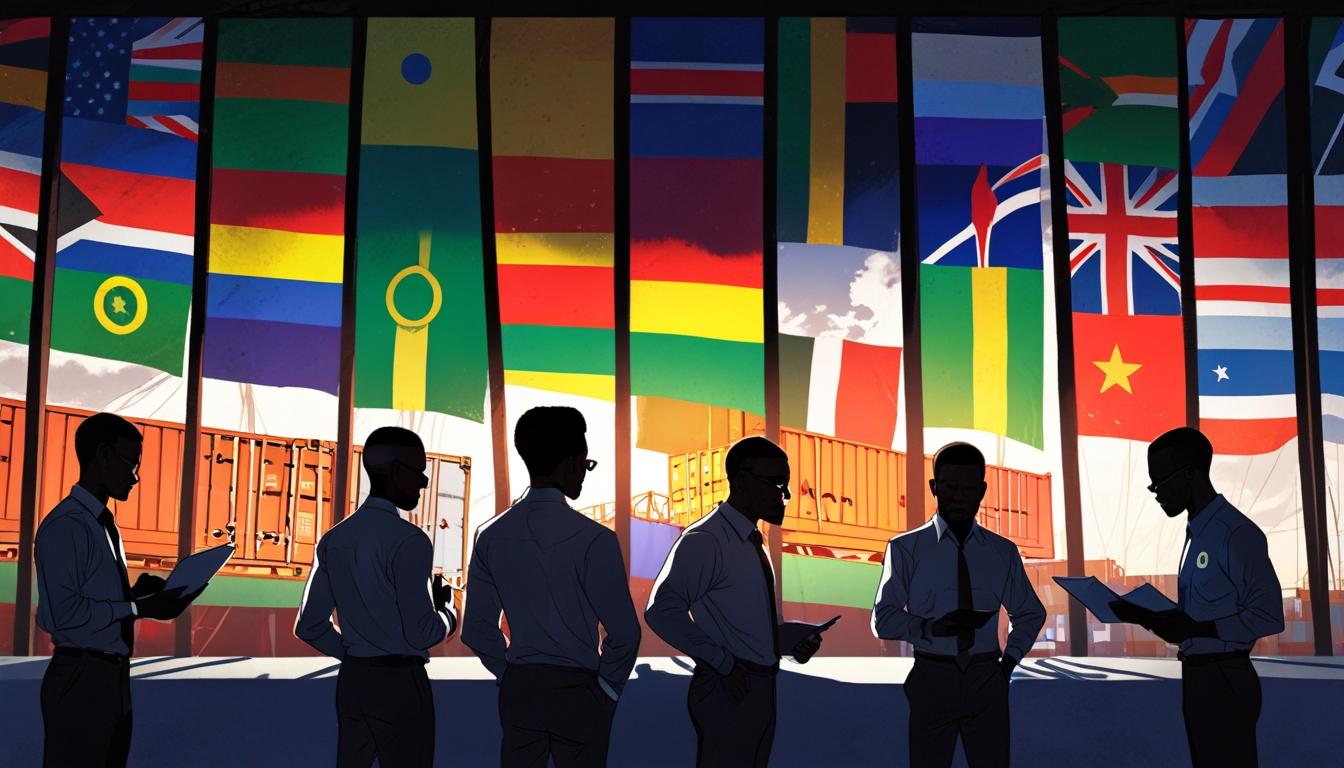
Washington: President Trump has reaffirmed the US commitment to its global trade war, imposing a 10% tariff on selected African goods. Africa now has 90 days to negotiate relief, facing potential economic strain and trade tension amid shifts in US protectionist policies.
The United States continues to maintain its stance in a global trade war, as affirmed by President Donald Trump despite prior inconsistencies and shifts in policy. In a recent announcement, Trump reiterated his commitment to pursuing this aggressive trade strategy worldwide, which has significant implications for various nations, especially those within Africa.
Countries across the continent now face a pressing deadline of 90 days to persuade Washington to reconsider the additional 10% tariffs imposed on select goods. This timeframe has prompted concern among African economies that rely heavily on exports to the United States.
The recent developments have prompted comprehensive analyses highlighting the sectors and economies most vulnerable to these changes. Various economic indicators and trade data suggest that certain industries may face notable hardships, potentially affecting jobs and economic growth. The tariffs target a range of goods, placing pressure on both exporters and consumers within the affected nations.
As nations strategise to mitigate the impact of the increased tariffs, there is a heightened focus on improving trade relations and negotiating better terms with the U.S. This has set off discussions among trade representatives and government officials aiming to navigate the complexities of the current trade landscape.
The implications of these tariffs are significant, not only for trade but also for diplomatic relations between the United States and African nations. With 90 days to act, countries will need to assess their economic dependencies and adopt strategies that could both safeguard their interests and foster more favourable trading conditions in the future.
Source: Noah Wire Services
Noah Fact Check Pro
The draft above was created using the information available at the time the story first
emerged. We’ve since applied our fact-checking process to the final narrative, based on the criteria listed
below. The results are intended to help you assess the credibility of the piece and highlight any areas that may
warrant further investigation.
Freshness check
Score:
4
Notes:
The narrative references Donald Trump's presidency, which ended in January 2021, suggesting potential outdated content. However, no specific date is provided in the article text to confirm its age or freshness.
Quotes check
Score:
2
Notes:
No direct quotes or attributable statements are included in the provided text, limiting verification opportunities. Claims about Trump's announcements lack traceable references to official statements or press releases.
Source reliability
Score:
6
Notes:
Jeune Afrique is a reputable pan-African news outlet, but the lack of article URL verification here limits certainty. The absence of direct citations or named sources in the text reduces reliability.
Plausibility check
Score:
7
Notes:
The described 10% tariffs align with Trump-era trade policies, but the lack of recent evidence for such measures post-presidency casts doubt. The 90-day negotiation timeframe is plausible but unverified.
Overall assessment
Verdict (FAIL, OPEN, PASS): OPEN
Confidence (LOW, MEDIUM, HIGH): MEDIUM
Summary:
The narrative contains plausible elements consistent with historical trade strategies, but reliance on outdated references to Trump's presidency and unverified claims about current tariffs merits caution. The absence of direct quotes or verifiable data prevents a conclusive assessment.