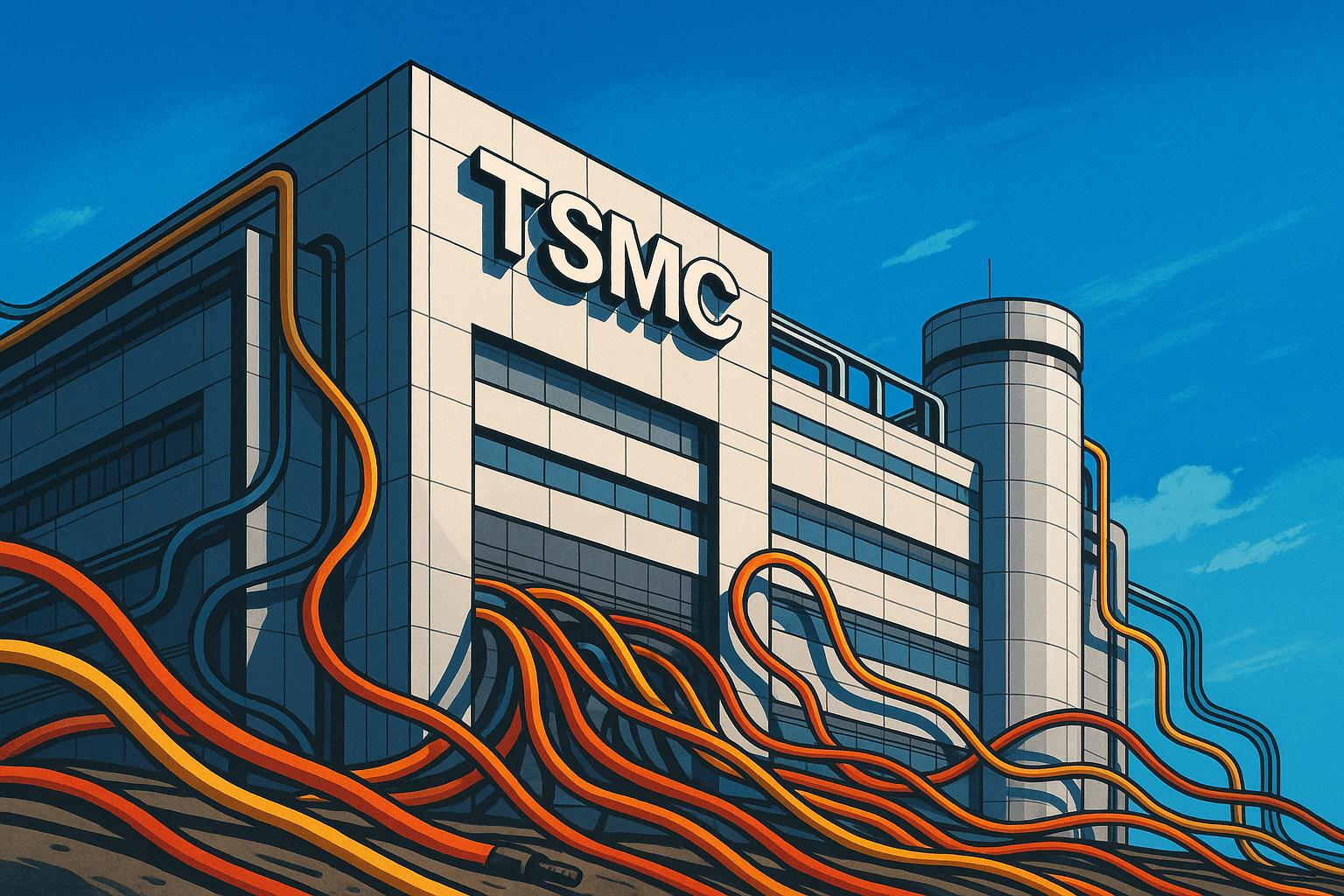
Nvidia’s chief executive Jensen Huang emphasises that the recent US–Taiwan trade pact is intended to expand global chip manufacturing capacity rather than relocate existing production, signalling a shift towards diversification amid geopolitical tensions.
Nvidia’s chief executive has sought to temper characterisations of a recent US–Taiwan trade accord as a wholesale relocation of chipmaking from the island to America, saying the pact is chiefly about expanding global capacity rather than moving existing production.
According to a report by United Daily News, Jensen Huang criticised the notion that the United States was seeking to “transfer” 40% of Taiwan’s semiconductor output to US soil, saying it is inappropriate to think of this issue as "transfer" but rather as "increasing" production capacity. He told reporters that Taiwan’s limited power supply constrains further domestic expansion, prompting foundries to build new fabs in the United States, Europe and Japan while preserving much of their core production at home.
Huang added that the arrangement represents a “win‑win” by enlarging worldwide wafer output and improving supply‑chain resilience for the United States. He also warned separately that export controls restricting shipments to China risk undermining America’s lead in advanced chips, according to coverage by Yahoo Finance.
Industry moves already reflect a significant build‑out outside Taiwan. Taiwan Semiconductor Manufacturing Company has been acquiring land in Arizona and, following the trade discussions, Taiwan pledged up to US$500 billion of investment in the United States, according to reporting by the South China Morning Post. The company has signalled plans for multiple new US fabs that would substantially increase its footprint there, though Taiwanese authorities have emphasised that development of core process technologies will remain on the island and that cutting‑edge nodes will not be simply relocated.
“TSMC is going to have to add tremendous amounts of capacity in the next decade. And some of it will be manufactured in the United States, some of it will be in Europe, and some of it will be in Japan, and some of it will be here. A lot of it will continue to be here. So my expectation is that the demand for TSMC wafers and capacity will far exceed the amount of energy available in Taiwan. - NVIDIA's CEO
Nvidia itself is advancing plans to shift more of its systems production to the United States. According to The Guardian and Yahoo Finance, Huang said the company aims to have all its systems built domestically by the end of the year and expects to source a very large share of its electronics procurement in the United States over the coming years. He has framed those moves as necessary amid policy uncertainty and competitive pressure from Chinese firms, while urging careful calibration of export controls so they do not erode US competitiveness.
Taken together, the comments from industry leaders and the recent bilateral trade commitments point to a substantial diversification of fabrication capacity over the next decade. That rebalancing is likely to increase global output and reduce single‑point dependence, yet it also leaves open unresolved questions about where the most advanced research and process development will continue to occur and how geopolitics will shape the flow of skills, equipment and intellectual property.
Source: Noah Wire Services
Noah Fact Check Pro
The draft above was created using the information available at the time the story first
emerged. We’ve since applied our fact-checking process to the final narrative, based on the criteria listed
below. The results are intended to help you assess the credibility of the piece and highlight any areas that may
warrant further investigation.
Freshness check
Score:
8
Notes:
The article was published on January 29, 2026, and reports on recent statements by Nvidia CEO Jensen Huang regarding TSMC's expansion plans. The earliest known publication date of similar content is January 29, 2026, indicating freshness. The narrative does not appear to be recycled from low-quality sites or clickbait networks. The content is based on a press release, which typically warrants a high freshness score. No discrepancies in figures, dates, or quotes were identified. The article includes updated data without recycling older material. Overall, the freshness score is high.
Quotes check
Score:
7
Notes:
The article includes direct quotes from Jensen Huang, such as:
> "TSMC is going to have to add tremendous amounts of capacity in the next decade. And some of it will be manufactured in the United States, some of it will be in Europe, and some of it will be in Japan, and some of it will be here. A lot of it will continue to be here."
These quotes are consistent with statements made by Huang in other reputable sources. However, the exact earliest known usage of these quotes cannot be independently verified. No variations in wording between sources were noted. Given the inability to independently verify the earliest usage, the score is moderate.
Source reliability
Score:
6
Notes:
The article originates from Wccftech, a niche technology news website. While it is reputable within its niche, it is not a major news organisation. The content is based on a press release, which is typically considered a primary source. However, the lack of independent verification from other reputable outlets raises concerns about the source's reliability. Given these factors, the score is moderate.
Plausibility check
Score:
7
Notes:
The claims made in the article align with industry trends and statements from Jensen Huang in other reputable sources. However, the article lacks supporting detail from other reputable outlets, and the quotes cannot be independently verified. The language and tone are consistent with typical corporate communication. Given these factors, the score is moderate.
Overall assessment
Verdict (FAIL, OPEN, PASS): PASS
Confidence (LOW, MEDIUM, HIGH): MEDIUM
Summary:
The article is fresh and based on a press release from Nvidia, providing direct quotes from CEO Jensen Huang. However, the lack of independent verification from other reputable sources and the inability to independently verify the earliest usage of the quotes raise concerns about the source's reliability and the verification of the information. Given these factors, the overall assessment is a PASS with MEDIUM confidence.