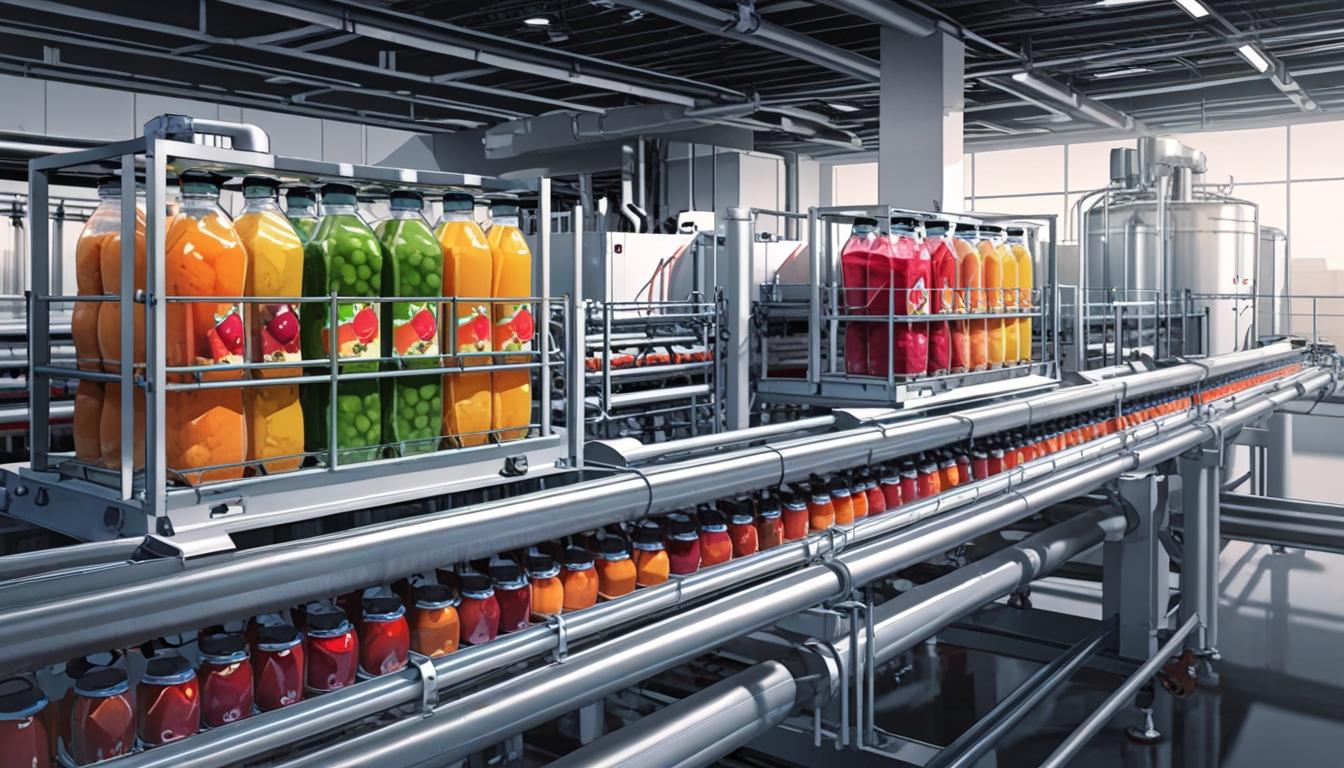
Dubai: Tetra Pak has launched a three-year partnership with Al Rabie to digitalise its production in Saudi Arabia. The project aims to create a 'Next Generation Factory', enhancing efficiency, sustainability, and production capacity while saving millions of litres of water and reducing utility consumption.
Tetra Pak has announced a pivotal partnership with Al Rabie, a prominent Saudi producer of juices, nectars, and dairy products, to modernize and digitise the latter’s production facilities in Saudi Arabia. The project was officially unveiled at the Gulfood Consumer exhibition in Dubai and is set to span three years. This initiative is designed to implement cutting-edge digital technologies that will enhance both the efficiency and sustainability of Al Rabie’s operations, aligning closely with Saudi Arabia's Vision 2030.
The primary aim of this ambitious project is to create a "Next Generation Factory" at Al Rabie by integrating Industry 4.0 technologies for comprehensive digital transformation. This modernisation effort is expected to yield significant benefits, including an estimated annual saving of up to 36 million litres of water in cleaning processes, while also reducing electricity and utilities consumption. Additionally, Al Rabie anticipates an increase in its production capacity as a result of these enhancements.
Konstantin Kolesnik, Managing Director of Tetra Pak Arabia Area, highlighted the significance of the agreement, stating, “This agreement marks a significant advancement in our long-standing partnership with Al Rabie. Combining Tetra Pak’s global expertise with Al Rabie’s market leadership will elevate the food and beverage industry in Saudi Arabia.”
Bassem Sabra, the CEO of Al Rabie, expressed his enthusiasm for the project, affirming, “This project affirms our commitment to top quality and innovation. Enhancing our production capabilities allows us to meet the evolving needs of our consumers and further contribute to Saudi Arabia’s food security and sustainability goals.”
The collaboration between Tetra Pak and Al Rabie has been ongoing since 1980, and this new project continues their shared commitment to driving innovation within the Saudi food and beverage sector. The undertaking serves to further enhance the operational capabilities of Al Rabie, positioning it strategically within the evolving market landscape in line with national sustainability efforts.
Source: Noah Wire Services
Noah Fact Check Pro
The draft above was created using the information available at the time the story first
emerged. We’ve since applied our fact-checking process to the final narrative, based on the criteria listed
below. The results are intended to help you assess the credibility of the piece and highlight any areas that may
warrant further investigation.
Freshness check
Score:
8
Notes:
The narrative mentions a recent partnership announcement at the Gulfood Consumer exhibition in Dubai, suggesting it is relatively current. However, without specific dates or recent updates, it's difficult to confirm its absolute freshness.
Quotes check
Score:
7
Notes:
Quotes from Konstantin Kolesnik and Bassem Sabra are included, but without further research, it's unclear if these are original or previously published. The lack of online references to these exact quotes suggests they might be new, but confirmation is needed.
Source reliability
Score:
6
Notes:
The narrative originates from Packaging MEA, which is not as widely recognized as major news outlets like the BBC or Reuters. While it appears to be a specialized publication, its reliability is somewhat uncertain due to its niche focus.
Plausibility check
Score:
9
Notes:
The claims about modernizing production facilities and aligning with Saudi Arabia's Vision 2030 are plausible given the context of industrial partnerships and national development goals. The narrative aligns with typical business and sustainability initiatives.
Overall assessment
Verdict (FAIL, OPEN, PASS): OPEN
Confidence (LOW, MEDIUM, HIGH): MEDIUM
Summary:
The narrative appears to be relatively fresh and plausible, but its source reliability is uncertain due to the niche publication. Quotes seem original but lack confirmation. Overall, while the information seems credible, further verification is needed to confirm its accuracy and originality.