
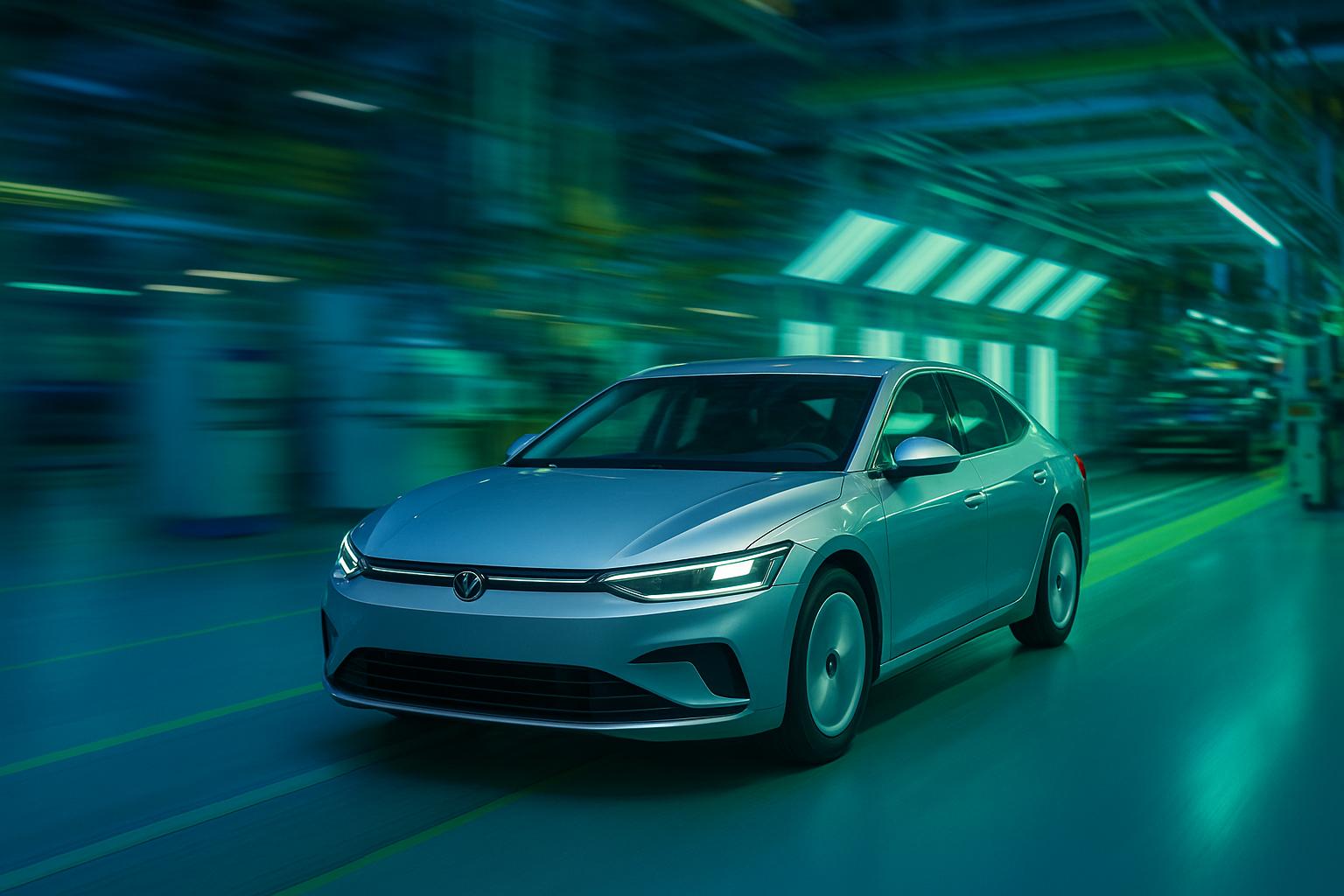
Slovakia stands as one of Europe's most industrialised economies, with manufacturing contributing over 30% of the nation’s GDP. Central to this industrial landscape is the automotive sector, which alone generates about 9.2% of GDP and nearly half of all industrial revenues. Major automotive players such as Volkswagen, Kia, Stellantis, and Jaguar Land Rover have firmly established their operations in Slovakia, making it a global leader in vehicle production per capita. Recent figures indicate that Slovak factories produced close to one million cars in 2024, reinforcing the country’s remarkable position as a powerhouse of automotive manufacturing.
However, the sector is now navigating a profound transformation, driven by the dual forces of electrification and regulatory shifts. The transition from traditional internal combustion engines to electric vehicles (EVs) is reshaping manufacturing processes and the logistics networks underpinning them. A significant marker of this shift is Volvo Cars’ planned electric vehicle plant near Košice, poised to produce around 250,000 units annually. This facility, part of Volvo’s €1.2 billion investment and slated to begin production in 2026, will be climate neutral and align with the company’s ambition to become fully electric by 2030 and climate neutral by 2040. The European Commission has endorsed this move by approving €267 million in state aid from the Slovak government to support the plant, highlighting Slovakia’s strategic role in sustainable automotive development within Europe.
The shift to electric vehicles introduces new complexities, particularly in logistics and supply chain management. EVs require fewer but far more specialised components, such as battery systems and high-voltage elements, which are classified as ADR goods. These demand stringent safety standards, adapted warehousing infrastructure, and trained personnel to handle hazardous materials safely. The sector’s logistics now need to ensure tighter coordination across multiple transport modes with precise timing of inbound flow to maintain uninterrupted production. This logistic overhaul underscores the need for advanced supply chain models and flexible, responsive services.
In parallel, broader geopolitical and market factors are influencing Slovakia’s automotive industry. Recent U.S. tariffs on European vehicles, which affect up to 11% of Slovak-made vehicle exports, could alter production and export priorities. With these tariffs reducing the volume of vehicles exported to the U.S., more production will need to be absorbed by the European market amid escalating competition, particularly from Chinese automotive brands. Chinese companies, themselves barred by U.S. tariffs, are pivoting toward Europe, intensifying competition but also potentially driving innovation and market expansion in Central and Eastern Europe (CEE), including Slovakia.
Central Asia is emerging as an intriguing new frontier for automotive expansion. The region, comprising countries such as Kazakhstan, Uzbekistan, Turkmenistan, Tajikistan, and Kyrgyzstan, boasts a population of around 80 million and a growing middle class with rising purchasing power. Improved infrastructure and consumer demand for modern goods, including vehicles equipped with advanced technology, position Central Asia as a promising alternative market. European manufacturers, facing pressures in traditional markets, might find new growth opportunities there. Notably, China has already established itself as a dominant automotive player in the region, particularly with electric and combustion vehicles.
To maintain competitive advantage, Slovak and regional manufacturers are increasingly adopting innovative logistics strategies. Vendor Managed Inventory (VMI) is gaining traction, wherein logistics operators oversee imports, inventory, and storage of components on behalf of manufacturers. This approach enables more efficient delivery schedules, deferred payment options, streamlined customs and tax processes, and improved production stability by reducing working capital requirements. Rohlig SUUS Logistics, a key player in the region, has been at the forefront of implementing VMI solutions and providing tailored, end-to-end supply chain models through their proprietary Supply Chain Solutions (SCS) model. These integrated logistics services combine operational execution with solution engineering to enhance resilience, efficiency, and compliance amid complex regulatory environments.
Beyond manufacturing logistics, customs management remains a vital aspect of competitive production. Centralised Customs Control Tower solutions provided by logistics firms like Rohlig SUUS are essential for ensuring compliance, simplifying administrative processes, and accelerating clearance times. Such capabilities are increasingly critical given the evolving safety, environmental, and trade regulations that govern automotive supply chains both within Europe and internationally.
Slovakia’s automotive sector remains a cornerstone of its economy, with the industry responsible for over 10% of GDP and nearly half of industrial exports, employing more than 170,000 people directly. The successful transition to electrification, supported by strategic investments such as Volvo’s new plant and innovative logistics solutions, will be crucial for maintaining this leading position amid global shifts. The combined pressures of regulatory changes, evolving trade dynamics, and emerging markets signal that Slovakia’s automotive industry is at a pivotal juncture. Yet, its strong industrial base, strategic geographic location, and adaptive supply chain capabilities position it well to embrace these challenges and opportunities, potentially expanding its influence beyond Europe into new, fast-growing regions like Central Asia.
Source: Noah Wire Services