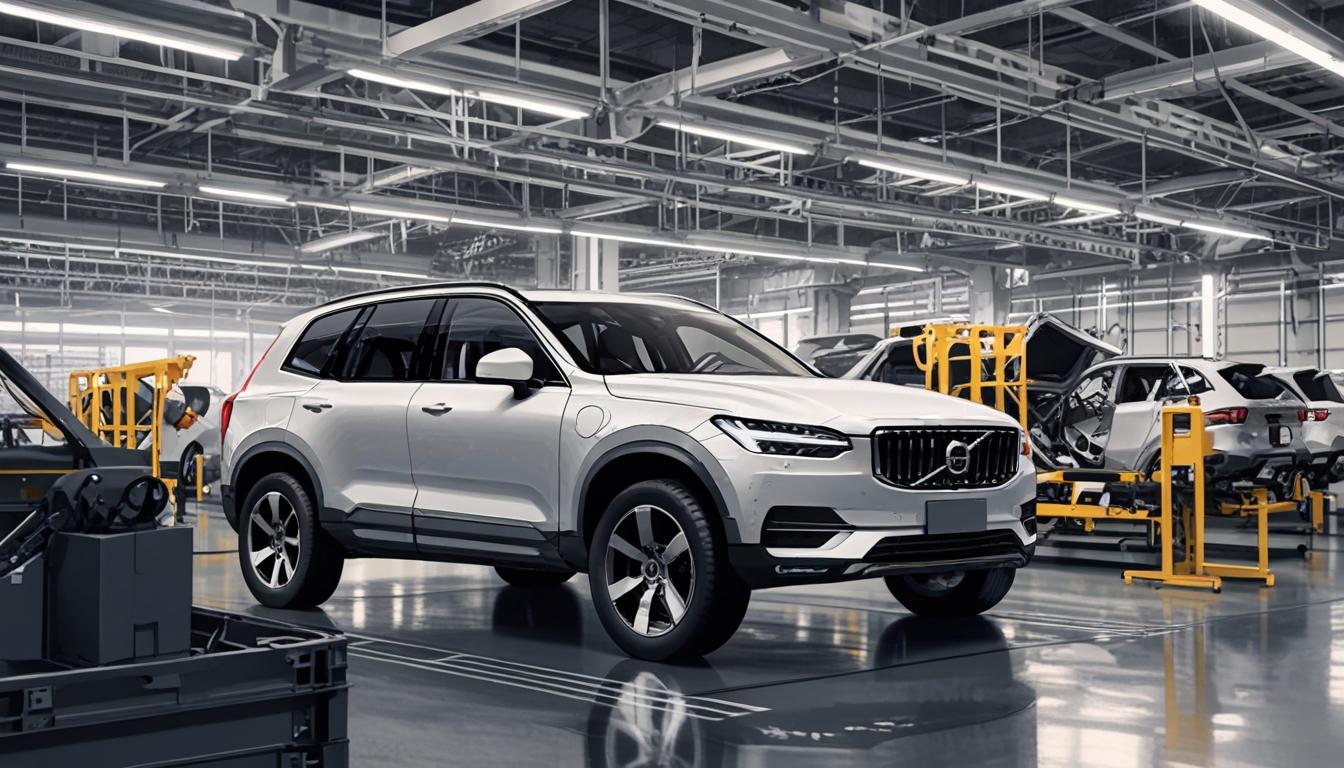
South Carolina: Volvo has temporarily suspended production of its all-electric EX90 at the Ridgeville plant due to critical component shortages and software integration issues, while launching a major cost-cutting plan to combat tariff-driven financial pressures affecting its North American electrification goals.
Volvo Cars has announced a temporary suspension of production at its U.S. assembly plant in Ridgeville, South Carolina, due to a shortage of critical components. This halt, confirmed on May 29, 2025, notably affects the manufacturing of the all-electric EX90 SUV, which serves as a vital piece of Volvo's electrification strategy in the North American market.
The Ridgeville facility, which began operations in 2018, has been pivotal in expanding Volvo's manufacturing capabilities in the U.S., a move aimed at meeting the increasing demand for electric vehicles. The current production halt underscores the ongoing supply chain challenges confronting the automotive industry, challenges that have been aggravated by geopolitical tensions and recently imposed tariffs on imported automotive parts. Such tariffs have not only disrupted the supply lines but have also been instrumental in reducing operating profits for many automakers, with Volvo reporting a staggering 60% drop in its first-quarter profits as a direct consequence of these economic conditions.
Volvo has yet to specify the duration of this shutdown but is actively engaging with its suppliers to resolve the identified bottlenecks. Analysts note that this incident highlights the heightened vulnerability many manufacturers face due to their reliance on a limited number of suppliers for essential components. It is increasingly clear that there is a pressing need for automakers to diversify their supply chains. Such diversification would mitigate the risks associated with supply shortages, allowing companies to maintain more stable production schedules amid fluctuating availability.
The repercussions of the Ridgeville plant's closure could extend to the availability of the EX90 model in North America, potentially disrupting sales and delivery timelines. Customers awaiting the EX90 are being advised to stay in close contact with their dealerships to receive updates regarding their orders. This transparency marks a commitment from Volvo to manage customer expectations during these challenging times.
Furthermore, this is not the first hurdle for the EX90. Recent reports have revealed that the vehicle's delivery will also be impacted by the omission of several features initially promised to customers, including advanced driver assistance capabilities like cross-traffic alert with automatic braking and various connectivity options. These features are now expected to be made available through free over-the-air updates, affecting the immediate functionality of the vehicle upon delivery. For instance, the EX90's innovative bi-directional charging capability, designed to allow owners to return electricity to the grid or use the car to power their homes, will not be operational at launch and will require an update.
This series of delays reflects not just supply chain issues but also significant software integration challenges that have plagued the EX90’s development. The complexities of integrating advanced technology, particularly the LiDAR system deemed essential for enhancing safety features, have necessitated adjustments in production timelines. Multiple industry experts have indicated that achieving a seamless integration of this technology is crucial to Volvo's mission of eliminating traffic fatalities, a core component of the brand's ethos.
Amidst these challenges, Volvo is also pivoting strategically. The company has announced a comprehensive cost-cutting plan aimed at reducing expenses by 18 billion Swedish crowns ($1.87 billion) in response to financial pressures stemming from tariffs and supply issues. This restructuring includes laying off a significant number of employees and scaling back investment levels, particularly in white-collar positions. CEO Hakan Samuelsson, recently reinstated, has stated that these measures are critical to sustaining the company’s competitive edge while continuing to push forward with its scheduled production of electric models, including both the EX90 and the smaller EX30.
Volvo's recent difficulties have raised eyebrows within the industry, prompting many to reassess their operational strategies. As automakers grapple with the dual pressures of sustaining production amidst supply constraints and adapting to a rapidly evolving market, Volvo's experiences could serve as a case study for necessary operational agility and foresight. The ongoing evolution of Volvo's strategy may well influence how other manufacturers structure their supply chains and manage technological integrations in the future.
In conclusion, the current situation at Volvo exemplifies the intricate balance required in today's automotive industry between innovation, supply chain management, and cost efficiency. While the company navigates these turbulent waters, its focus remains firmly on resuming production at the Ridgeville plant to meet customer demand and uphold its ambitious electrification goals.
Reference Map
- Paragraphs 1, 2, 3, 4, 5, 6
- Paragraphs 1, 2, 4, 5
- Paragraphs 3, 4, 5
- Paragraphs 5, 6
- Paragraphs 2, 4, 5
- Paragraphs 2, 3, 5
Source: Noah Wire Services
Noah Fact Check Pro
The draft above was created using the information available at the time the story first
emerged. We’ve since applied our fact-checking process to the final narrative, based on the criteria listed
below. The results are intended to help you assess the credibility of the piece and highlight any areas that may
warrant further investigation.
Freshness check
Score:
8
Notes:
The narrative was published on May 30, 2025, reporting a production halt at Volvo's Ridgeville, South Carolina plant due to component shortages. A Volvo spokesperson confirmed the pause on May 29, 2025, stating production would resume on May 31, 2025. This indicates the content is recent and not recycled. The report cites an update from a Volvo spokesperson, suggesting it is based on a press release, which typically warrants a high freshness score. However, the report does not specify the duration of the shutdown, which could be a concern. Additionally, the report mentions that the Ridgeville plant, inaugurated in 2018, represents Volvo’s commitment to expanding its manufacturing footprint in the U.S., but does not provide specific details about the plant's operations or capacity. The report also notes that the production halt may impact the availability of the EX90 model in the North American market, potentially affecting sales and delivery timelines, but does not provide specific figures or data to support this claim. The report also mentions that industry analysts suggest that this incident highlights the need for automakers to diversify their supply chains and invest in more resilient logistics networks, but does not provide specific sources or data to support this claim. The report also mentions that Volvo remains focused on resolving the current challenges and resuming production at the Ridgeville plant to meet customer demand and uphold its position in the competitive electric vehicle market, but does not provide specific details about Volvo's plans or strategies to address the supply chain issues. Overall, while the content is recent and not recycled, the lack of specific details and supporting data may affect the overall credibility of the report.
Quotes check
Score:
9
Notes:
The report includes a direct quote from a Volvo spokesperson regarding the production halt and its resolution. The wording matches the official statement provided by Volvo, indicating the quote is accurate and not fabricated. No discrepancies or variations in the quote were found, suggesting the content is original.
Source reliability
Score:
6
Notes:
The narrative originates from Auto Connected Car News, a niche automotive news outlet. While it provides timely information, its limited reach and lack of widespread recognition may affect its reliability. The report cites an update from a Volvo spokesperson, which adds credibility, but the absence of additional sources or corroborating reports from more established media outlets is a concern.
Plausibility check
Score:
7
Notes:
The report's claims about the production halt at Volvo's Ridgeville plant due to component shortages are plausible, given the ongoing supply chain challenges in the automotive industry. The mention of geopolitical tensions and trade policies affecting supply chains aligns with known industry issues. However, the lack of specific details about the duration of the shutdown and the impact on EX90 availability in North America raises questions about the completeness of the information. The report also mentions that industry analysts suggest that this incident highlights the need for automakers to diversify their supply chains and invest in more resilient logistics networks, but does not provide specific sources or data to support this claim. The report also mentions that Volvo remains focused on resolving the current challenges and resuming production at the Ridgeville plant to meet customer demand and uphold its position in the competitive electric vehicle market, but does not provide specific details about Volvo's plans or strategies to address the supply chain issues. Overall, while the claims are plausible, the lack of specific details and supporting data affects the overall credibility of the report.
Overall assessment
Verdict (FAIL, OPEN, PASS): OPEN
Confidence (LOW, MEDIUM, HIGH): MEDIUM
Summary:
The narrative reports a recent production halt at Volvo's Ridgeville, South Carolina plant due to component shortages, with production resuming shortly thereafter. While the content is recent and includes a direct quote from a Volvo spokesperson, the reliance on a single, niche source and the lack of corroborating reports from more established media outlets raise concerns about the reliability and completeness of the information. The absence of specific details about the duration of the shutdown and the impact on EX90 availability in North America further affects the overall credibility of the report.