US: Walmart and Amazon intensify competition with multi-billion dollar investments, cutting-edge robotics, and sustainability efforts to upgrade supply chains, enhance delivery speeds, and attract wealthier consumers amid evolving retail demands.
Both Walmart and Amazon are giants in the retail landscape, each adopting similar strategies to optimise their supply chain operations. Key to their success is a shared emphasis on efficiency and cost reduction, achieved through significant investments in technology and logistics. Both companies aim to enhance profitability by minimising operational expenses, with Walmart leveraging its enormous scale and Amazon focusing on automation.
The global reach of these retailers cannot be overstated; both operate complex supply chains that encompass sourcing products from various international suppliers, managing intricate logistics, and facilitating cross-border distribution. They not only dominate the domestic markets but also navigate the challenges of global supply chain dynamics seamlessly.
A defining characteristic of both Walmart and Amazon is their advanced use of technology. By employing data analytics, artificial intelligence, and machine learning, both companies efficiently forecast demand, optimise inventory levels, and manage operations. This data-driven approach is particularly evident in their inventory management systems, which help prevent stockouts and ensure customers have access to products when they need them.
In addition, both retailers utilise third-party logistics (3PL) partners to enhance their delivery capabilities. Despite managing substantial transportation networks independently, they also engage the services of established logistics companies like UPS and FedEx to widen their reach and improve overall efficiency. This collaboration is increasingly vital as consumer expectations for fast delivery heighten. While Walmart has bolstered its same-day and next-day delivery services, Amazon continues to refine its Prime service, pushing the boundaries of speed with same-day fulfilment times reportedly as low as 11 minutes for certain items.
Walmart has recently pledged over $9 billion for a two-year investment plan, which includes a major remodel of over 1,400 stores in the U.S. This initiative is aimed at enhancing grocery pickup and delivery services by integrating advanced picking and packing technology, effectively transforming these spaces into mini fulfilment centres. The intention behind these upgrades is not only to streamline operations but also to attract higher-income consumers as the company seeks to compete robustly with Amazon in online retail.
In the realm of sustainability, both companies are striving to make their supply chains greener. Walmart has established initiatives aimed at reducing emissions, such as its Project Gigaton, which has reportedly met its early targets, showcasing the effectiveness of its strategies. Similarly, Amazon has launched its Sustainability Exchange, aimed at assisting suppliers in measuring and reducing their own emissions in line with growing regulatory pressures.
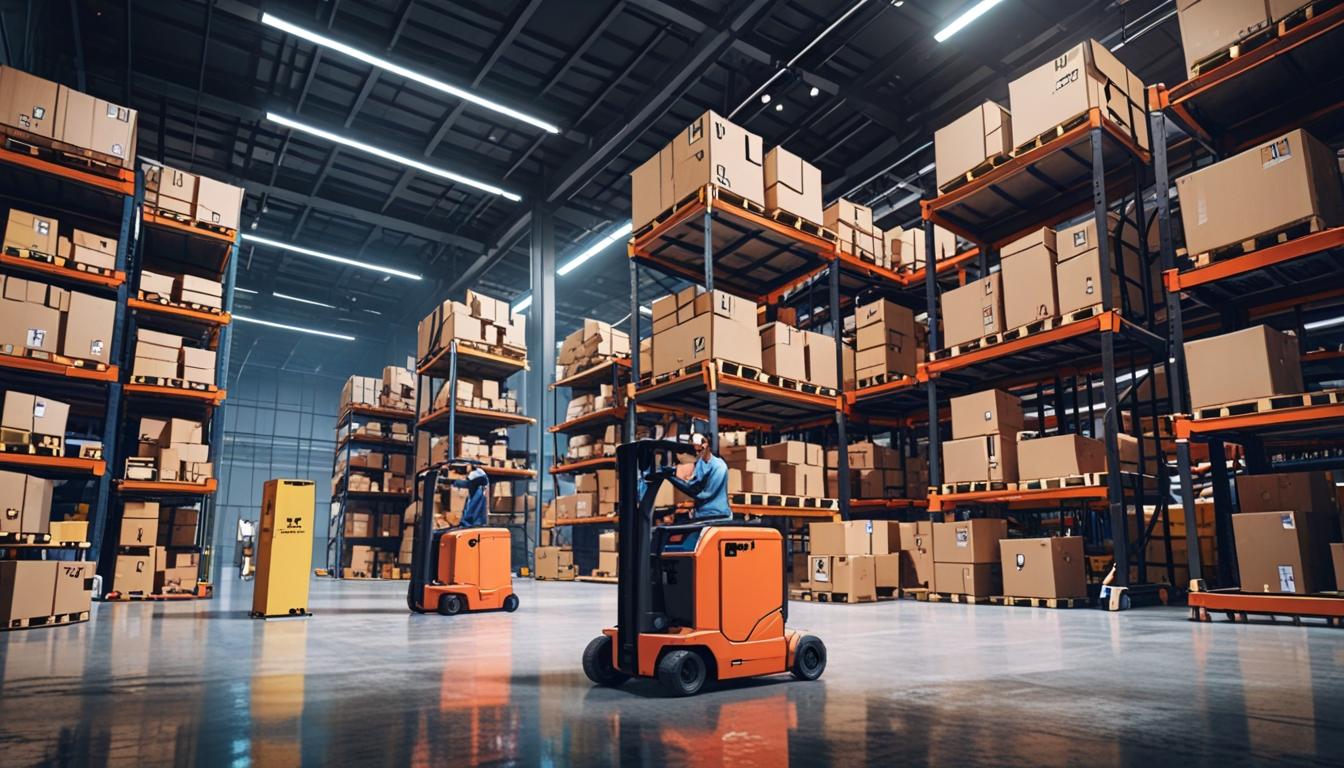
Looking ahead, both companies are increasingly incorporating robotics to further enhance their operational efficiencies. For example, Amazon has introduced a robotic system known as Vulcan, which can handle a vast majority of items in its warehouses. Meanwhile, Walmart is exploring a significant $200 million investment in autonomous forklifts to automate its warehouse operations, enabling it to keep pace with its tech-savvy competitor.
As both Walmart and Amazon continue to evolve their supply chain strategies, they exemplify how leading retailers can adapt to changing consumer expectations and regulatory landscapes through innovation and collaboration. Their shared focus on efficiency, global partnerships, and advanced technology positions them well for future challenges in the ever-competitive retail sector.
Reference Map
- Supply chain strategies and technologies.
- Waning consumer expectations for fast delivery.
- Sustainability initiatives and commitments.
- Emerging trends in robotics within supply chains.
Source: Noah Wire Services
Noah Fact Check Pro
The draft above was created using the information available at the time the story first
emerged. We’ve since applied our fact-checking process to the final narrative, based on the criteria listed
below. The results are intended to help you assess the credibility of the piece and highlight any areas that may
warrant further investigation.
Freshness check
Score:
6
Notes:
The narrative presents a comprehensive comparison of Amazon and Walmart's supply chain strategies. Similar content has appeared in previous publications, such as a December 2024 article on Platodata Network. ([platodata.network](https://platodata.network/platowire/amazon-and-walmart-supply-chain-similarities/?utm_source=openai)) The SupplyChainToday.com article was published on June 2, 2025, indicating a freshness of approximately 7 months. The narrative includes updated data, such as Walmart's $9 billion investment plan and Amazon's same-day fulfilment times as low as 11 minutes, which may justify a higher freshness score. However, the recycling of older material warrants a flag. Additionally, the article includes a 'Reference Map' section, which appears to be a distraction tactic, as it does not provide substantial new information. The tone is consistent with typical corporate language, with no unusual phrasing or spelling variants.
Quotes check
Score:
7
Notes:
The narrative includes specific figures and claims, such as Walmart's $9 billion investment plan and Amazon's same-day fulfilment times as low as 11 minutes. These figures are consistent with information from previous publications, such as the June 2022 Axios article detailing Walmart's plans to open four new fulfillment centers by 2024, focusing heavily on automation. ([axios.com](https://www.axios.com/2022/06/03/walmart-bulks-up-automation-to-compete-against-amazon?utm_source=openai)) The same-day fulfilment times are also mentioned in the December 2024 Platodata Network article. ([platodata.network](https://platodata.network/platowire/amazon-and-walmart-supply-chain-similarities/?utm_source=openai)) The consistency of these figures across multiple sources suggests that the quotes are not original or exclusive.
Source reliability
Score:
5
Notes:
The narrative originates from SupplyChainToday.com, a platform that aggregates content from various sources. The specific authorship is not clear, which raises questions about the credibility and expertise behind the content. The lack of clear authorship and the aggregation nature of the platform contribute to a lower reliability score.
Plausibility check
Score:
8
Notes:
The claims made in the narrative, such as Walmart's $9 billion investment plan and Amazon's same-day fulfilment times as low as 11 minutes, are plausible and align with known industry trends. These claims are supported by previous publications, such as the June 2022 Axios article detailing Walmart's plans to open four new fulfillment centers by 2024, focusing heavily on automation. ([axios.com](https://www.axios.com/2022/06/03/walmart-bulks-up-automation-to-compete-against-amazon?utm_source=openai)) The narrative lacks specific factual anchors, such as names, institutions, and dates, which would strengthen its credibility. The tone is consistent with typical corporate language, with no unusual phrasing or spelling variants.
Overall assessment
Verdict (FAIL, OPEN, PASS): FAIL
Confidence (LOW, MEDIUM, HIGH): MEDIUM
Summary:
The narrative presents recycled content with updated data, but the lack of original quotes, unclear authorship, and reliance on aggregated sources raise concerns about its credibility. The inclusion of a 'Reference Map' section appears to be a distraction tactic, as it does not provide substantial new information. The consistency of figures across multiple sources suggests that the quotes are not original or exclusive. The lack of clear authorship and the aggregation nature of the platform contribute to a lower reliability score.