
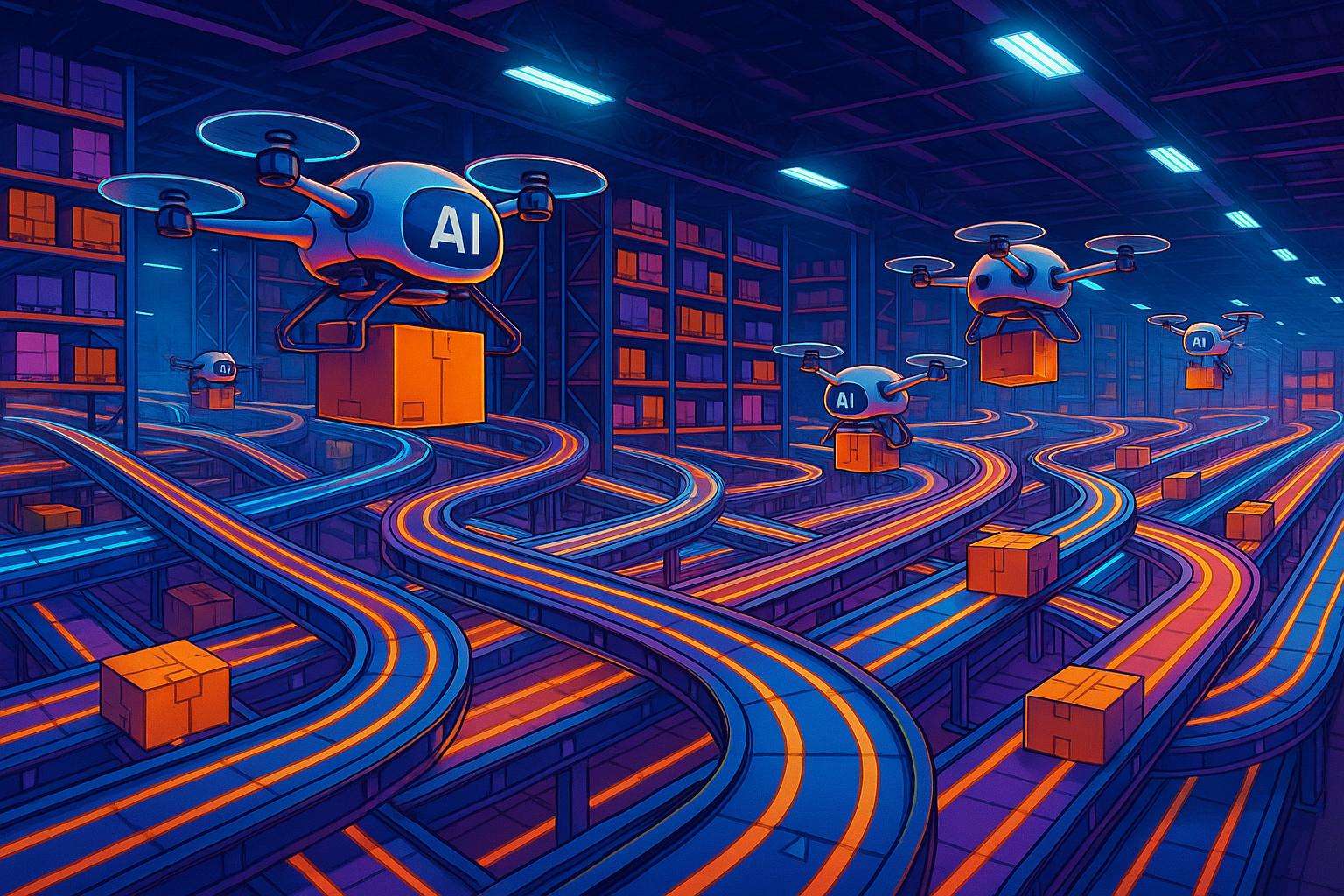
Local firms are increasingly using artificial intelligence to shore up supply chains that have long been vulnerable to port congestion, weather disruptions and global trade shocks, sector executives told a Manila forum this week.
At Manila Horizon 2026, organised by logistics software provider GoComet, leaders from large Philippine companies including Jollibee, IMI and Century Pacific Foods described a shift from simple tracking tools toward systems that analyse live signals and recommend operational responses before local operations are affected. According to the report by Newsbytes, the forum highlighted structural weaknesses in the country’s logistics network , fragmented transport links, limited port redundancy and heavy import reliance , that make early warning and decision support especially valuable.
“Visibility tells you where things are. Intelligence tells you what to do next,” Chitransh Sahai, cofounder and chief executive officer of GoComet, said at the event. He argued AI can move supply chains from late-stage reaction to early planning, positioning technology as an aid to human decision-makers rather than a replacement. “Technology only creates impact when it fits naturally into how teams work,” he added. “The goal isn’t more dashboards , it’s fewer surprises”.
GoComet told participants that Philippine uptake of its AI-enabled platform has accelerated since the company entered the market in 2021, with local customers now representing almost one-fifth of its Southeast Asia portfolio, a development also reported by Context.ph. That platform links live shipment feeds to external indicators such as port congestion, weather events and geopolitical developments, and offers natural-language queries so logistics staff can extract insights without cumbersome reports. Context.ph reported business users have seen freight-cost reductions of up to 30%, higher productivity and faster inventory turnover where the tools have been adopted.
The Manila discussion took place against a broader national push to apply AI to logistics and supply resilience. Industry partnerships and vendor deployments cited at related events suggest the technology is being rolled out across multiple layers of the value chain. According to BusinessWorld, FarEye’s collaboration with the Procurement and Supply Institute of Asia aims to harness AI to improve last-mile performance and says its platform supports nearly 100 million deliveries a year in the Philippines, helping reduce route miles and raise on-time rates. The same report notes the country’s logistics costs remain elevated , about 27% of GDP, more than triple the global average and well above the ASEAN norm , underscoring the scale of the challenge.
Corporate adoption is not limited to last-mile or visibility tools. Century Pacific Foods has chosen Blue Yonder’s AI-driven demand and supply solutions to strengthen forecasting and inventory management, a company announcement reported by Business Wire said. Vendors such as HashMicro are also promoting AI modules for restock recommendations and automated planning, with the Philippines among several Southeast Asian markets where they operate.
Policy and research initiatives are moving in parallel. Government-backed programmes aim to increase access to AI tools and analytics for business and public-sector users. Government figures published in BusinessWorld describe the Department of Science and Technology’s ACABAI-PH programme, which is building an AI virtual hub to make advanced analytics available as a service across the country, with use cases that include supply-chain optimisation and disaster response.
Speakers at other industry gatherings have emphasised collaboration as a critical enabler. The Nordic Innovation Exchange in March 2025 showcased demand-sensing use cases and urged sharing best practices and data across retailers, manufacturers and logistics providers to reduce waste and improve service, a report by NordCham said. Participants at Manila Horizon echoed that view, saying broader data-sharing among enterprises, carriers and technology platforms will be necessary to unlock the full resilience benefits that AI promises.
Those attending the forum warned that the technology alone will not resolve deeper systemic constraints. Executives noted that timely data and interoperable systems must be paired with investments in alternative gateways, inland transport links and contingency planning if the Philippines is to reduce its exposure to external shocks that quickly translate into higher consumer prices and production stoppages.
Still, proponents argue AI can materially reduce uncertainty by converting disparate signals into actionable options for planners and operators. According to Context.ph, companies adopting such tools report more stable inbound supply, better inventory alignment and operational time freed for supplier coordination and longer-term resilience planning , outcomes industry players say are becoming essential in a nation where imports and complex archipelagic logistics make uninterrupted flows of goods a policy as well as a commercial priority.
Source: Noah Wire Services