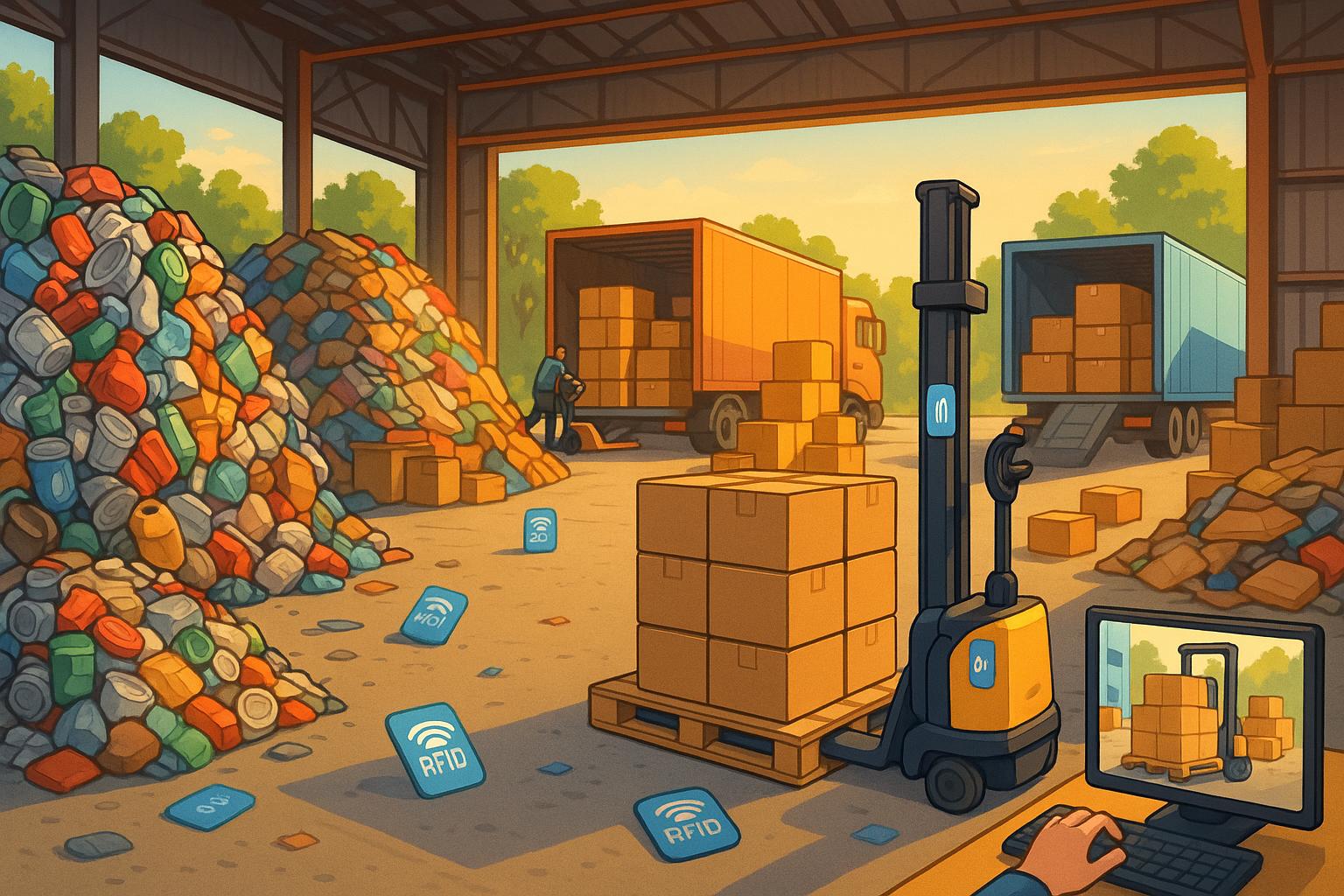
Walmart advances its environmental strategies by integrating AI-driven packaging, RFID inventory tracking, and recycled materials, aiming to cut waste and emissions across its supply chain.
Walmart is layering automation, digital tracking and recycled materials into its packaging and fulfilment systems as it pushes to cut waste across its business and supplier network. According to PackWorld, the retailer is deploying an AI-driven void-fill system in its Next Generation Fulfilment Centres that scans shipping cases and dispenses only the paper needed to secure items, a move designed to shrink material use while speeding packing operations.
The company is testing radio-frequency identification tags in fresh departments such as meat, bakery and deli to sharpen inventory visibility and reduce spoilage. PackWorld reports that the digital labels improve stock accuracy and help stores manage perishable flows more precisely, a potential lever to lower food waste at store level.
Walmart’s drive sits inside a broader supplier-facing strategy. The retailer launched Project Gigaton in 2017, inviting suppliers to cut greenhouse gas emissions across global value chains by 2030. The programme set a 1 billion metric tonne avoidance target; Walmart said in February 2024 that supplier-reported projects were on track to exceed that goal six years early, a development the company presented as evidence of supplier engagement with energy, packaging and waste-reduction measures.
Material innovation is being used alongside technology. Industry announcements show Walmart partnering with suppliers to introduce flexible film and retail bags containing post-consumer recycled resin. According to a PR Newswire release and reporting by Packaging Gateway, Emerald Packaging, working with Wada Farms and other partners, brought a 30% post-consumer recycled (PCR) bag for the retail potato market to commercial rollout in late 2025, signalling progress toward substituting virgin plastics in produce packaging.
These moves follow earlier public commitments. In 2019 Walmart set targets to make its private-brand packaging recyclable, reusable or industrially compostable by 2025 and to incorporate at least 20% PCR content in such packaging. The company also pledged wider labelling with the How2Recycle scheme. Industry observers say combining procurement targets with operational changes , like right-sized boxes and RFID-enabled inventory control , is necessary to translate supplier pledges into measurable waste reductions.
Walmart has also extended consumer-facing options, offering recycled shipping and moving boxes through its online retail channels, which the company frames as another way to scale recycled-material use beyond its supply chain. According to Walmart’s online product pages, those items are positioned to make recycled packaging accessible to shoppers while reinforcing the retailer’s circular-materials messaging.
Taken together, the technology pilots, supplier collaborations and recycled-material introductions illustrate a multipronged approach: reduce the amount of packaging through smarter fulfilment, limit food loss through better inventory data, and substitute recycled content where plastics remain. Walmart presents these initiatives as consistent with Project Gigaton’s goals; independent verification of their full climate and waste impacts will depend on how broadly the pilots scale and on ongoing supplier reporting.
Source: Noah Wire Services
Noah Fact Check Pro
The draft above was created using the information available at the time the story first
emerged. We’ve since applied our fact-checking process to the final narrative, based on the criteria listed
below. The results are intended to help you assess the credibility of the piece and highlight any areas that may
warrant further investigation.
Freshness check
Score:
8
Notes:
The article was published on March 16, 2026, and reports on recent initiatives by Walmart to reduce waste through AI, RFID, and recycled materials. The earliest known publication date of similar content is February 11, 2026, regarding Walmart's deployment of AI-powered void-fill systems in e-commerce hubs. ([packworld.com](https://www.packworld.com/leaders-new/materials/protective-transport-packaging/article/22960426/walmart-deploys-aipowered-automated-void-fill-at-ecomm-hubs?utm_source=openai)) The article does not appear to be republished across low-quality sites or clickbait networks. The narrative is based on a press release from Packaging World, which typically warrants a high freshness score. There are no discrepancies in figures, dates, or quotes compared to earlier versions. The article includes updated data and does not recycle older material. Overall, the content appears fresh and original.
Quotes check
Score:
7
Notes:
The article includes direct quotes from Walmart's Vice President of Produce Sourcing, Laura Himes, regarding the introduction of the 30% post-consumer recycled (PCR) bag for the potato category. A search for the earliest known usage of these quotes indicates they were first published in a press release on September 30, 2025. ([prnewswire.com](https://www.prnewswire.com/news-releases/emerald-packaging-and-walmart-roll-out-the-first-30-post-consumer-recycled-pcr-bag-for-the-retail-potato-market-302569908.html?utm_source=openai)) The wording of the quotes matches the earlier publication, suggesting they have been reused. While the quotes are verifiable, their reuse raises concerns about originality.
Source reliability
Score:
8
Notes:
The narrative originates from Packaging World, a reputable publication within the packaging industry. The article is not summarising, rewriting, or aggregating content from another publication. The sources mentioned, such as Walmart and its suppliers, have verifiable public presences and legitimate websites. Overall, the source reliability is strong.
Plausibility check
Score:
9
Notes:
The claims made in the article are plausible and align with Walmart's known sustainability initiatives, such as Project Gigaton. The article provides specific details about the deployment of AI-driven void-fill systems and the introduction of 30% PCR bags, which are consistent with recent industry trends. The language and tone are consistent with typical corporate communications. There are no excessive or off-topic details, and the tone is appropriately formal. Overall, the plausibility of the claims is high.
Overall assessment
Verdict (FAIL, OPEN, PASS): PASS
Confidence (LOW, MEDIUM, HIGH): MEDIUM
Summary:
The article presents a factual news report on Walmart's recent initiatives to reduce waste through AI, RFID, and recycled materials. While the content is fresh and the claims are plausible, the reuse of quotes from a press release raises concerns about originality and the independence of verification sources. Therefore, the overall assessment is a PASS with MEDIUM confidence.