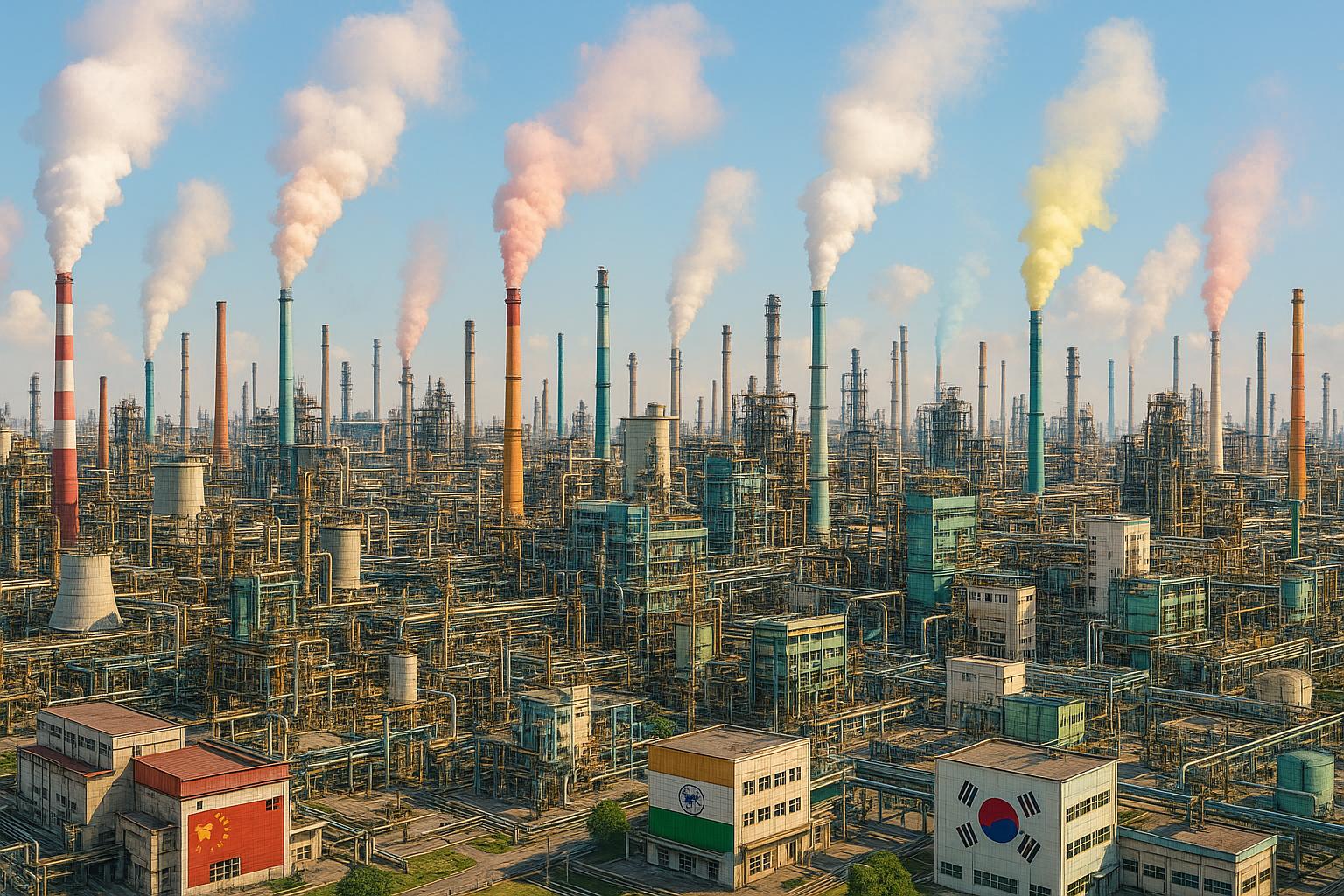
The United States’ dependence on China for pharmaceuticals is less a single-point crisis than a long-built exposure at the base of the drug supply chain. As Y. Tony Yang argues in Asia Times, the real issue is not simply how many finished medicines are imported from China, but how much of the world’s chemical and manufacturing backbone has shifted there over decades of cost-driven outsourcing.
Claims that China supplies 80% to 90% of active pharmaceutical ingredients used in US medicines are too sweeping, according to the US-China Business Council, which says those figures misread the available evidence. Its assessment points to a more modest but still significant dependence, with China responsible for about 12% of foreign-sourced APIs after indirect imports are taken into account. Even so, the broader picture remains troubling: the FDA has acknowledged that it does not have full visibility into actual API production volumes in Chinese facilities or how those ingredients are distributed.
That opacity matters because the supply chain is already highly concentrated. Yang notes that some 477 FDA-registered drug manufacturing facilities operate in China, while the agency inspected only 204 foreign drug and device establishments in fiscal 2024. The Government Accountability Office has separately warned that more than half of the manufacturers supplying the US market are overseas, and that the FDA continues to face a backlog of foreign plants needing inspection because of pandemic disruptions and staffing shortages.
The risk is not abstract. The 2022-23 amoxicillin shortage showed how quickly routine disruption can cascade through the health system, affecting one in three US hospitals, Yang writes. The Journal of Pharmaceutical Innovation has also found that from 2014 to 2024, rising import volumes were associated with fewer inspections, underscoring the strain on oversight as global trade expanded.
What makes the system vulnerable is not only geography but concentration. Yang says roughly 40% of US generic drugs have just one FDA-approved manufacturer, and about 20% of critical medicines rely on APIs sourced solely from China. India is often presented as a fallback, but it too depends heavily on Chinese inputs, limiting how much insulation it can provide on its own.
China’s role is also growing beyond manufacturing into innovation. Yang cites estimates that Chinese entities account for about 20% of drugs under global development, with nearly half of new molecules entering human trials in the first half of 2025 originating from Chinese laboratories. That reflects Beijing’s decision to make biotechnology a strategic industry, supported by state policy, talent recruitment and capital.
For Washington, the practical response is less about decoupling than hardening the system. Yang argues for diversification through dual sourcing, nearshoring and investment in continuous manufacturing. The US-China Business Council’s caution about inflated dependency statistics also suggests that policy should rest on better data, not slogans. The FDA has said it is expanding unannounced inspections of foreign facilities, while lawmakers are advancing measures such as the BIOSECURE Act. But inspections and legislation alone will not rebuild capacity that has been lost over decades.
The larger lesson is that medicine supply is now a question of industrial resilience as much as geopolitics. The US can still lead in drug discovery while rebuilding more of the manufacturing base underneath it, but doing so will require money, time and a tolerance for redundancy in a sector that has long prized efficiency above all else.
Source: Noah Wire Services