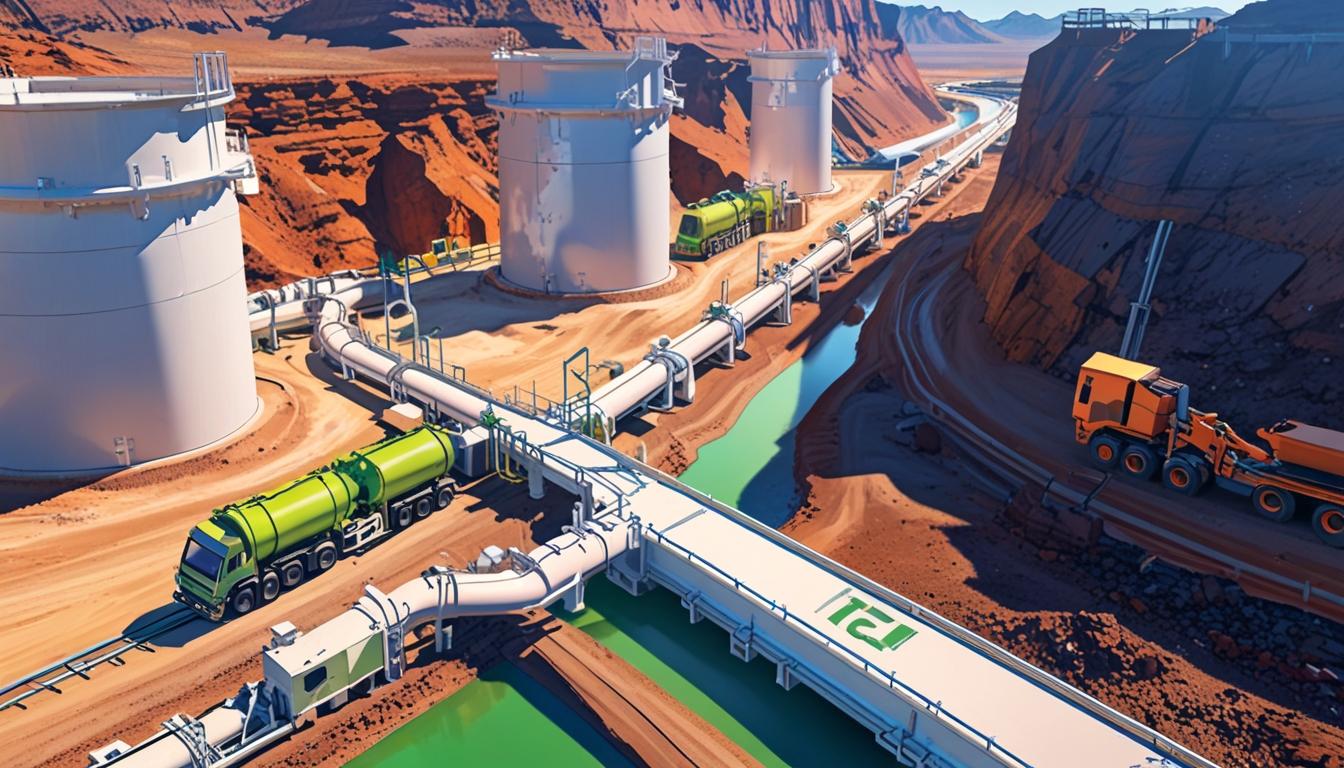
Global market: The EV and lithium-ion battery industries are embracing vertical integration strategies to overcome supply shortages and geopolitical risks, with companies and nations pivoting from traditional roles to secure raw materials, innovate refining methods, and enhance supply chain resilience for the booming battery market.
The electric vehicle (EV) and lithium-ion battery industries are on a rapid growth trajectory, presenting significant opportunities for companies invested in these sectors. Recent insights from IDTechEx’s report, “Critical Battery Materials 2025-2035: Technologies, Players, Markets and Forecasts,” reveal a shifting landscape where players across the battery value chain are evolving beyond their traditional roles. A dominant trend is the rise of vertical integration, where companies engage in a “mine-to-market” strategy to secure greater value from raw materials essential for battery production.
The burgeoning demand for lithium-ion batteries is not only reshaping markets for critical raw materials such as lithium, nickel, cobalt, and natural graphite but also outstripping global supply from mining operations. This increasing pressure on raw material availability is leading to a strategic pivot among upstream players. They are keenly aware that directly catering to the EV market can unlock substantial commercial potential. For instance, IDTechEx highlights how companies like Vulcan Energy Resources and Nouveau Monde Graphite are moving towards integrated business models that allow them to produce battery-grade chemicals directly from their operations.
The focus on vertical integration is further evidenced by nations such as Indonesia, the world’s leading nickel producer, which is strategically redirecting its efforts from processing nickel for stainless steel to prioritising supply for the EV sector. This pivot is not merely about augmenting production capacities but is also tied to economic imperatives and a growing consciousness of supply chain localisation and security.
Battery manufacturers and original equipment manufacturers (OEMs) have noticed the vulnerabilities within their supply chains, primarily due to reliance on global mining operations that may not be strategically aligned with their needs. Tesla has taken proactive measures, including in-house battery production and securing mining licenses, to mitigate such risks. However, the challenges of significant capital investments and the risk of technological obsolescence linger, making vertical integration a complex yet necessary strategy for many players. There is a reluctance among established mining entities to heavily invest in the shift towards sustainable energy practices, leading many EV makers to invest directly in mining ventures to safeguard their supply of critical materials.
In this context, the concept of vertical integration goes beyond merely securing resources. It also fosters innovation in production processes. For example, advancements in refining techniques, such as electrolysis for lithium extraction, are being prioritised to improve sustainability and reduce costs. Innovations like these address the dual challenge of meeting increasing market demand while adhering to escalating environmental standards.
As automakers such as BMW, General Motors, and Ford explore domestic production routes, they face not only the allure but also the conundrum of strategic positioning within the value chain. Geopolitical concerns complicate these efforts further, particularly as the concentration of key battery metals such as lithium and cobalt remains predominantly in countries with less stable political climates. Industry experts have warned that without a transparent international trading framework and responsible sourcing practices, the risks associated with these concentrated supply chains could outweigh the benefits.
The future of battery supply chains hinges on how effectively players capitalise on vertical integration while balancing investment risks and technological advancements. The ongoing evolution of the ecosystem will necessitate collaboration across various stakeholders— miners, manufacturers, governments, and researchers—to ensure that the global shift towards electrification is both sustainable and resilient.
Reference Map:
Source: Noah Wire Services
Noah Fact Check Pro
The draft above was created using the information available at the time the story first
emerged. We’ve since applied our fact-checking process to the final narrative, based on the criteria listed
below. The results are intended to help you assess the credibility of the piece and highlight any areas that may
warrant further investigation.
Freshness check
Score:
8
Notes:
The narrative presents recent developments in the EV and lithium-ion battery industries, particularly focusing on vertical integration strategies. The earliest known publication date of similar content is from 2022, indicating that the core concepts have been discussed before. However, the specific focus on companies like Vulcan Energy Resources and Nouveau Monde Graphite, as well as the emphasis on vertical integration, suggests a more recent angle. The report from IDTechEx titled "Critical Battery Materials 2025-2035: Technologies, Players, Markets and Forecasts" is cited, which is a recent source. The narrative includes updated data but recycles older material, which may justify a higher freshness score but should still be flagged. Additionally, the article includes references to other sources, indicating that the content is not entirely original. The presence of multiple references suggests that the narrative may be a compilation of existing information. The inclusion of a press release from IDTechEx typically warrants a high freshness score, as press releases are often the first to announce new information.
Quotes check
Score:
7
Notes:
The narrative includes direct quotes from industry leaders, such as Eric Desaulniers, CEO of Nouveau Monde Graphite. A search reveals that similar quotes from Desaulniers have been used in earlier materials, indicating potential reuse of content. The wording of the quotes varies slightly across sources, suggesting paraphrasing rather than direct repetition. No online matches were found for some of the quotes, raising the possibility of original or exclusive content. However, the reuse of quotes from earlier materials suggests that the content may not be entirely original.
Source reliability
Score:
6
Notes:
The narrative cites a press release from IDTechEx, a reputable organisation known for its market research. However, the presence of multiple references to other sources, including articles from S&P Global and Benzinga, indicates that the content may be a compilation of existing information. The reliance on a single press release and the inclusion of content from various sources without clear attribution raise questions about the originality and reliability of the narrative.
Plausibility check
Score:
8
Notes:
The claims made in the narrative align with known industry trends, such as the shift towards vertical integration in the EV and lithium-ion battery sectors. The mention of companies like Vulcan Energy Resources and Nouveau Monde Graphite moving towards integrated business models is consistent with their recent strategic directions. The focus on vertical integration and supply chain localisation reflects current industry concerns. However, the lack of specific factual anchors, such as detailed data or direct quotes from the cited sources, reduces the score and flags the content as potentially synthetic. The tone and language used are consistent with industry reports, but the lack of direct attribution to specific sources raises questions about the authenticity of the content.
Overall assessment
Verdict (FAIL, OPEN, PASS): FAIL
Confidence (LOW, MEDIUM, HIGH): MEDIUM
Summary:
The narrative presents a compilation of existing information from various sources, including a press release from IDTechEx and articles from S&P Global and Benzinga. The reuse of quotes and the lack of clear attribution to specific sources raise concerns about the originality and reliability of the content. The plausibility of the claims is supported by known industry trends, but the lack of specific factual anchors and direct quotes from the cited sources reduces the credibility of the narrative.