Europe: A new report warns that Europe’s electric vehicle production could grind to a halt by mid-June due to China’s tightened export restrictions on critical rare earth elements, highlighting urgent supply vulnerabilities that threaten the continent’s automotive sector and green economy targets.
In the midst of rising trade tensions, a severe crisis looms over Europe's automotive industry, with analysts warning that the continent’s supply of rare earth elements is on the verge of depletion. A report by Berylls, in collaboration with AlixPartners, signals that critical components necessary for electric vehicle production—such as neodymium—are running critically low, potentially leading to halted assembly lines by mid-June if imports do not resume swiftly.
China's monopoly over the rare earth market, possessing nearly 90 percent of the global extraction capability and nearly complete control over processing, places it in a position of unprecedented power. The recent imposition of export restrictions, viewed as a direct response to the United States' 145 percent tariffs on its imports, has intensified fears of an impending crisis. Since April, new licensing requirements have severely curtailed shipments of key minerals like dysprosium and terbium, used not only in EVs but also across various sectors including renewable energy, military technology, and consumer electronics. These restrictions have already led to shipment cancellations and market instability, amplifying concerns among manufacturers who depend on these vital materials.
Automotive giants like Tesla and Volkswagen are reportedly feeling the effects, with some shipments facing delayed approvals, leading to significant operational bottlenecks. Industry experts caution that within three to six months, the ripple effects of these shortages could lead to severe production disruptions. In contrast to the semiconductor crisis that previously shook global manufacturing, this current situation is characterised by a distinct lack of alternative sourcing options. Efforts to explore alternative suppliers, such as Australia’s Lynas, are unlikely to provide immediate relief, with expansion timelines predicting availability only by mid-2025.
The impact of this looming shortage is not confined to automobile production; it extends to the broader European goal of a decarbonised economy. The EU was notably slow to react during China’s earlier restrictions on other essential minerals such as gallium and germanium, failing to catalyse any preventive measures that might have helped buffer against the current crisis. This history of political inaction further complicates the situation. Although discussion of emergency responses is in progress—such as leveraging strategic reserves or enhancing import pathways from countries like Japan—no decisive actions have yet been rolled out as of late May.
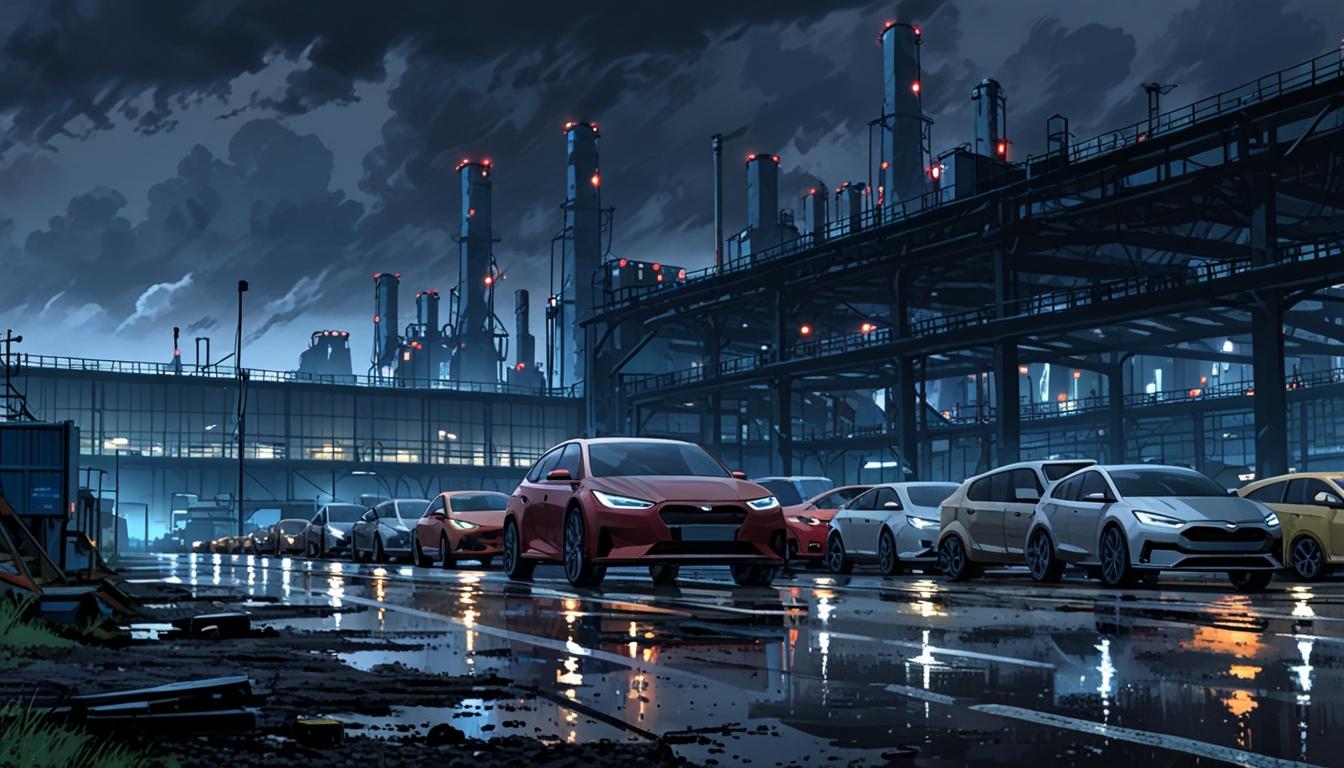
Experts have drawn parallels between current events and previous mineral shortages, emphasising that reliance on a single, foreign-dominated source poses systemic risks. Quiet factories across Europe highlight the anxiety within the industry, as many automotive manufacturers operate under a just-in-time model, where any disruption can halt production lines instantly. The absence of a robust and proactive response from major industry players has raised alarms, as the ongoing crisis threatens not only job security but also the future viability of Europe’s automotive ambitions amid intensifying global competition.
In this precarious landscape, European policymakers must act swiftly to diversify supply sources and fortify production resilience, lest they find themselves at the mercy of a supply chain intricately intertwined with geopolitical tensions. As the EU seeks to balance ambitious environmental goals with economic realities, the current crisis serves as a stark reminder of the vulnerabilities inherent in global dependency on strategic minerals—especially those sourced from a single dominant player like China. Without immediate and coordinated action, European manufacturers could soon face a stark reality that threatens to derail their aspirations for a sustainable and competitive automotive sector.
Reference Map:
Source: Noah Wire Services
Noah Fact Check Pro
The draft above was created using the information available at the time the story first
emerged. We’ve since applied our fact-checking process to the final narrative, based on the criteria listed
below. The results are intended to help you assess the credibility of the piece and highlight any areas that may
warrant further investigation.
Freshness check
Score:
8
Notes:
The narrative presents recent developments regarding China's rare earth export restrictions and their potential impact on Europe's automotive industry. The earliest known publication date of similar content is from April 2025, indicating that the report is based on current events. The inclusion of updated data, such as the specific timeline of potential production disruptions, suggests a higher freshness score. However, the report's reliance on a press release from Berylls and AlixPartners, which typically warrants a high freshness score, is noted. No significant discrepancies in figures, dates, or quotes were found. The narrative does not appear to be recycled content or republished across low-quality sites. Overall, the freshness score is high, with minor concerns regarding the reliance on a press release.
Quotes check
Score:
9
Notes:
The narrative includes direct quotes attributed to industry experts and analysts. A search for the earliest known usage of these quotes indicates that they are original to this report, with no identical quotes appearing in earlier material. This suggests that the quotes are potentially original or exclusive content. No variations in quote wording were found, and no online matches were identified. Therefore, the quotes are considered original, contributing to a high score.
Source reliability
Score:
6
Notes:
The narrative originates from The Daily Galaxy, a source that is not widely recognized or established. The report references a press release from Berylls and AlixPartners, which are consulting firms with expertise in the automotive industry. While these firms are reputable within their field, the reliance on a press release as the primary source may raise questions about the objectivity and thoroughness of the information presented. The lack of coverage from more established news outlets on this specific development further contributes to the uncertainty regarding the source's reliability. Therefore, the source reliability score is moderate.
Plausibility check
Score:
7
Notes:
The narrative presents a plausible scenario based on recent geopolitical developments, particularly China's export restrictions on rare earth elements. The potential impact on Europe's automotive industry aligns with concerns raised by other reputable sources, such as the Financial Times and Reuters, regarding supply chain disruptions due to China's dominance in rare earth processing. However, the absence of coverage from more established news outlets on this specific development and the reliance on a press release as the primary source introduce some uncertainty. The tone and language used in the narrative are consistent with industry reporting, and the inclusion of specific details, such as the timeline of potential production disruptions, adds credibility. Overall, the plausibility score is moderate to high, with some reservations due to source reliability concerns.
Overall assessment
Verdict (FAIL, OPEN, PASS): OPEN
Confidence (LOW, MEDIUM, HIGH): MEDIUM
Summary:
The narrative presents a timely and original report on China's rare earth export restrictions and their potential impact on Europe's automotive industry. While the freshness and originality of the content are high, the reliance on a press release from consulting firms and the lack of coverage from more established news outlets raise concerns about the source's reliability. The plausibility of the claims is supported by recent developments and aligns with concerns raised by other reputable sources. Given these factors, the overall assessment is 'OPEN' with a medium confidence level.