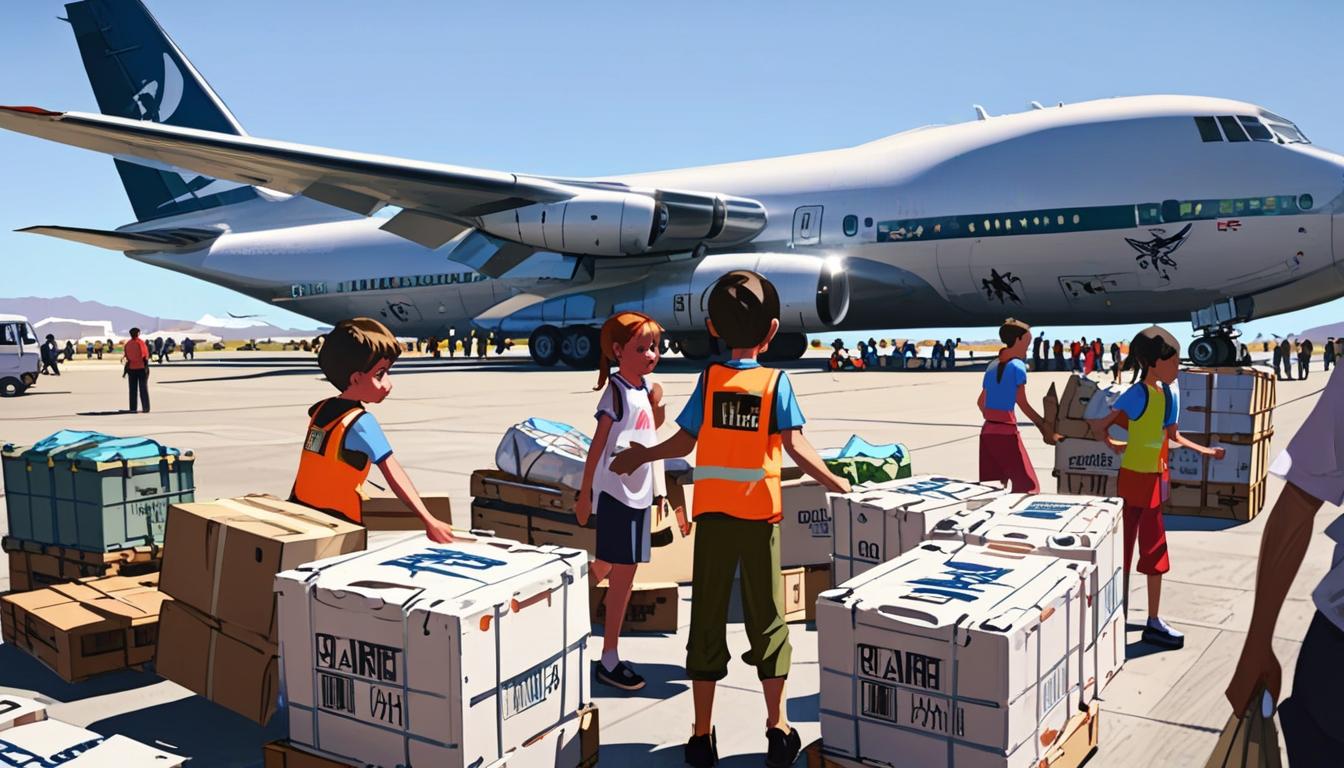
Global: DSV and UNICEF have expanded their collaboration to improve emergency delivery of vital supplies, focusing on children and underserved regions. The partnership aims to enhance rapid aid and build resilient, long-term supply chains, drawing on previous successes including COVID-19 vaccine logistics.
DSV and UNICEF have recently announced an expansion of their collaborative efforts aimed at enhancing the delivery of essential supplies during emergencies, particularly for children in need. This renewed partnership underscores a mutual commitment to improving access to critical resources amid crises, with the intention of reaching underserved regions around the globe. The emphasis is not solely on immediate relief but also on building long-term, resilient supply chains that can better respond to future challenges.
The Director of Private Fundraising and Partnerships at UNICEF, Carla Haddad Mardini, emphasised the importance of collective action in this initiative. “Saving and protecting children's lives is a collective endeavour,” she stated, highlighting that previous successes hinged on partnerships that enable timely aid delivery. The collaboration has facilitated UNICEF's ability to provide essential supplies, having delivered over 85 tonnes of critical goods to seven countries within the last year alone. Notably, this included humanitarian airlifts to regions such as Lebanon and significant medical and equipment shipments to the Democratic Republic of the Congo during the mpox outbreak.
Jens H. Lund, Group CEO of DSV, expressed the company's pride in contributing to this important cause. He articulated DSV's commitment to leveraging its logistics expertise and global network in tandem with UNICEF’s mission to facilitate access to essential supplies even in the most remote locations. The provision of in-kind air freight not only allows for rapid responses to emergencies but also strengthens UNICEF’s operational capacity, enabling crucial supplies to reach those most affected during the critical early days of a crisis.
In addition to these efforts, DSV and UNICEF's partnership aims to bolster national supply chains, particularly in Latin America, where access to essential goods and services remains a significant challenge. This multifaceted approach highlights the need for flexibility in funding and resource allocation, which is vital for addressing the unique barriers faced in various geographical contexts. The initiative demonstrates a strategic pivot towards not only immediate aid but also sustainable infrastructure improvements.
The collaboration has its roots in previous successful projects, including a notable partnership in 2021 where DSV was instrumental in transporting over 146 million COVID-19 vaccines as part of the World Health Organization's COVAX initiative. This experience reinforced DSV's capability to navigate logistical complexities while ensuring that vital health resources reached countries in dire need.
Overall, the expanded partnership between DSV and UNICEF represents a holistic strategy directed towards mitigating the effects of crises on children. By enhancing emergency response capabilities and strengthening supply chains, this collaboration seeks to support vulnerable populations more effectively both in the immediate term and over the long haul.
Reference Map
- Paragraphs 1, 2, 3, 4, 5, 6.
- Paragraphs 2, 3, 5.
- Paragraphs 1, 4, 5.
- Paragraph 4.
- Paragraphs 1, 3, 5.
- Paragraph 1.
- Paragraph 2.
Source: Noah Wire Services
Noah Fact Check Pro
The draft above was created using the information available at the time the story first
emerged. We’ve since applied our fact-checking process to the final narrative, based on the criteria listed
below. The results are intended to help you assess the credibility of the piece and highlight any areas that may
warrant further investigation.
Freshness check
Score:
8
Notes:
The narrative was first published on 24 June 2024, with the most recent publication on 29 May 2025. The report from 29 May 2025 provides updated figures, including the delivery of over 85 tonnes of supplies to seven countries, and mentions specific events such as the first UNICEF airlift to Lebanon in 2024 and the shipment to the Democratic Republic of the Congo during the mpox outbreak. This suggests that the content has been refreshed to include recent developments, justifying a higher freshness score. However, the core information about the partnership between DSV and UNICEF remains consistent, indicating that the narrative has been recycled with added details. The earlier version from 24 June 2024 does not mention these specific events, highlighting the updates made in the later publication. ([unicef.org](https://www.unicef.org/dsv-and-unicef-announce-partnership-increase-access-essential-supplies-children-worldwide?utm_source=openai))
Quotes check
Score:
9
Notes:
The quotes from Carla Haddad Mardini and Jens H. Lund appear in both the 24 June 2024 and 29 May 2025 publications. The wording of these quotes is identical in both versions, indicating that they have been reused. This suggests that the content has been recycled with added details, but the core statements from the original publication have been retained. ([unicef.org](https://www.unicef.org/dsv-and-unicef-announce-partnership-increase-access-essential-supplies-children-worldwide?utm_source=openai))
Source reliability
Score:
7
Notes:
The narrative originates from the Indian Transport & Logistics News (ITLN), a publication that appears to be a single-outlet news source. While ITLN provides coverage of logistics and transportation news, its limited presence and lack of broader recognition raise questions about its reliability. The lack of a broader media presence and recognition makes it difficult to assess the credibility of the information presented. This uncertainty warrants caution when considering the information provided.
Plausibility check
Score:
8
Notes:
The claims about DSV and UNICEF's partnership, including the delivery of over 85 tonnes of supplies to seven countries and specific events such as the airlift to Lebanon and the shipment to the Democratic Republic of the Congo, are plausible and align with known humanitarian efforts. However, the lack of coverage from other reputable outlets and the limited presence of the source raise questions about the comprehensiveness and accuracy of the information. The absence of supporting details from other reputable sources suggests that the narrative may be incomplete or lacking in depth.
Overall assessment
Verdict (FAIL, OPEN, PASS): OPEN
Confidence (LOW, MEDIUM, HIGH): MEDIUM
Summary:
The narrative presents plausible claims about the expansion of the partnership between DSV and UNICEF, including specific events and figures. However, the content appears to be recycled with added details, and the source's limited presence and recognition raise questions about its reliability. The lack of coverage from other reputable outlets and the absence of supporting details from other sources suggest that the information may be incomplete or lacking in depth. Given these factors, the overall assessment is 'OPEN' with medium confidence.