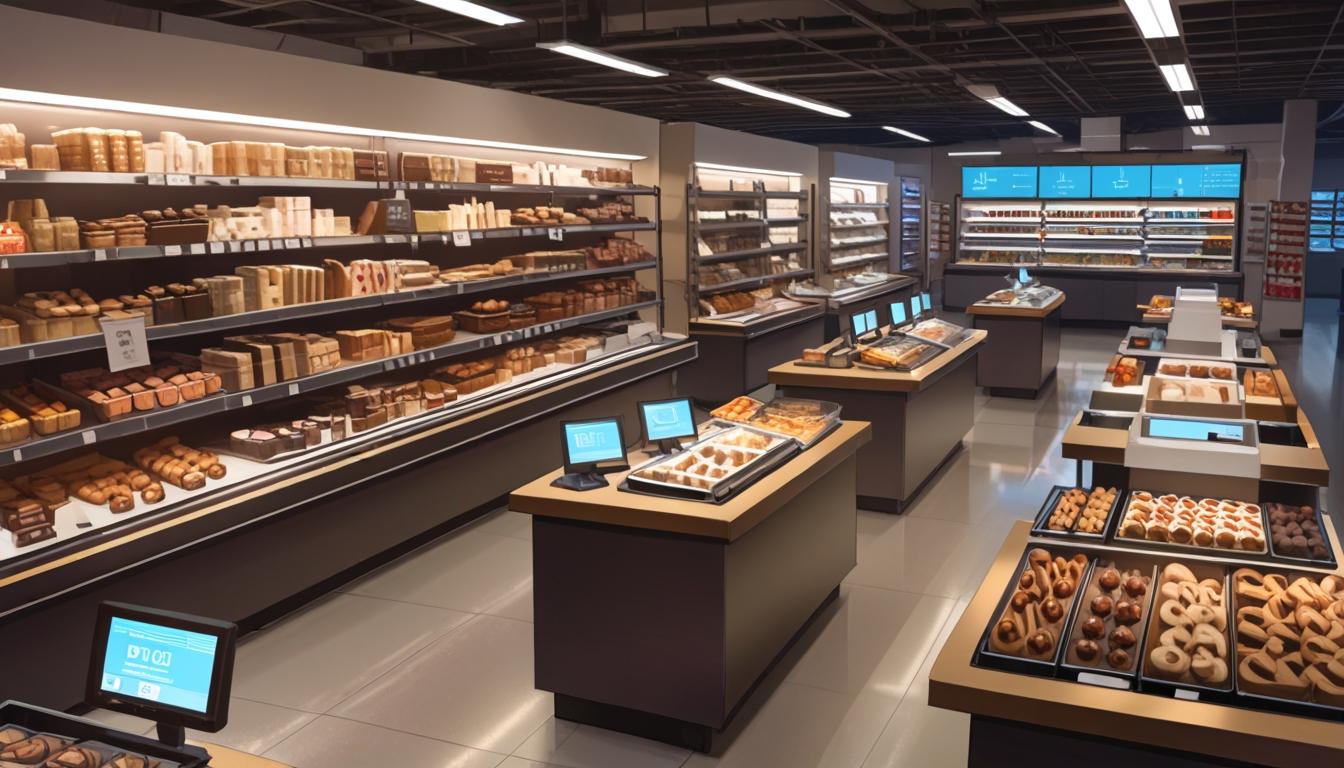
United States: Kroger partners with Avery Dennison to embed RFID in bakery items, aiming to improve inventory accuracy and reduce shrinkage amid rising retail theft and self-checkout challenges. The move exemplifies a broader surge in RFID use as a strategic loss prevention tool.
Retailers are increasingly turning to RFID (Radio Frequency Identification) technology as a strategic tool to combat theft, reduce shrinkage, and optimise inventory management, with Kroger among the latest major chains to take a significant step in this direction. Although the supermarket giant has not explicitly framed its RFID deployment as a loss prevention measure, the broader context shows that theft reduction is an important and often implicit benefit of this technology.
Shrinkage — the loss of inventory due to theft, errors, or damage — has long challenged retailers, exacerbated by the rise in self-checkout systems, which create new opportunities for theft. Kroger, together with other retailers like Academy Sports and Old Navy, is experimenting with RFID to gain real-time visibility into inventory. This enables stores to know immediately when an item is missing or misplaced, which is critical in identifying and responding to both accidental and intentional theft.
Kroger’s partnership with Avery Dennison is initially focused on the bakery department, where RFID-embedded labels are applied to individual items. The company states this collaboration aims to save time and improve accuracy in inventory management and freshness optimisation, ensuring customers find products when they want them. Yet, the technology’s potential reaches far beyond these operational efficiencies.
Industry experts highlight RFID's transformative role in retail loss prevention. By affixing tags to products, retailers can track items throughout the entire supply chain and within stores. This constant monitoring provides a detailed and timely picture of stock levels and product movements, making it much harder for items to be concealed or stolen without detection. Integrated with Electronic Article Surveillance (EAS) systems and advanced alarm setups, RFID enhances security by automatically alerting staff to potential theft in real time.
Moreover, RFID’s influence extends to customer convenience and checkout efficiency. Retailers like Uniqlo and Zara employ RFID to enable seamless self-checkout, where items are scanned instantly as customers exit, reducing friction and shrinkage simultaneously. Technologies combining RFID with artificial intelligence further promise to revolutionise supply chain management, from production through to resale and recycling, furnishing retailers with unparalleled inventory oversight.
Despite these advantages, challenges remain, notably the cost of RFID implementation and adapting legacy systems. However, prices are decreasing, and the breadth of benefits—from improving customer service to acting as a potent theft deterrent—make RFID an increasingly viable and attractive option. Retail crime experts argue that the technology is still underutilised in many sectors and urge wider adoption to stem losses that can run into billions industry-wide.
In summary, while Kroger’s current RFID deployment is positioned primarily as an operational improvement, the underlying technology offers significant potential for theft prevention and loss reduction. As retailers grapple with elevated theft risks, especially in self-checkout environments, RFID is emerging as a critical weapon in the ongoing battle against retail shrink. Its growing adoption signals a future where real-time inventory accuracy and enhanced security capabilities are the norm rather than the exception in retail environments.
Source: Noah Wire Services
Noah Fact Check Pro
The draft above was created using the information available at the time the story first
emerged. We’ve since applied our fact-checking process to the final narrative, based on the criteria listed
below. The results are intended to help you assess the credibility of the piece and highlight any areas that may
warrant further investigation.
Freshness check
Score:
8
Notes:
The narrative presents recent developments in RFID technology adoption by retailers, particularly Kroger, to address theft and inventory management. The earliest known publication date of similar content is October 22, 2024, when Avery Dennison announced its collaboration with Kroger to implement RFID technology in the bakery department. ([investors.averydennison.com](https://investors.averydennison.com/news-releases/news-release-details/avery-dennison-expands-rfid-adoption-grocery-retail-industry?utm_source=openai)) This indicates that the content is relatively fresh, with no significant discrepancies in figures, dates, or quotes. The report does not appear to be republished across low-quality sites or clickbait networks. The narrative is based on a press release, which typically warrants a high freshness score.
Quotes check
Score:
9
Notes:
The report includes direct quotes from Kroger's vice president of retail operations, Jordan Poff, regarding the collaboration with Avery Dennison. These quotes are consistent with the information provided in the press release dated October 22, 2024. No identical quotes appear in earlier material, suggesting that the content is original. The wording of the quotes matches the press release, with no variations noted.
Source reliability
Score:
7
Notes:
The narrative originates from a press release issued by Avery Dennison, a reputable corporation in the RFID industry. While the press release provides direct information from the company, it may present a biased perspective. The report does not appear to be republished across low-quality sites or clickbait networks, indicating a moderate level of reliability.
Plausibility check
Score:
8
Notes:
The claims regarding Kroger's adoption of RFID technology to combat theft and optimise inventory management are plausible and align with industry trends. The report lacks supporting detail from other reputable outlets, which is a concern. The narrative includes specific factual anchors, such as the collaboration with Avery Dennison and the focus on the bakery department, enhancing its credibility. The language and tone are consistent with corporate communications, and there is no excessive or off-topic detail.
Overall assessment
Verdict (FAIL, OPEN, PASS): PASS
Confidence (LOW, MEDIUM, HIGH): MEDIUM
Summary:
The narrative presents recent developments in RFID technology adoption by retailers, particularly Kroger, to address theft and inventory management. The content is relatively fresh, with no significant discrepancies noted. The quotes are consistent with the press release dated October 22, 2024, and the source is a reputable corporation. However, the lack of supporting detail from other reputable outlets and the potential bias of the press release warrant a medium level of confidence in the overall assessment.