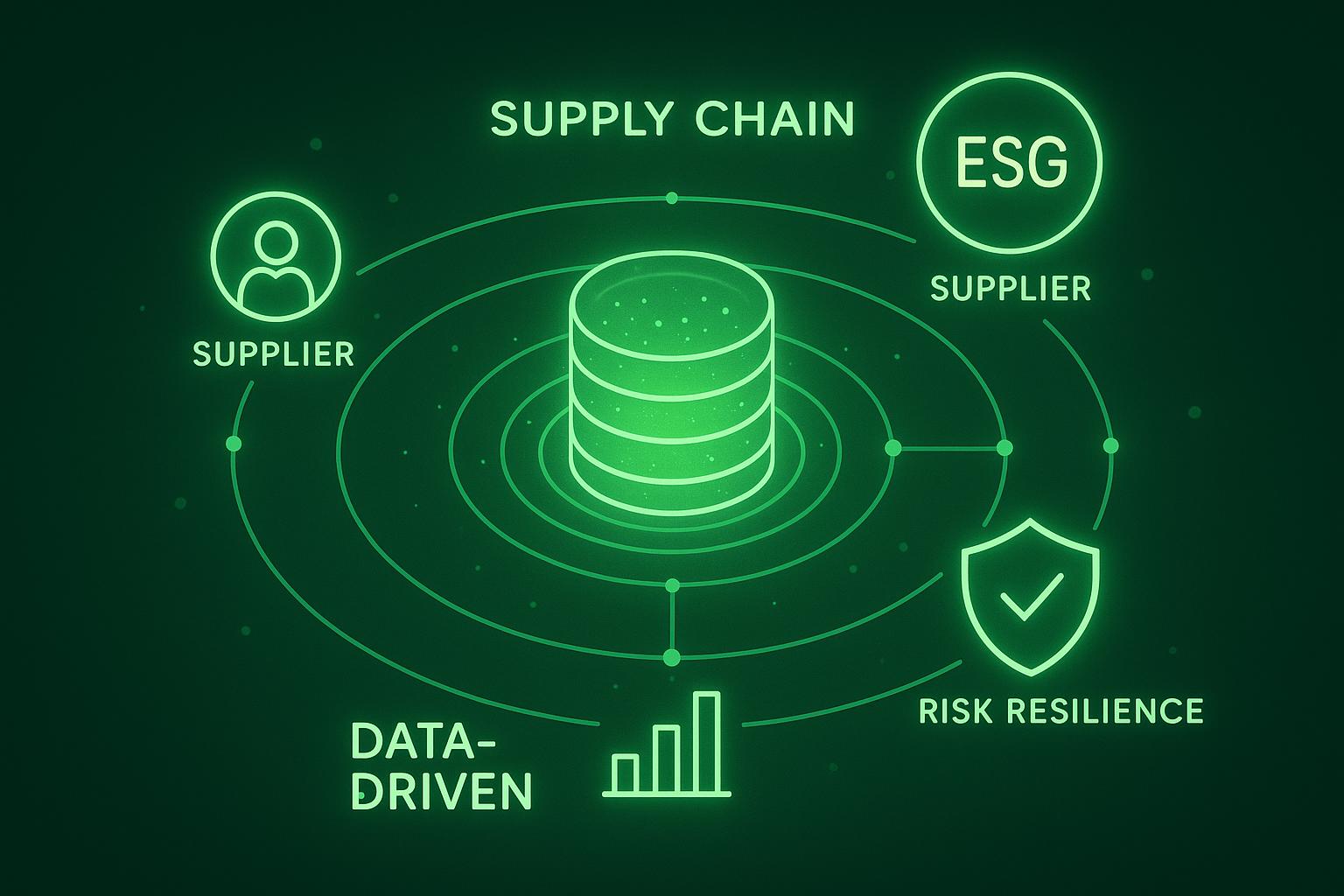
New data from Amazon Business underscores that procurement leaders are embedding ESG metrics into supplier selection, contracting and ongoing management, turning sustainability into a core business input. With 33% naming supply-chain disruption and 25% political volatility as top risks for the next 12-24 months, resilience and responsibility are now central to growth.
The rise of the conscious B2B buyer, once a trend whispered in sustainability reports, has hardened into a core criterion shaping procurement decisions across sectors. Buyers are no longer content with opportunistic ESG pledges or greenwashed supplier lists; they are increasingly seeking partners whose values align with their own commitments to environmental and social responsibility. The latest data from Amazon Business underscores this shift, revealing that supply chain disruptions and political instability are the principal concerns for procurement leaders as they plan for the next 12–24 months. In the 2025 State of Procurement data, 33% flag supply-chain disruption as the most likely risk and 25% worry about political volatility. The message is clear: resilience and responsibility are inseparable, and procurement sits at the fulcrum.
Two-thirds of a company’s ESG footprint lies with suppliers, McKinsey notes in its ESG premium framework, making supplier performance not a back-office concern but a strategic imperative. For procurement teams, this means embedding ESG into the heart of supplier selection, contracting, and ongoing management rather than treating it as an add-on. The payoff, according to industry analysis, can be a faster growth trajectory and a more valuable, better-positioned business when ESG credentials are credible and verifiable. In practice, this translates into baseline emissions mapping across the supply chain, integrating ESG metrics into supplier reviews, and treating sustainability data as a core business input rather than a regulatory obligation.
Yet the path to truly responsible procurement is not simply a matter of aim and aspiration. Harvard Business Review’s analysis of supplier risk from a decade ago still resonates: reputational harm from suppliers can derail brands, and codes of conduct plus regular audits are essential to shield a company from missteps that originate upstream. The report argues for proactive supplier management—requiring ESG documentation, monitoring compliance, and aligning procurement decisions with brand protection. In today’s market, that approach has only grown more important as brands seek not just cost and quality, but trust and resilience across the supply chain.
From a practical standpoint, professional bodies and commercial ecosystems are pushing the same message with renewed urgency. McKinsey’s Resource Cleansheet framework maps a product’s cost and CO2 footprint along its entire value stream, enabling procurement leaders to quantify trade-offs between price, performance and carbon at every step. The tool is designed to translate sustainability ambitions into actionable decisions—helping teams see where emissions reductions also drive cost savings, and where incremental improvements yield the greatest return. The approach reinforces the idea that procurement decisions must be data-driven, cross-functional, and auditable if they are to withstand scrutiny from regulators, investors and customers.
Within the procurement leadership community, the trend toward sustainability is being reinforced by AI-enabled capabilities. The ProcureCon CPO landscape, as summarized by Icertis from its 2024 and 2025 surveys, shows that a majority of chief procurement officers now play a moderate to large role in steering sustainability outcomes, with ESG and sustainability goals explicitly prioritised in planning and reporting. AI adoption is accelerating as well, with large swathes of procurement activity moving toward contract intelligence and analytics to monitor ESG compliance and risk. In short, sustainability is becoming a core competency of the procurement function, not a peripheral add-on.
This expanding remit sits against a broader narrative about the strategic importance of procurement for corporate growth. The World Economic Forum argues that sustainability is a growth enabler rather than a compliance burden. Data from NielsenIQ and Boston Consulting Group, cited by the Forum, show that consumer expectations are shifting and innovation flourishes when sustainability is embedded in strategy. Procurement, with its unique vantage point over sourcing, logistics and supplier relationships, is increasingly viewed as the driver of green growth—especially as supply chains account for the majority of a company’s emissions. The Forum’s analysis also points toward nature-positive procurement and circular models as concrete avenues for value creation, not just risk mitigation.
The COP29 era has amplified the sense that procurement must lead the sustainability agenda. In a World Economic Forum briefing and accompanying interviews, CPOs describe a need to move beyond cost, speed and quality toward a multi-dimensional leadership role. They emphasise the importance of data-driven decision-making, transparent supplier collaboration, and the integration of ESG metrics into strategic planning. The overarching thrust is clear: procurement should co-create value with sustainability at the core, delivering measurable economic and environmental benefits for the enterprise and broader society.
Taken together, the body of evidence suggests a practical playbook for organisations aiming to align procurement with sustainability and resilience:
Baseline and benchmark. Start with a clear map of scope 1–3 emissions and a data-driven assessment of supplier performance. McKinsey’s approach shows how to translate ESG commitments into concrete baselines that inform supplier selection and ongoing collaboration. This is not a one-off exercise; it must be refreshed regularly as products, markets and regulatory expectations evolve.
Embed ESG in all supplier interactions. The Harvard Business Review analysis underscores that supplier audits, codes of conduct and continuous monitoring are essential for protecting brand integrity. The business case is reinforced by evidence that robust supplier governance reduces disruption risk and strengthens trust with customers and regulators alike.
Leverage contract and data analytics. AI-enabled procurement tools can extract ESG metrics from supplier data, monitor performance, and flag anomalies. Icertis highlights that a significant share of CPOs are integrating ESG considerations into contracting workflows, using data analytics to balance risk, compliance and value creation.
Treat sustainability as a growth and resilience driver. WEF’s ecosystem view suggests that procurement’s leadership in green sourcing, smarter logistics and supplier collaboration can unlock significant value, including the potential for nature-positive outcomes and circular business models.
Communicate and coordinate across the organisation. Chief procurement officers are increasingly central to the sustainability conversation, collaborating with finance, sustainability and product teams to articulate the business case for green procurement and to secure the executive sponsorship needed to scale change.
Be credible and transparent with stakeholders. With ESG reporting standards continuing to evolve, organisations that can quantify financial impact, provide auditable metrics and benchmark against peers will command greater trust from investors, customers and employees.
For procurement leaders, the current moment is both an obligation and an opportunity. The market signals are clear: sustainability is no longer a niche issue; it is a core driver of supplier selection, risk management and competitive advantage. As the data mature and tools proliferate, procurement teams that couple robust supplier governance with rigorous data insights will be best positioned to navigate the turbulence forewarned by the latest risk assessments while delivering real value in innovation, cost management and resilience.
Source Panel
- The Rise of the Conscious B2B Buyer — lead article, Green Redeem
- Manage the Suppliers That Could Harm Your Brand — Harvard Business Review (authors Jodi L. Short, Michael W. Toffel)
- Buying into a More Sustainable Value Chain — McKinsey
- Icertis ProcureCon CPO Report — ProcureCon/SDCE reporting on Icertis data
- The ESG Premium — McKinsey
- Unlocking Sustainability and Green Growth — World Economic Forum
- Chief Procurement Officers Leading the Charge on Sustainability — World Economic Forum
If you would like, I can tailor the piece to a specified length, or weave in additional data points from the sources above to align with a particular industry or audience.
Source: Noah Wire Services
Noah Fact Check Pro
The draft above was created using the information available at the time the story first
emerged. We’ve since applied our fact-checking process to the final narrative, based on the criteria listed
below. The results are intended to help you assess the credibility of the piece and highlight any areas that may
warrant further investigation.
Freshness check
Score:
7
Notes:
✅ The narrative is recent and hosted on Greenredeem's site (page shows 2025 site content). ([greenredeem.co.uk](https://www.greenredeem.co.uk/the-rise-of-the-conscious-b2b-buyer/)) ▪️ Much of the piece is an aggregation of already‑published reports and industry briefs rather than breaking original research. Key cited data (Amazon Business 2025 State of Procurement) is linked from the post itself. ([greenredeem.co.uk](https://www.greenredeem.co.uk/the-rise-of-the-conscious-b2b-buyer/)) ▪️ Similar or substantially matching themes/data appear in industry reports published earlier in 2024–2025 (ProcureCon/Icertis 2024–2025 briefs) — so elements are recycled or summarised from those publications rather than exclusively new reporting. ([icertis.com](https://www.icertis.com/company/news/86-of-procurement-leaders-are-spearheading-sustainability-initiatives-according-to-icertis-sponsored-study?utm_source=chatgpt.com)) ▪️ Established consulting frameworks referenced (McKinsey Resource Cleansheet / cleansheet work) date back to 2020–2025 and are re-used here; earliest substantial matching material for that concept appears in McKinsey content from 2020 onwards. ([upgrade.mckinsey.com](https://upgrade.mckinsey.com/capabilities/operations/our-insights/design-cost-effective-carbon-abated-products-with-resource-cleansheets?utm_source=chatgpt.com), [mckinsey.com](https://www.mckinsey.com/capabilities/operations/how-we-help-clients/cleansheet/resource-cleansheet?utm_source=chatgpt.com)) ▪️ Flag: If editors expect wholly original, exclusive coverage this is recycled/aggregated content. 🕰️ If any component first published >7 days earlier (e.g. Icertis/ProcureCon findings), that reduces freshness for novelty purposes. ⚠️
Quotes check
Score:
8
Notes:
✅ No exclusive, attributable interview quotations unique to the Greenredeem piece were located on the page — the post paraphrases and cites external reports (Amazon Business, McKinsey, Icertis, WEF, HBR) rather than presenting novel quoted soundbites. ([greenredeem.co.uk](https://www.greenredeem.co.uk/the-rise-of-the-conscious-b2b-buyer/), [mckinsey.com](https://www.mckinsey.com/capabilities/operations/how-we-help-clients/cleansheet/resource-cleansheet?utm_source=chatgpt.com), [icertis.com](https://www.icertis.com/company/news/90-of-procurement-leaders-to-adopt-ai-agents-in-2025-according-to-icertis-sponsored-study/?utm_source=chatgpt.com), [library.hbs.edu](https://www.library.hbs.edu/working-conditions-in-supply-chains/citations/manage-the-suppliers-that-could-harm-your-brand-know-when-to-avoid-engage-or-drop-them?utm_source=chatgpt.com)) ▪️ Where short quoted language appears in industry press releases (e.g. Icertis statements in their CPO report release), identical wording appears in the vendor press materials — indicating reuse of vendor quotes rather than original interviewing. ([icertis.com](https://www.icertis.com/company/news/90-of-procurement-leaders-to-adopt-ai-agents-in-2025-according-to-icertis-sponsored-study/?utm_source=chatgpt.com)) ▪️ No unique direct quotes were found that lack an earlier online footprint; that suggests the article draws on existing published commentary rather than publishing exclusive quotes. ⚠️
Source reliability
Score:
7
Notes:
✅ The narrative references high‑reliability organisations and frameworks: Harvard Business Review analysis (HBR, academic authors), McKinsey frameworks (Resource Cleansheet), Icertis/ProcureCon reports, Amazon Business research and World Economic Forum material — all findable online. ([library.hbs.edu](https://www.library.hbs.edu/working-conditions-in-supply-chains/citations/manage-the-suppliers-that-could-harm-your-brand-know-when-to-avoid-engage-or-drop-them?utm_source=chatgpt.com), [mckinsey.com](https://www.mckinsey.com/capabilities/operations/how-we-help-clients/cleansheet/resource-cleansheet?utm_source=chatgpt.com), [icertis.com](https://www.icertis.com/company/news/90-of-procurement-leaders-to-adopt-ai-agents-in-2025-according-to-icertis-sponsored-study/?utm_source=chatgpt.com), [greenredeem.co.uk](https://www.greenredeem.co.uk/the-rise-of-the-conscious-b2b-buyer/)) ▪️ However, the host is Greenredeem — a commercial sustainability platform/blog (company content/marketing) rather than an independent editorial publisher; this context should be treated as commercial commentary that aggregates reputable materials and promotes Greenredeem’s product. ([greenredeem.co.uk](https://www.greenredeem.co.uk/the-rise-of-the-conscious-b2b-buyer/)) ▪️ Flag: Narrative provenance is single‑outlet (company blog) that cites reputable third parties — strength comes from the cited organisations, but the host’s commercial motive lowers independence. ⚠️‼️
Plausibility check
Score:
8
Notes:
✅ Claims align with industry reporting: procurement leaders emphasising supply‑chain risk, ESG integration, and AI in procurement are documented across ProcureCon/Icertis briefings and other industry coverage. ([icertis.com](https://www.icertis.com/company/news/90-of-procurement-leaders-to-adopt-ai-agents-in-2025-according-to-icertis-sponsored-study/?utm_source=chatgpt.com), [gep.com](https://www.gep.com/research-reports/the-2025-annual-procurecon-cpo-report?utm_source=chatgpt.com)) ▪️ Specific numeric claims shown on the Greenredeem page (33% citing supply‑chain disruption; 25% political volatility) match the Amazon Business 2025 State of Procurement reference linked on the page. ([greenredeem.co.uk](https://www.greenredeem.co.uk/the-rise-of-the-conscious-b2b-buyer/)) ▪️ The McKinsey cleansheet/resource‑cleansheet framing and HBR supplier risk guidance are reputable and consistent with the recommendations presented. ([upgrade.mckinsey.com](https://upgrade.mckinsey.com/capabilities/operations/our-insights/design-cost-effective-carbon-abated-products-with-resource-cleansheets?utm_source=chatgpt.com), [library.hbs.edu](https://www.library.hbs.edu/working-conditions-in-supply-chains/citations/manage-the-suppliers-that-could-harm-your-brand-know-when-to-avoid-engage-or-drop-them?utm_source=chatgpt.com)) ▪️ Missing detail / risk: the piece summarises multiple reports without always providing direct links or dates for every claim (though some are linked); where Greenredeem paraphrases external work, exact figures or context could differ slightly from originals — editors should cross‑check original PDFs for precise wording/percentages before re‑reporting. ⚠️
Overall assessment
Verdict (FAIL, OPEN, PASS): OPEN
Confidence (LOW, MEDIUM, HIGH): MEDIUM
Summary:
✅ The narrative is credible as an aggregation of established industry material and reputable frameworks (McKinsey Resource Cleansheet, HBR supplier‑risk analysis, Icertis/ProcureCon findings, Amazon Business 2025 survey, WEF commentary). ([mckinsey.com](https://www.mckinsey.com/capabilities/operations/how-we-help-clients/cleansheet/resource-cleansheet?utm_source=chatgpt.com), [library.hbs.edu](https://www.library.hbs.edu/working-conditions-in-supply-chains/citations/manage-the-suppliers-that-could-harm-your-brand-know-when-to-avoid-engage-or-drop-them?utm_source=chatgpt.com), [icertis.com](https://www.icertis.com/company/news/90-of-procurement-leaders-to-adopt-ai-agents-in-2025-according-to-icertis-sponsored-study/?utm_source=chatgpt.com), [greenredeem.co.uk](https://www.greenredeem.co.uk/the-rise-of-the-conscious-b2b-buyer/)) ▪️ Major risks: the piece is hosted on Greenredeem (commercial blog) and appears to repackage previously published research and vendor press releases rather than reporting new, independently verified findings — this reduces novelty and editorial independence. ⚠️‼️ ▪️ Freshness note: several constituent elements (Icertis/ProcureCon reports, McKinsey material, Amazon Business survey) were published prior to this blog and are being summarised; where those materials were published more than 7 days earlier, the Greenredeem post should be treated as a repackaging rather than original breaking news. 🕰️ ([icertis.com](https://www.icertis.com/company/news/86-of-procurement-leaders-are-spearheading-sustainability-initiatives-according-to-icertis-sponsored-study?utm_source=chatgpt.com), [upgrade.mckinsey.com](https://upgrade.mckinsey.com/capabilities/operations/our-insights/design-cost-effective-carbon-abated-products-with-resource-cleansheets?utm_source=chatgpt.com)) ▪️ Actionable recommendation: label the piece as commercial commentary/aggregation (not original reporting), and if re‑using any figures or quotes for editorial publication, check the original reports (linked within the page or via the cited organisations) for exact wording, dates and methodology to avoid small discrepancies. ✅🔎