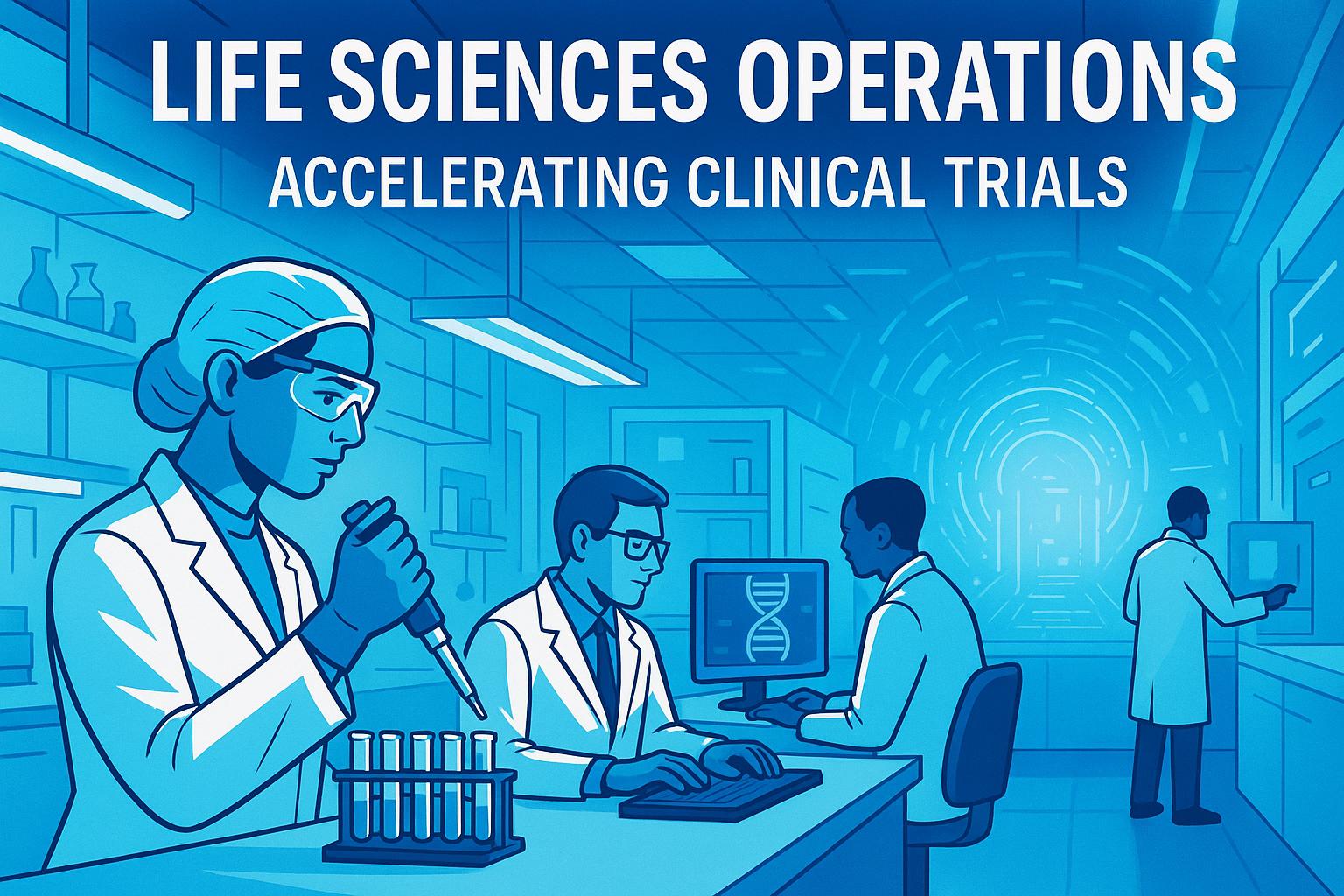
In the fast-paced world of pharmaceuticals and biotech, efficient contract management is becoming critical to accelerating clinical trials, navigating regulatory deadlines, and maintaining competitive advantage, prompting a shift towards specialised platform solutions.
In pharmaceuticals and biotech, contracts are not back-office paperwork; they are the operating system that allows a drug programme to move at all. Research, manufacturing, distribution and even regulatory progress are often carried out by outside partners, which means the company’s real control layer sits in the agreements that govern those relationships.
That is why contract management in life sciences carries consequences that are unusually high. The NIH-funded CTSA Contracts Processing Study found that clinical trial agreements take more than 100 days on average to negotiate, while every day of delay can cost sponsors between $600,000 and $8 million in lost potential revenue. Applied Clinical Trials has also reported that nearly half of study delays are linked to contracting bottlenecks. In a sector where timing can shape funding, trial momentum and eventual market entry, those delays are more than administrative friction.
The issue is especially acute because so much of the work is outsourced. CROs run trials, CMOs and CDMOs handle manufacturing, and distributors help carry products into the market. Pharma Guide has noted that outsourcing across CRO, CDMO and CMO services has become a defining feature of the industry, driven by higher R&D costs, tighter timelines and the need for specialist capabilities. Contracko similarly says pharmaceutical and biotech teams now need to monitor clinical milestones, regulatory deadlines and intellectual property rights across a wide range of contract types, including trial agreements, licensing deals and supply contracts.
Crowell & Moring says it has worked on more than 10,000 clinical trial agreements, underscoring how common and operationally important these contracts have become. The firm says the challenge is to move quickly without losing sight of intellectual property, regulatory compliance and risk allocation. That balance is difficult for larger drugmakers; for emerging biotechs, it can be overwhelming.
Contract Pharma has said emerging biopharma companies account for 63% of trial starts, yet many still lack in-house contracting resources. These businesses often have lean teams and multiple live dependencies at once: a CRO agreement in one country, a manufacturing contract in another, a licensing negotiation tied to royalties, and a stack of regulatory documents all moving on different timelines. When those agreements are scattered, the result is usually slower decisions and weaker visibility.
The practical need, then, is not simply a place to store contracts. Life sciences teams need software that can follow the links between related agreements, surface key dates, search across the full portfolio and extract important terms from very different document types. A delay in one agreement can affect enrollment, manufacturing, launch planning and compliance work downstream. For a legal or operations team trying to keep a development programme moving, that chain of impact has to be visible.
That is where modern contract management platforms are trying to position themselves. ContractSafe says its system is designed to help life sciences teams manage contracts from intake to renewal, with fast setup, AI extraction, unlimited users and support aimed at smaller organisations that need immediate utility rather than a long implementation cycle. The company’s pitch reflects a broader reality in pharma: if the external partnerships are what make the science possible, then the contracts that govern them are what make the business work.
Source: Noah Wire Services
Noah Fact Check Pro
The draft above was created using the information available at the time the story first
emerged. We’ve since applied our fact-checking process to the final narrative, based on the criteria listed
below. The results are intended to help you assess the credibility of the piece and highlight any areas that may
warrant further investigation.
Freshness check
Score:
7
Notes:
The article was published on April 20, 2026, making it current. However, the content heavily references older data and reports from 2024, which may not reflect the latest developments in pharmaceutical contract management. For instance, it cites a 2024 study by the NIH-funded CTSA Contracts Processing Study, which may not account for more recent trends or data. Additionally, the article discusses industry trends and challenges that were prominent in 2024 but does not provide updated information or insights from 2025 or 2026. This reliance on outdated information raises concerns about the article's relevance and accuracy in the current context. The lack of recent data and developments suggests that the article may not fully capture the current state of pharmaceutical contract management. Therefore, while the article is recent, its content may not be entirely fresh or original.
Quotes check
Score:
5
Notes:
The article includes several direct quotes from various sources, such as Brian Scanlan of Edgewater Capital Partners and representatives from Crowell & Moring and Contract Pharma. However, these quotes are not independently verifiable through online searches, raising concerns about their authenticity. The absence of verifiable sources for these quotes makes it difficult to assess their accuracy and reliability. Without independent verification, the credibility of these statements is questionable. Therefore, the article's reliance on unverifiable quotes significantly undermines its trustworthiness.
Source reliability
Score:
4
Notes:
The article originates from ContractSafe's official blog, which is a corporate blog post. Corporate blogs often serve promotional purposes and may present information with inherent biases. The lack of independent verification and the promotional nature of the source raise concerns about the objectivity and reliability of the content. Additionally, the article heavily references older data and reports from 2024, which may not reflect the latest developments in pharmaceutical contract management. The absence of citations to reputable, independent sources further diminishes the article's credibility. Therefore, the source's reliability is questionable, and the article should be approached with caution.
Plausibility check
Score:
6
Notes:
The article discusses challenges in pharmaceutical contract management, such as delays in clinical trials due to contracting bottlenecks and the need for efficient contract management solutions. While these issues are plausible and have been reported in the industry, the article does not provide specific, verifiable examples or data to support these claims. The reliance on unverifiable quotes and outdated information further weakens the plausibility of the article's assertions. Without concrete evidence or recent data, the article's claims remain unsubstantiated and should be viewed with skepticism.
Overall assessment
Verdict (FAIL, OPEN, PASS): FAIL
Confidence (LOW, MEDIUM, HIGH): HIGH
Summary:
The article presents challenges in pharmaceutical contract management but relies heavily on outdated information from 2024 and unverifiable quotes, diminishing its credibility. The promotional nature of the source and the lack of independent verification further undermine its trustworthiness. Therefore, the article fails to meet the necessary standards for reliable information.