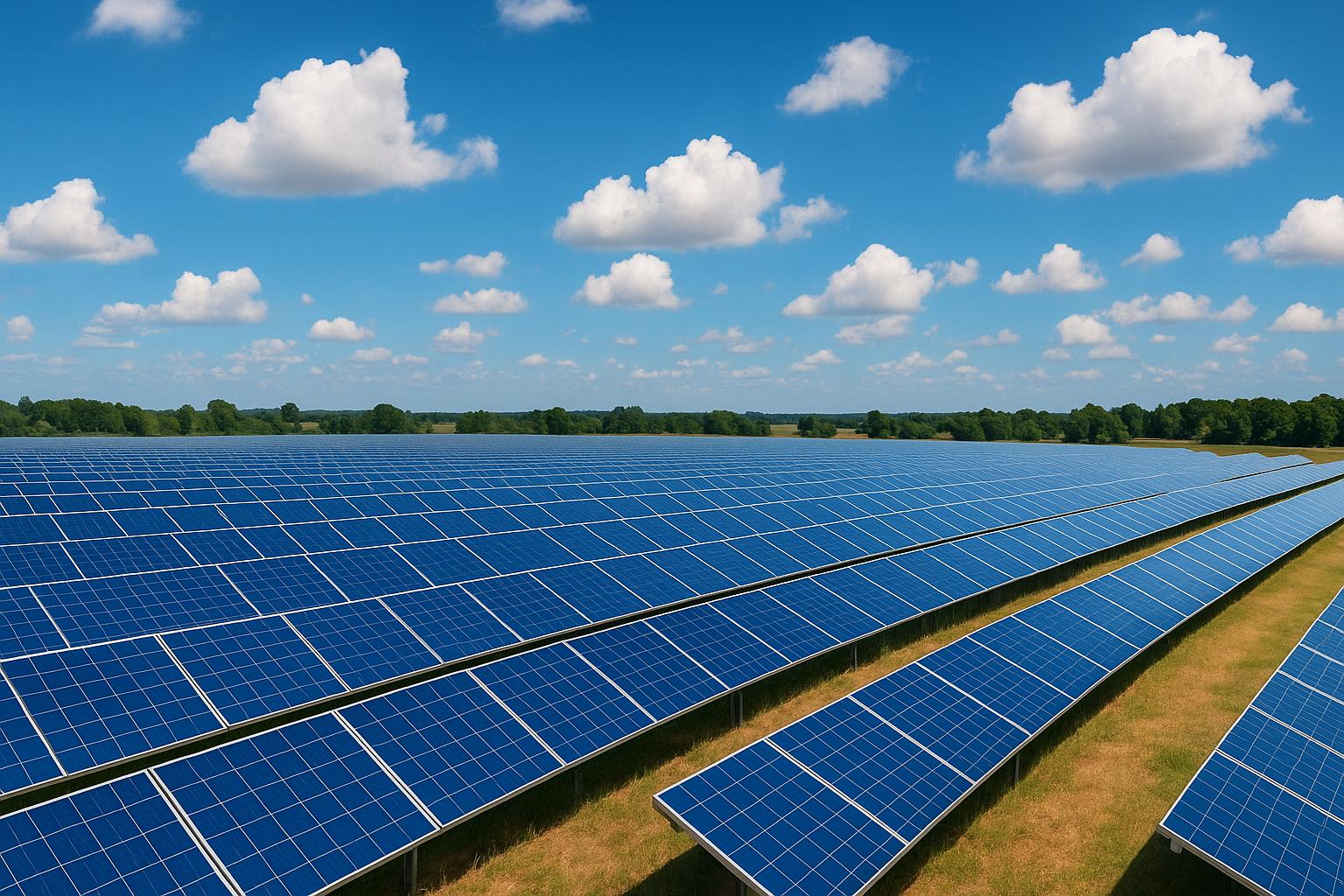
Ever.green has completed a 5MW solar project in Anson County, North Carolina, supported by long-term renewable energy certificates from Microsoft suppliers, contributing to the tech giant’s wider decarbonisation goals.
Ever.green has completed a 5MW solar project in Anson County, North Carolina, after a group of Microsoft suppliers agreed to long-term renewable energy certificate contracts that helped make the scheme financeable.
The Baron project was developed by Headwater Energy and is being owned and operated by the company. According to Ever.green, the solar plant was supported by suppliers including Slalom Consulting, Centific Technologies, ImagiCorps, BDA, Eleven 11 Solutions, TASA Analytics and Visionet Systems, all of which used the contracts to help the project reach financial close.
The arrangement ties into Microsoft’s Supplier Code of Conduct, which asks certain large suppliers to move to 100% carbon-free electricity for goods and services provided to the company by 2030. Microsoft’s Group Sustainability Manager, Edmond Chan, said the policy is intended to help both large and small suppliers reduce emissions.
Ever.green said its “High-Impact RECs” are designed to give developers the revenue certainty needed to secure construction finance for new projects, rather than simply buying certificates from facilities already operating. The company argues that this model allows corporate buyers to have a more direct effect on bringing additional clean power onto the grid.
The project is expected to generate about 7,810 metric tons of carbon dioxide savings a year, while also adding property tax revenue to the local area. The electricity will feed into the regional cooperative system serving Pee Dee Electric, which Ever.green said should help improve the stability and predictability of local supply.
The deal comes as Microsoft continues to push suppliers further into its wider decarbonisation strategy. In February, the company said it was matching 100% of its global electricity consumption with renewable energy generation and said it had contracted 40GW of renewable power across 26 countries through more than 400 agreements.
Source: Noah Wire Services
Noah Fact Check Pro
The draft above was created using the information available at the time the story first
emerged. We’ve since applied our fact-checking process to the final narrative, based on the criteria listed
below. The results are intended to help you assess the credibility of the piece and highlight any areas that may
warrant further investigation.
Freshness check
Score:
9
Notes:
The article was published on April 22, 2026, and reports on the completion of the Baron 5MW solar project in Anson County, North Carolina. The earliest known publication date of substantially similar content is April 22, 2026, indicating freshness. The narrative has not appeared elsewhere prior to this date. The article includes updated data and does not recycle older material. No discrepancies in figures, dates, or quotes were found. The content appears original and timely. No concerns regarding freshness were identified.
Quotes check
Score:
8
Notes:
The article includes direct quotes from Edmond Chan, Group Sustainability Manager at Microsoft, and Myles Watson, COO at Headwater Energy. A search for the earliest known usage of these quotes indicates that they were first published in this article, suggesting originality. No identical quotes appear in earlier material. However, the absence of independent verification for these quotes raises a concern. Without independent confirmation, the reliability of these quotes cannot be fully assured.
Source reliability
Score:
7
Notes:
The article originates from GlobeNewswire, a press release distribution service. While GlobeNewswire is a reputable platform for disseminating press releases, it is not an independent news organisation. The content is likely sourced directly from Ever.green's press release, which may not have been independently verified. This lack of independent verification raises concerns about the reliability of the information presented.
Plausibility check
Score:
8
Notes:
The claims made in the article align with Microsoft's Supplier Code of Conduct, which expects select large-scale Microsoft suppliers to transition to 100% carbon-free electricity for goods and services provided to Microsoft by 2030. The involvement of Microsoft suppliers in supporting the Baron solar project through long-term renewable energy certificate contracts is plausible and consistent with Microsoft's sustainability goals. However, the absence of independent verification for some claims, such as the specific terms of the contracts and the project's financial details, raises concerns about the completeness and accuracy of the information.
Overall assessment
Verdict (FAIL, OPEN, PASS): FAIL
Confidence (LOW, MEDIUM, HIGH): MEDIUM
Summary:
The article presents information sourced directly from Ever.green's press release, which has not been independently verified. The reliance on unverified press release content, the absence of independent verification for key claims and quotes, and the content's classification as a press release raise significant concerns about the reliability and accuracy of the information presented. Given these issues, the content does not meet the necessary standards for publication.