
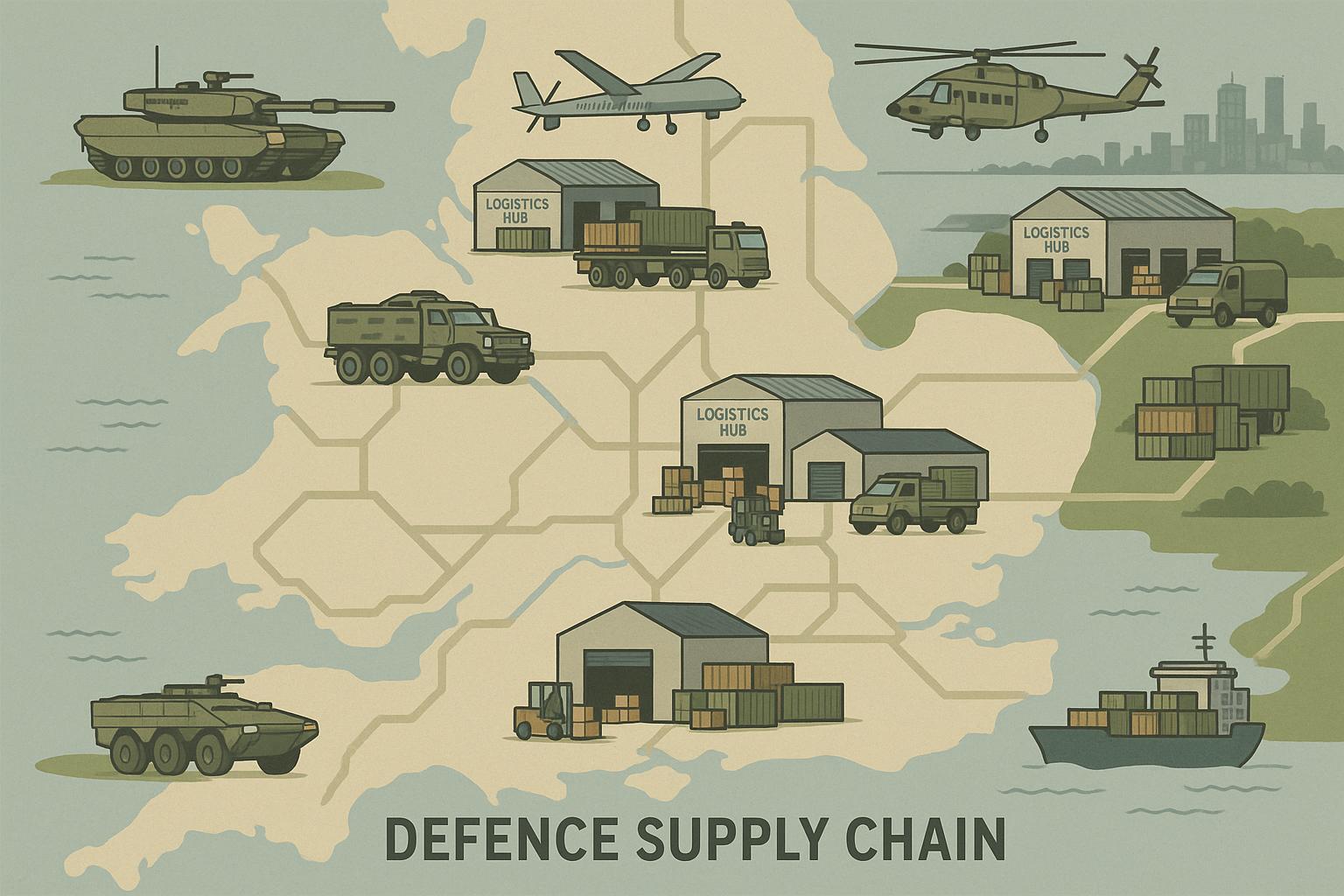
Loughborough University has entered into a new collaboration with the Ministry of Defence aimed at improving the resilience of the UK’s defence supply chains, as the sector confronts mounting pressure from geopolitical instability, shifting technology and the need for faster, more reliable logistics.
The partnership will draw on the UK Supply Chain and Logistics Excellence Centre, or UK SCALE, which is based at Loughborough and sits within the MIT Global SCALE Network. The university said the centre will contribute research capability, specialist facilities and technical expertise, while the MoD will bring operational knowledge and access to relevant data and environments where appropriate.
The work will focus on a series of practical defence challenges, including base resilience, digital manufacturing, data analytics, artificial intelligence and the energy transition. The aim is to turn research into tools that can be used directly in defence operations, rather than leaving it in the academic sphere.
Professor Jan Godsell, director of the UK SCALE Centre, said the collaboration was designed to address end-to-end supply chain issues in defence and help deliver better decision-making and stronger resilience across the supply base. Vice Admiral Andy Kyte, the chief of defence logistics and support, said the arrangement would help the MoD adapt more quickly in an increasingly complex and contested environment.
The emphasis on applied research comes as the defence sector places greater weight on visibility, agility and preparedness throughout its logistics network. Recent government activity has underlined the importance of that effort, including a visit by defence procurement minister Maria Eagle to the Defence Fulfilment Centre in Telford, a major logistics hub that stores and distributes items ranging from clothing to medicines for the armed forces.
Loughborough’s UK SCALE centre has also been expanding its work on industrial AI and optimisation, recently hosting an event on how advanced analytics can be translated into practical manufacturing improvements. That broader research agenda points to the kind of methods the new defence collaboration is likely to draw on: data-driven decision support, better scheduling, more efficient use of resources and improved operational performance.
The university also has a long-standing link with MIT through the only UK-based centre in the Global SCALE Network, which has helped establish its reputation in supply chain education and research. Its MSc in Supply Chain Management combines academic study with industry-facing projects, reflecting the same applied philosophy that now underpins the defence partnership.
The latest collaboration is likely to be welcomed by a sector that has been pushing for more robust and adaptable supply networks. In a period when defence organisations are being asked to deliver more with less certainty, the challenge is not simply moving equipment more efficiently, but ensuring the system can withstand shocks, respond to disruption and support readiness when it matters most.
Source: Noah Wire Services