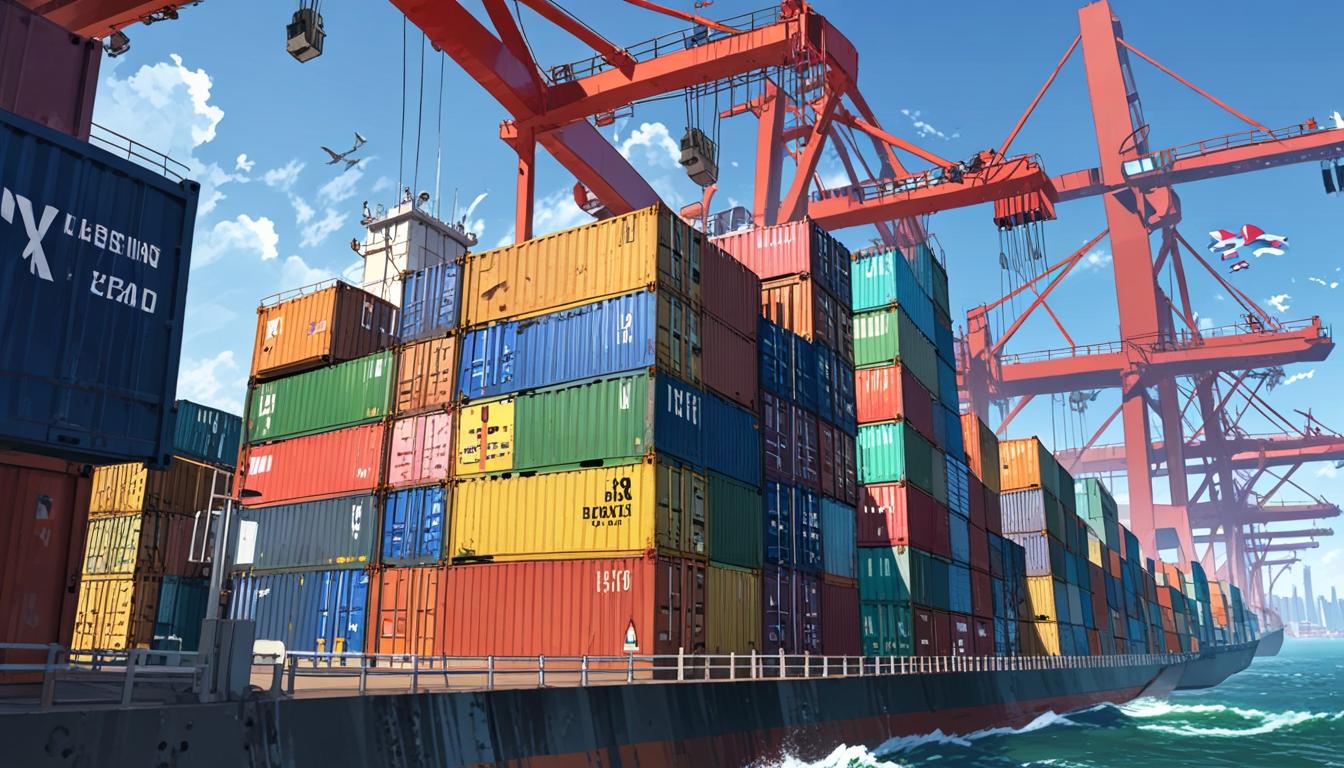
Washington: President Donald Trump's new tariffs on imports raise concerns on their economic impact, triggering retaliatory actions from trading partners, particularly China. Analysts remain divided on whether these measures will benefit the U.S. economy or lead to a broader trade conflict.
President Donald Trump's announcement regarding the imposition of extensive tariffs on a broad range of imports into the United States has triggered significant debate about its potential economic implications. The new policy, which entails a baseline duty of 10 percent on nearly all imports, alongside larger reciprocal tariffs, is seen by some as a drastic shift that could alter the landscape of international trade.
The tariffs have sparked swift retaliation from several trading partners, particularly China, leading to heightened tensions in global commerce. This retaliatory response has had immediate effects, as evidenced by a notable selloff in stock markets worldwide, which has raised concerns about a possible recession.
In stating his position, Trump expressed unwavering confidence in the policy, asserting that it would catalyse an economic boom for the United States. He contends that the existing global trading system has been disadvantageous, allowing other nations to take advantage of the U.S. He argues that his aggressive trade measures would not only protect American industries but also revive jobs in the country's industrial heartlands.
Analysts and economists are divided on the effectiveness of these policies, with questions emerging about whether they will deliver the promised economic benefits or instead escalate tensions into a full-scale global trade war. The long-term consequences of such tariffs remain uncertain, as stakeholders await further developments in the evolving situation.
Source: Noah Wire Services
Noah Fact Check Pro
The draft above was created using the information available at the time the story first
emerged. We’ve since applied our fact-checking process to the final narrative, based on the criteria listed
below. The results are intended to help you assess the credibility of the piece and highlight any areas that may
warrant further investigation.
Freshness check
Score:
8
Notes:
The narrative discusses current events with a recent publication date in April 2025. However, it references policies from previous years, which could indicate recycled or outdated information if not properly updated.
Quotes check
Score:
7
Notes:
Although direct quotes are attributed to President Donald Trump, specific references or dates for these quotes could not be immediately verified in the provided context.
Source reliability
Score:
10
Notes:
The narrative originates from Al Jazeera, a well-known and reputable international news organisation, enhancing the reliability of the information presented.
Plausibility check
Score:
9
Notes:
The claims about tariffs and their economic implications are plausible given recent geopolitical tensions, but the long-term consequences are speculative and require further evidence for verification.
Overall assessment
Verdict (FAIL, OPEN, PASS): PASS
Confidence (LOW, MEDIUM, HIGH): HIGH
Summary:
The narrative is generally reliable due to its reputable source and recent publication date. However, the historical context of the tariffs and unverified quotes slightly reduce the overall confidence in its freshness and quotation accuracy.