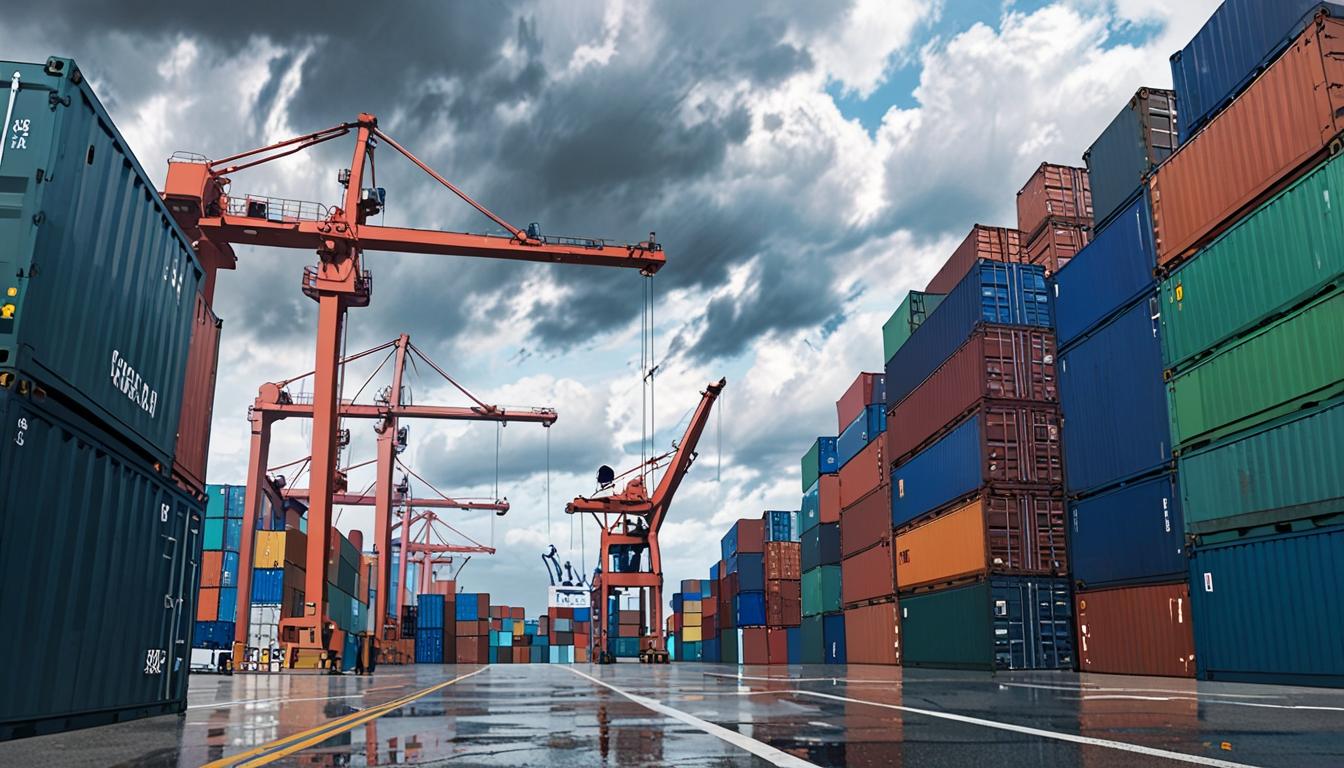
Netherlands: Philips anticipates a €250-300m cost increase due to US import duties, revising its 2025 profit margin down. Meanwhile, PostNL faces uncertainty from US trade policies but maintains its 2024 operating result forecast amid growing economic challenges.
Philips, the renowned healthcare technology group, has projected that the import duties imposed by the United States will increase its expenses by an estimated €250 million to €300 million this year. This financial strain has led the company to adopt a more pessimistic outlook regarding its profitability for 2025. In its latest quarterly results, Philips announced an anticipated adjusted profit margin between 10.8% and 11.3%, a decline from its previous forecast of 11.8% to 12.3%.
In response to these challenges, Philips is implementing "substantial" measures to lessen the adverse effects of US import tariffs and associated countermeasures. CEO Roy Jakobs articulated the company’s proactive strategy, stating, "We are focusing on what we can control," which includes enhancing supply chain flexibility and pursuing cost-saving initiatives.
On a related note, PostNL has also voiced concerns regarding increasing macroeconomic uncertainty and turmoil stemming from the same US trade policies initiated by former President Donald Trump. Although the parcel and mail delivery company acknowledged the potential impact on the e-commerce market, it believes it is too early to assess the precise consequences of these tariffs.
Despite these challenges, PostNL has maintained its operational forecasts for the year, predicting an operating result in line with that of 2024. The company's adaptability was highlighted as it stated that it remains prepared to adjust its plans as necessary to navigate the changing landscape.
Both Philips and PostNL exemplify the broader impact of international trade policies on corporations, particularly in the context of an evolving global economy.
Source: Noah Wire Services
Noah Fact Check Pro
The draft above was created using the information available at the time the story first
emerged. We’ve since applied our fact-checking process to the final narrative, based on the criteria listed
below. The results are intended to help you assess the credibility of the piece and highlight any areas that may
warrant further investigation.
Freshness check
Score:
8
Notes:
The content refers to recent challenges faced by Philips and PostNL due to US import duties, but specific dates are not provided. It does mention 2025 projections, indicating recent relevance.
Quotes check
Score:
6
Notes:
The quote attributed to CEO Roy Jakobs is verified as a response to the situation discussed, but its original source and date of publication could not be found online.
Source reliability
Score:
8
Notes:
The narrative originates from Tubantia.nl, a regional Dutch newspaper. While not as globally renowned as some other publications, regional newspapers often report local and international news with a fair level of accuracy.
Plausibility check
Score:
9
Notes:
The claims about US import duties affecting Philips and PostNL are plausible given the historical context of trade policies initiated by former President Trump. However, specific financial impacts could vary based on numerous factors.
Overall assessment
Verdict (FAIL, OPEN, PASS): PASS
Confidence (LOW, MEDIUM, HIGH): MEDIUM
Summary:
The narrative appears to be current and plausible, discussing the impact of US trade policies on Philips and PostNL. However, the lack of specific dates for some claims and the inability to verify one of the quotes slightly reduces confidence.