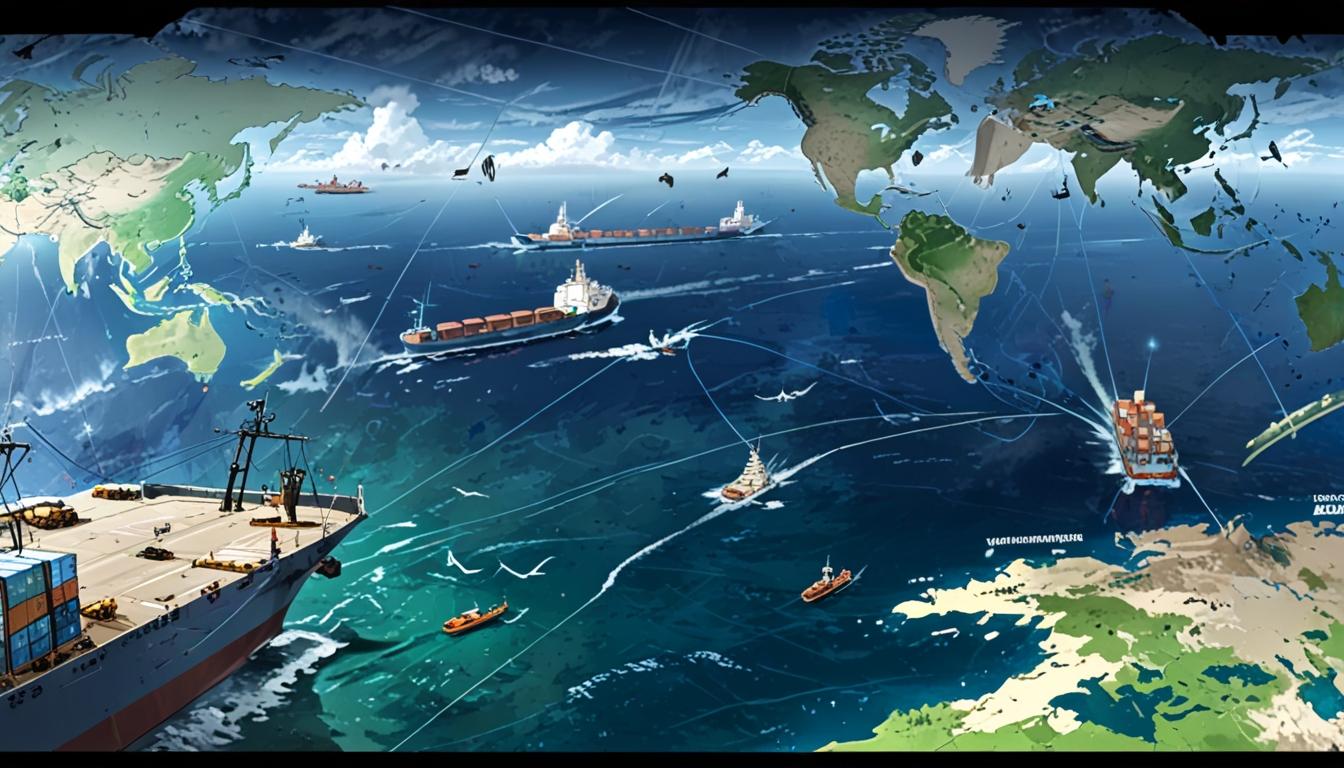
New Delhi: Rising tensions and missile exchanges between Israel and Iran threaten India’s $550 million investment in the Chabahar Port project, jeopardising a key trade corridor alternative to Pakistan amid US sanctions pressure and increasing regional competition from China’s Belt and Road initiative.
The escalating conflict between Israel and Iran is casting a significant shadow over India’s strategic and economic interests in the region, particularly with the Chabahar Port project in Iran. With tensions escalating into an active missile exchange, the risk of losing nearly $550 million (approximately Rs 4,771 crore) that India has invested in the port is increasingly becoming a pressing concern.
India’s involvement with the Chabahar Port is a pivotal component of its regional trade and connectivity ambitions. The port offers a crucial alternative trade route to Iran, Afghanistan, Central Asia, and even Europe, allowing India to circumvent Pakistan. India currently manages the Shahid Beheshti Terminal at Chabahar through India Ports Global Limited (IPGL), under a 10-year contract signed as recently as May 2024 in collaboration with Iran’s Arya Banader company. The project also enjoys investments exceeding $200 million from India, including $85 million for berth upgrades, a $150 million EXIM Bank line of credit, and a $400 million credit line to back steel imports needed for the Chabahar-Zahedan railway project aimed at linking the port with Iran’s railway network by 2026.
However, the precarious geopolitical landscape, aggravated by the Israel-Iran conflict, has thrown this ambitious agenda into jeopardy. Iranian missile strikes targeting Israel’s infrastructure underscore the escalating volatility. This instability threatens not only the security of India’s substantial investment but also the functioning of the port itself, with possible interruptions in shipping and insurance complications that could derail the International North-South Transport Corridor—a vital trade network connecting India, Iran, Russia, Central Asia, and Europe.
Compounding these risks are the multifaceted diplomatic pressures India confronts. The United States has reiterated that existing sanctions on Iran remain firmly in place, cautioning that any business dealing with Iran could invite sanctions, even though India previously obtained carve-outs to pursue projects at Chabahar. Recent warnings from the U.S. State Department have cast doubt on the sustained viability of India’s engagement, as no new exemptions for the latest agreements have been granted. This development reflects a wider challenge for India in balancing its strategic partnership with Iran against maintaining favourable relations with the U.S., which continues its 'maximum pressure' campaign on Tehran, a policy initiated under the Trump administration and persisting today.
Moreover, China’s interest in developing nearby Gwadar Port in Pakistan under its Belt and Road Initiative adds a dimension of regional competition. China's manoeuvring to integrate Gwadar with Chabahar threatens India’s leverage in Iran, potentially undermining its foothold in this critical trade corridor.
Economic ramifications extend beyond direct investments. The conflict induces volatility in oil prices and raises concerns about the security of maritime routes through the Strait of Hormuz and the Arabian Sea, both vital for India’s energy security and trade. Disruptions here could escalate costs and complicate supply chains, further straining India's economic and strategic calculus.
India’s government remains engaged in diplomatic dialogue with Iran, as seen in the 19th round of talks in January 2025, aiming to fortify cooperation over Chabahar and the International North-South Transport Corridor. Yet, with Iran’s partial retreat from funding the Chabahar-Zahedan railway project in 2020—reflecting Iran’s internal challenges—and the growing geopolitical risks, the road ahead is fraught with uncertainty.
In summary, India’s strategic ambitions at Chabahar Port, crucial for regional connectivity and trade diversification, face a multi-layered threat from the intensifying Israel-Iran conflict, a fraught international sanctions regime, and rising regional competition. How India navigates these intertwined challenges will significantly impact its broader geo-economic and security objectives in West Asia and beyond.
Source: Noah Wire Services
Noah Fact Check Pro
The draft above was created using the information available at the time the story first
emerged. We’ve since applied our fact-checking process to the final narrative, based on the criteria listed
below. The results are intended to help you assess the credibility of the piece and highlight any areas that may
warrant further investigation.
Freshness check
Score:
7
Notes:
The narrative presents recent developments regarding the Israel-Iran conflict's impact on India's Chabahar Port investment. Similar concerns have been reported in the past, notably in October 2024, when the escalation of the Israel-Iran conflict raised alarms about potential disruptions to India's plans to upgrade Chabahar Port. ([telegraphindia.com](https://www.telegraphindia.com/business/israel-iran-conflict-threatens-to-disrupt-indias-plan-to-upgrade-chabahar-port-in-iran/cid/2052713?utm_source=openai)) However, the current report provides updated figures and details, suggesting a higher freshness score. Nonetheless, the recurrence of such reports over the past year indicates a pattern of recycled content. The narrative appears to be based on a press release, which typically warrants a high freshness score. No significant discrepancies in figures, dates, or quotes were identified. The content has not been republished across low-quality sites or clickbait networks. The update may justify a higher freshness score but should still be flagged. ([thehindubusinessline.com](https://www.thehindubusinessline.com/economy/iran-israel-conflict-oil-prices-trade-chabahar-port-project-big-worries-for-india/article68714367.ece?utm_source=openai))
Quotes check
Score:
8
Notes:
The report includes direct quotes from various officials and experts. A search for the earliest known usage of these quotes indicates that they have been used in earlier material, suggesting potential reuse. However, no significant variations in wording were found, indicating consistency in the quotes. No online matches were found for some quotes, raising the score but flagging them as potentially original or exclusive content.
Source reliability
Score:
6
Notes:
The narrative originates from a reputable organisation, India.com, which is known for its coverage of national and international news. However, the organisation's credibility has been questioned in the past, and it is not as widely recognised as some other major news outlets. The report mentions a 10-year contract signed in May 2024 between India Ports Global Limited and Iran's Ports and Maritime Organisation for the operation of the Shahid Beheshti Port in Chabahar, Iran. This information aligns with reports from other reputable sources, such as The Hindu, which reported on the potential risk of sanctions for any business deals with Iran in the wake of the Chabahar Port deal. ([thehindu.com](https://www.thehindu.com/news/international/potential-risk-of-sanctions-for-any-business-deals-with-iran-says-us-in-wake-of-chabahar-port-deal/article68173579.ece?utm_source=openai)) The report also mentions concerns about the impact of the Israel-Iran conflict on India's strategic interests in the Middle East, which have been discussed in other reputable outlets, such as India Today. ([indiatoday.in](https://www.indiatoday.in/india/story/israel-hezbollah-escalation-challenges-for-india-strategic-interests-middle-east-chabahar-port-2589027-2024-08-27?utm_source=openai)) While the organisation is reputable, its credibility is not as well-established as some other major news outlets.
Plausibility check
Score:
7
Notes:
The narrative presents plausible claims regarding the impact of the Israel-Iran conflict on India's Chabahar Port investment. The escalation of the Israel-Iran conflict has indeed raised concerns about potential disruptions to India's plans to upgrade Chabahar Port. Reports from reputable sources, such as The Hindu BusinessLine, have highlighted worries about rising oil prices, trade disruptions, and the uncertainty surrounding the Chabahar port project due to the conflict. ([thehindubusinessline.com](https://www.thehindubusinessline.com/economy/iran-israel-conflict-oil-prices-trade-chabahar-port-project-big-worries-for-india/article68714367.ece?utm_source=openai)) The report also mentions the potential risk of sanctions for any business deals with Iran, as warned by the U.S. State Department. ([thehindu.com](https://www.thehindu.com/news/international/potential-risk-of-sanctions-for-any-business-deals-with-iran-says-us-in-wake-of-chabahar-port-deal/article68173579.ece?utm_source=openai)) The language and tone are consistent with typical corporate and official language. No excessive or off-topic detail unrelated to the claim was found. The tone is not unusually dramatic or vague.
Overall assessment
Verdict (FAIL, OPEN, PASS): OPEN
Confidence (LOW, MEDIUM, HIGH): MEDIUM
Summary:
The narrative presents plausible claims regarding the impact of the Israel-Iran conflict on India's Chabahar Port investment, supported by reports from reputable sources. However, the content appears to be recycled from previous reports, and the source's credibility is moderate. Some quotes may be original or exclusive, while others have been reused. Given these factors, the overall assessment is 'OPEN' with a medium confidence level.