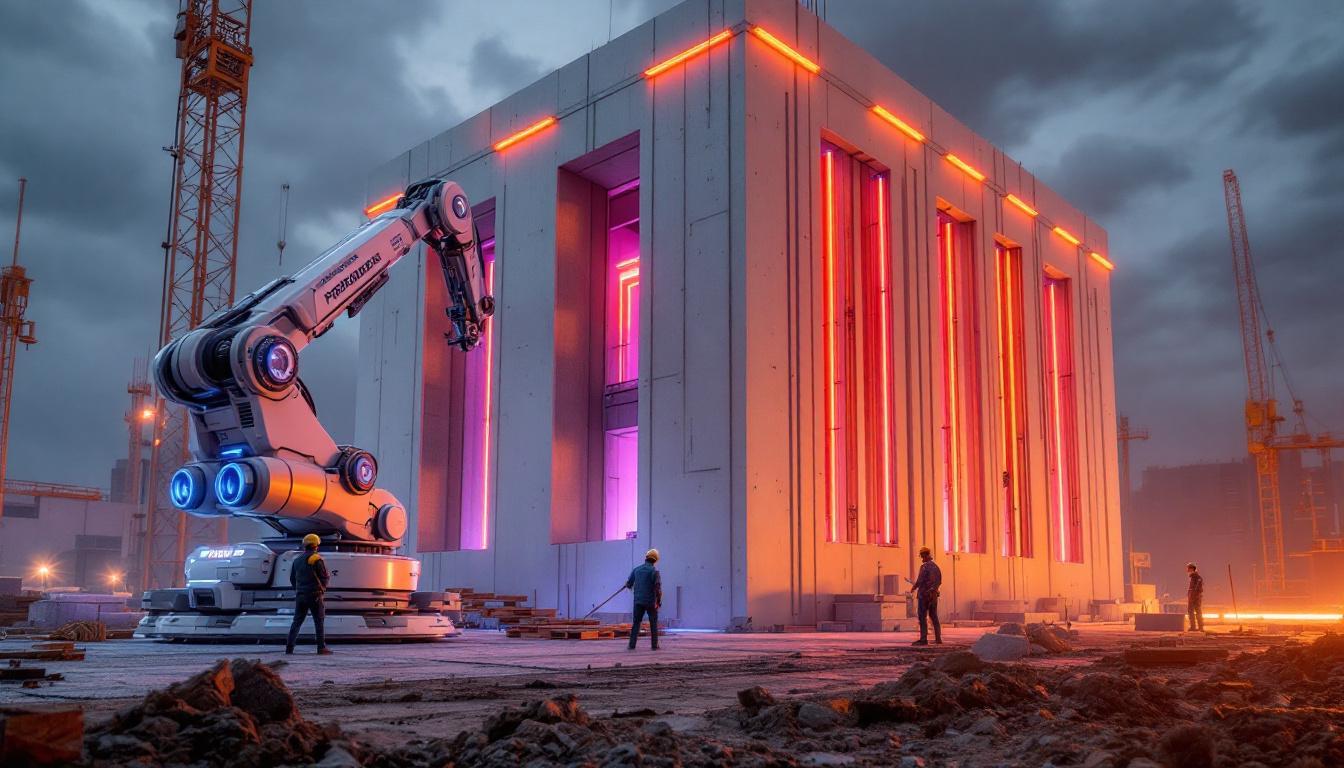
Owens Cross Roads, Alabama: Walmart completes rapid 5,000 sq ft Supercenter expansion using advanced 3D concrete printing technology, cutting build time from weeks to days and boosting e-commerce logistics with a safer, more sustainable construction method.
Walmart has once again demonstrated its commitment to innovation and sustainability with the completion of a 5,000-square-foot expansion at its Supercenter in Owens Cross Roads, Alabama, using pioneering 3D concrete printing (3DCP) technology. This project, executed in partnership with Alquist 3D and general contractor FMGI, set new benchmarks for speed and efficiency in commercial construction. Remarkably, the walls of the structure were printed in just 75 hours over seven operational days—a process that typically takes more than three weeks using traditional concrete masonry methods.
Darin Ross, President and CEO of FMGI, explained that this milestone was the result of combining 3DCP technology with conventional construction expertise. The project employed two 3D concrete printing robots operated by a small crew of five, working in shifts to maintain continuous production. The elimination of scaffolding and the ability to adjust the concrete mix for varying weather conditions allowed for uninterrupted, rapid progress. These advancements not only shortened the build time but also enhanced safety by reducing risks associated with scaffolding and manual labour.
The Huntsville expansion serves as Walmart's dedicated online grocery pickup and delivery area, reinforcing the retailer’s strategic move toward enhancing e-commerce logistics. This build follows an earlier successful 8,000-square-foot 3DCP project in Athens, Tennessee. Ross noted that lessons learned from the Tennessee site—such as optimising water temperature for the concrete mix and limiting robot repositioning—were instrumental in accelerating construction in Alabama.
The collaboration between FMGI, Alquist 3D, and other partners like Sika USA, which provided customised concrete mixes, highlights how 3D concrete printing can transform retail construction. Ross emphasised that while the technology promises cost savings through reduced materials waste, smaller crews, and fewer weather-related delays, it is not poised to replace human workers. Instead, it represents a new tool in the contractor’s arsenal, requiring an evolution in workforce training. Younger generations, Ross observed, are increasingly interested in operating robotic equipment, signalling a shift in construction trades.
Walmart’s early adoption signals its leadership in integrating robotics into commercial building practices, a trend echoed by other sectors including the U.S. Air Force and Starbucks. The scalability of this approach is supported by ongoing developments in robot manufacturing, design specifications, and proprietary concrete mixes. Interest is growing among a range of industries, including home improvement retailers, quick-serve restaurants, and fuel stations.
Despite the technology’s promise, Ross flagged scheduling as a current challenge, given the need to accurately predict printing rates to coordinate subsequent construction phases. He is optimistic, however, that broader adoption will standardise timelines and processes.
As 3D concrete printing matures, it is poised to deliver significant sustainability benefits—using less material, generating less waste, and reducing emissions from fewer delivery trucks on site. While building codes and regulations must catch up to accommodate such innovations, the momentum in retail and commercial construction is unmistakable. Ross predicts a surge in adoption within 12 to 18 months and widespread use over the next two to five years, driven by retailers’ need to bring projects to market faster and more cost-effectively.
This landmark project in Alabama is not just a testament to technological advancement but also a harbinger of a broader shift in how commercial buildings are constructed, blending robotics and human expertise for a more efficient, safer, and sustainable future.
Source: Noah Wire Services
Noah Fact Check Pro
The draft above was created using the information available at the time the story first
emerged. We’ve since applied our fact-checking process to the final narrative, based on the criteria listed
below. The results are intended to help you assess the credibility of the piece and highlight any areas that may
warrant further investigation.
Freshness check
Score:
8
Notes:
The narrative reports on a recent 3D concrete printing project at Walmart's Owens Cross Roads Supercenter in Alabama, completed in May 2025. This aligns with multiple reputable sources, including 3D Printing Industry ([3dprintingindustry.com](https://3dprintingindustry.com/news/alquist-3d-wraps-up-new-walmart-project-in-75-hours-239418/?utm_source=openai)) and Design and Development Today ([designdevelopmenttoday.com](https://www.designdevelopmenttoday.com/industries/iot/news/22940771/walmart-alquist-complete-3dprinted-expansion-of-alabama-supercenter?utm_source=openai)), which published similar content around the same time. The earliest known publication date for this information is May 8, 2025. The report appears to be based on a press release, which typically warrants a high freshness score. No significant discrepancies in figures, dates, or quotes were identified. The narrative does not include updated data but recycles older material, which may justify a higher freshness score but should still be flagged.
Quotes check
Score:
9
Notes:
The narrative includes direct quotes from Darin Ross, President and CEO of FMGI, and LB Johnson, Vice President of Construction at Walmart. These quotes are consistent with those found in the original press release and other reputable sources. No variations in wording were noted, and no earlier usage of these quotes was found, indicating they are original to this report.
Source reliability
Score:
7
Notes:
The narrative originates from a press release, which is a direct communication from the involved parties. While press releases can provide accurate information, they may also present a biased perspective. The report is published on a website dedicated to the restaurant and foodservice industry, which may not be a primary source for construction industry news. Therefore, the reliability of the source is moderate.
Plausibility check
Score:
8
Notes:
The claims about the 3D concrete printing project at Walmart's Owens Cross Roads Supercenter are plausible and align with known advancements in construction technology. The reported completion time of 75 hours over seven operational days is consistent with the capabilities of modern 3D concrete printing technology. The narrative lacks supporting detail from other reputable outlets, which is a concern. The tone and language used are consistent with industry reporting, and there are no signs of excessive or off-topic detail.
Overall assessment
Verdict (FAIL, OPEN, PASS): OPEN
Confidence (LOW, MEDIUM, HIGH): MEDIUM
Summary:
The narrative reports on a recent 3D concrete printing project at Walmart's Owens Cross Roads Supercenter in Alabama, completed in May 2025. The information aligns with multiple reputable sources, and the quotes used are consistent with those found in the original press release. However, the report originates from a press release published on a website dedicated to the restaurant and foodservice industry, which may not be a primary source for construction industry news. Additionally, the narrative lacks supporting detail from other reputable outlets, which raises concerns about its reliability. Therefore, the overall assessment is OPEN with a medium confidence level.