
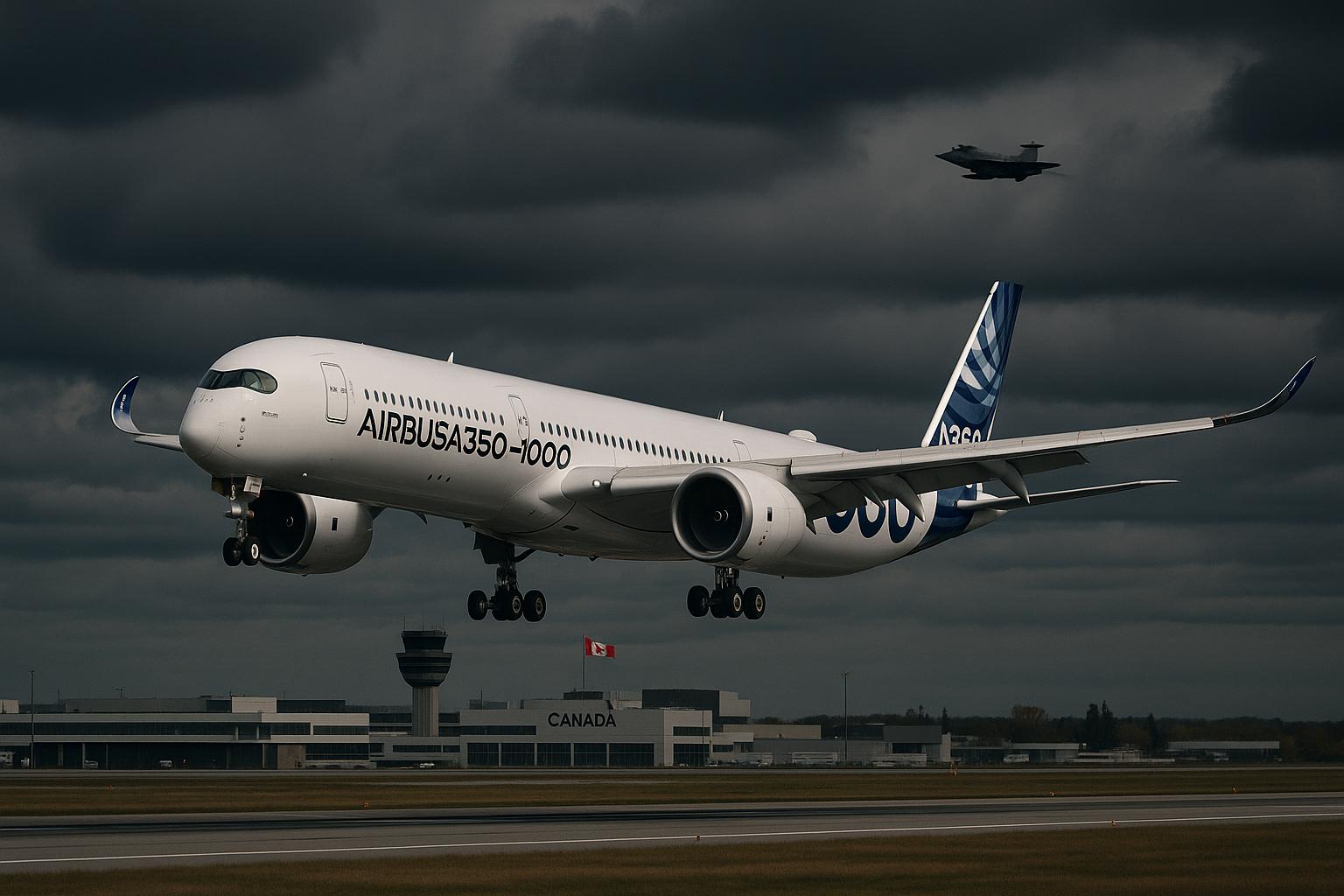
Air Canada’s decision to buy eight Airbus A350-1000s crystallises a shift in how carriers are choosing aircraft: fleet procurement is now as much about geopolitical risk and supply‑chain resilience as it is about fuel efficiency and range. The Montreal-based carrier confirmed the firm A350-1000 order on 12 February 2026, with rights to acquire a further eight jets and first deliveries slated to begin in the second half of 2030. According to Airbus, the type’s 9,000‑nautical‑mile capability will allow Air Canada to launch new non‑stop services to markets across the Indian subcontinent, Southeast Asia and Australia.
Air Canada positioned the purchase squarely within its long‑haul fleet renewal plan, citing the A350‑1000’s modern systems and lower operating costs as key advantages. Executives highlighted improvements in economics and efficiency, including a reported reduction in fuel burn versus older generation aircraft, and said the cabins will adopt the airline’s new interior standard when they enter service. Industry notices and the airline’s filings confirm the airline had previously listed the order as undisclosed in November 2025 before making the commitment public this month.
Beyond the technical and commercial rationale, the move feeds into a broader pattern across world aviation. According to reporting and industry releases, carriers in several regions have altered procurement approaches amid rising trade tensions and shifting export controls since the recent US policy realignments under the Trump administration. Chinese airlines, for example, paused Boeing purchases during tariff disputes, and other carriers have accelerated orders from Airbus to reduce exposure to potential US‑driven supply disruptions. Analysts say these developments make aircraft selection a form of strategic hedging: diversifying manufacturers to limit the risk that political friction could interrupt deliveries or spare‑parts supply.
Canada’s geographic and diplomatic position gives the Air Canada decision added weight. Traditionally integrated with the US aerospace supply chain, Canadian operators now face the prospect that procurement could be affected by trade measures directed at allied economies. Industry commentators view Air Canada’s A350 commitment not as a clean break from Boeing but as a deliberate diversification to preserve operational flexibility and protect route growth from geopolitical shocks.
The A350‑1000’s attributes make it an attractive option in that context. Airbus and market releases emphasise the model’s ultra‑long‑range capability, payload performance and cabin environment as enablers of new route economics. Commercial bulletins published alongside the announcement note the aircraft will support Air Canada’s international network expansion while offering compatibility with a higher blend of sustainable aviation fuels, a growing priority for carriers seeking emissions reductions.
Still, the wider aircraft rivalry remains unresolved. Boeing continues to win large packages in markets where political alignment or long‑standing relationships favour US manufacturers, and many airlines retain mixed fleets to preserve bargaining power and operational redundancy. As Journal Aviation and other trade outlets observed, Air Canada’s A350 order is the carrier’s first firm commitment to Airbus widebodies since the late 1990s, signalling a tactical shift rather than an outright realignment.
The industry consequence is a more geopolitically inflected market for widebodies. Aircraft orders now communicate more than capacity plans; they also send messages about which suppliers and jurisdictions airlines believe will best guarantee continuity of service over the next decade. For Air Canada, the A350‑1000 purchase reflects a calculation that long‑haul growth, environmental goals and supply‑chain insurance are best pursued through a diversified fleet mix , and that, in an era of renewed trade frictions, the choice of airframe can no longer be treated as a purely technical decision.
Source: Noah Wire Services