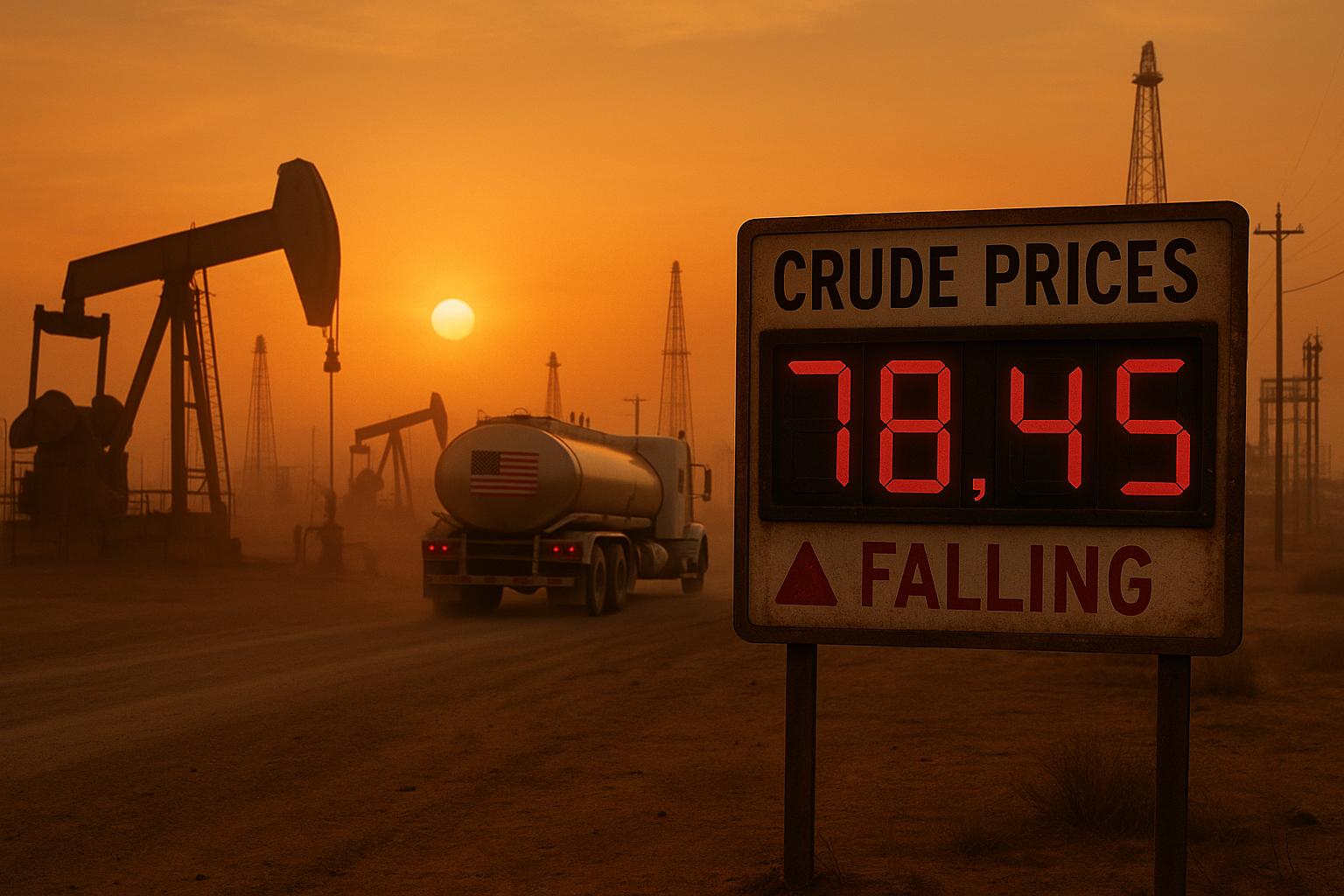
Oil markets fell on Monday following President Donald Trump’s decision to raise a temporary import tariff to 15%, stoking fears of reduced demand amid ongoing geopolitical tensions and supply concerns.
Oil prices eased on Monday as markets digested President Donald Trump’s decision to raise a temporary tariff on imports to 15%, a move that analysts and traders said increases uncertainty about global growth and fuel demand.
According to Reuters, Brent fell to about US$71.31 a barrel and US crude to roughly US$65.98 by 2315 GMT, reversing part of last week’s gains that had been driven by rising tensions between the United States and Iran. The tariff increase, announced after the US Supreme Court struck down Mr Trump’s earlier tariff programme, represents the maximum levy permitted under the statute and is scheduled to take effect immediately, with exemptions for critical minerals, metals, pharmaceuticals and USMCA-compliant goods from Canada and Mexico, The Guardian reported on February 21, 2026.
Market participants said the tariff move counterbalanced supply-driven upside from geopolitical risk. “The jump in risk premium linked to potential US–Iran hostilities had pushed benchmarks higher last week; the tariff hike has brought those gains under pressure by dimming the demand outlook,” a trader told Reuters.
The latest tariff step is the most recent in a sequence of policy actions that have unsettled oil markets over the past year. Anadolu Agency coverage in April and January 2025 linked earlier rounds of US reciprocal tariffs to falls in crude as investors feared curbs on trade would sap fuel consumption. Those pieces also noted that planned production increases from several OPEC+ members have repeatedly weighed on sentiment by enlarging near-term supply prospects.
Industry forecasters warn the policy mix could have longer-term consequences for production dynamics. Forbes summarised Wood Mackenzie analysis in May 2025 indicating that sustained price weakness, alongside tariff-driven volatility and cost pressures, risks flattening US oil output in 2025 and prompting a modest decline in 2026 unless prices recover. That outlook underlines how trade policy can ripple through investment decisions in the shale patch and elsewhere.
Analysts said the immediate market response will balance three forces: the demand drag from higher trade barriers, the potential for renewed geopolitical risk to lift risk premia, and OPEC+ supply intentions. “For now, the tariff announcement has tilted the balance toward weaker demand expectations, but any escalation in geopolitical tensions could quickly reverse that,” an oil analyst at a major bank said.
Government and corporate statements surrounding the tariff change emphasise legal constraints and targeted exemptions. According to The Guardian, the administration carved out certain strategic product categories from the blanket increase, a detail traders flagged as limiting but not eliminating broader economic impact.
With prices still sensitive to both policy shifts and geopolitics, market watchers said volatility is likely to persist in the near term as participants reassess consumption forecasts, production plans and the evolving US trade stance.
Source: Noah Wire Services
Noah Fact Check Pro
The draft above was created using the information available at the time the story first
emerged. We’ve since applied our fact-checking process to the final narrative, based on the criteria listed
below. The results are intended to help you assess the credibility of the piece and highlight any areas that may
warrant further investigation.
Freshness check
Score:
8
Notes:
The article reports on recent developments regarding US tariffs and their impact on oil prices, with publication dates ranging from February 22 to February 23, 2026. ([investing.com](https://www.investing.com/news/commodities-news/oil-slides-as-us-tariff-hike-raise-jitters-over-global-economy-4517638?utm_source=openai)) The content appears to be original and timely, with no evidence of recycling or republishing from low-quality sites. The narrative is based on recent events, including President Trump's decision to raise tariffs and the US Supreme Court's ruling, which are current as of the publication date.
Quotes check
Score:
7
Notes:
The article includes direct quotes attributed to Reuters and The Guardian. However, the specific articles from these sources are not provided, making it challenging to verify the exact wording and context of the quotes. Without access to the original sources, it's difficult to confirm the accuracy and originality of the quotes.
Source reliability
Score:
6
Notes:
The article cites reputable sources such as Reuters and The Guardian. However, the lack of direct links to these sources raises concerns about the transparency and verifiability of the information. Additionally, the article is published on Business Today, which is a niche publication. While it may be reputable within its niche, its broader reach and influence are limited compared to major news organizations.
Plausibility check
Score:
7
Notes:
The claims about the US tariff hike and its impact on oil prices are plausible and align with recent news reports. However, the article lacks specific details, such as the exact date of the tariff announcement and the Supreme Court's ruling, which would help verify the timeline and context of the events. The absence of these details makes it difficult to fully assess the accuracy and completeness of the information.
Overall assessment
Verdict (FAIL, OPEN, PASS): FAIL
Confidence (LOW, MEDIUM, HIGH): MEDIUM
Summary:
The article presents timely information on recent US tariff hikes and their impact on oil prices. However, the lack of direct links to original sources, such as Reuters and The Guardian, and the absence of specific details raise concerns about the transparency, verifiability, and completeness of the information. The reliance on a niche publication further limits the assessment of source reliability. Given these issues, the content does not meet the necessary standards for independent verification.