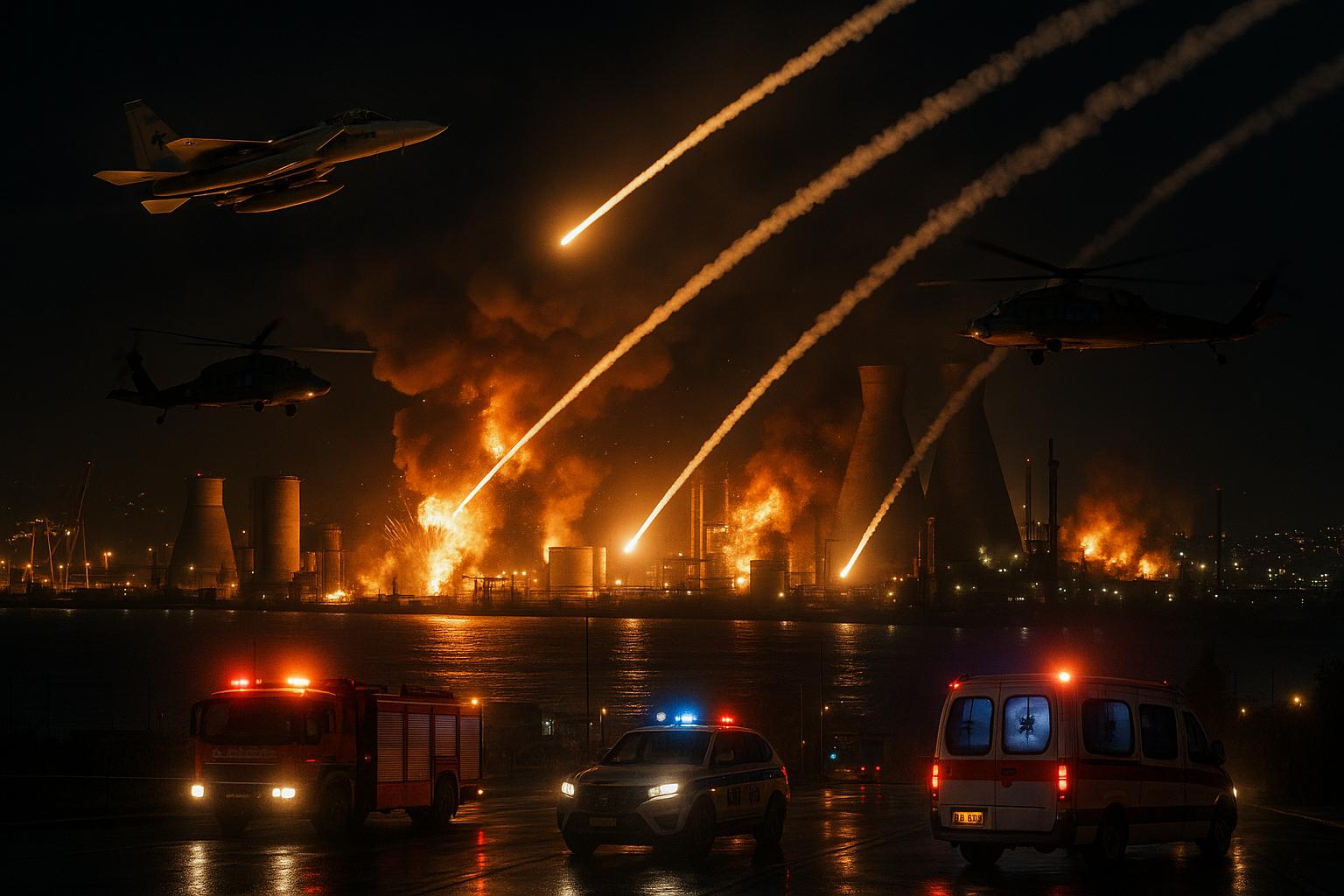
A missile attack by Iran on Israel’s key oil-processing complex in Haifa highlights rising regional tensions and the potential for widespread disruptions in global energy markets amid ongoing strikes across the Middle East.
An Iranian missile strike on Israel’s largest oil-processing complex in Haifa on March 19, 2026, caused smoke, local power outages and minor injuries but, officials say, no major infrastructure damage, underscoring how the long-running exchange of strikes over energy targets is escalating regional economic risk.
According to the Israeli Energy Ministry, the Bazan Group facilities in Haifa Bay , which process nearly 9.8 million tonnes of crude a year and supply as much as 60% of Israel’s transport fuels , were struck during a wave of Iranian attacks. Energy Minister Eli Cohen said the assault produced “no significant damage to infrastructure sites”, Al Jazeera reported.
The Israel Defense Forces disputed that any direct missile hits struck the refinery itself, saying instead that "the impacts at the oil refineries in Haifa were caused by falling fragments following the interception of an Iranian ballistic missile". Video and social-media posts showed a plume rising from the industrial zone and a Hebrew-language post by journalist Itay Blumental reading: טיל ששוגר מאיראן פגע בבתי הזיקוק בחיפה. לא ידוע על נפגעים.
Local authorities said shrapnel from the intercepted missile severed a high-voltage transmission line, triggering outages across parts of Haifa and nearby neighbourhoods before the Israel Electric Corporation restored most supplies; the industrial area remained partially without power, The Jerusalem Post reported. Hospitals and emergency services treated at least one person for minor injuries from falling debris.
Iran’s Islamic Revolutionary Guard Corps described the strike as part of an ongoing campaign of retaliation for strikes on its energy and military infrastructure, with state-linked outlets describing the operation as the 65th wave of assaults targeting Israeli refineries. Analysts note Tehran’s efforts are deliberately focused on symbolic and economically sensitive targets rather than mass civilian casualties, a pattern highlighted in commentary published by The Atlantic analysing Iran’s low-cost, asymmetric tactics.
The attacks have broader market implications. Industry observers point to recent hits on Gulf energy facilities , including damage at Qatar’s Ras Laffan LNG hub that analysts say contributed to sharp rises in European gas prices , as evidence that disruptions to energy nodes can ripple quickly through global markets. Al-Monitor and other regional outlets warn that repeated strikes on production and transit points, combined with the risk around the Strait of Hormuz, raise the prospect of prolonged supply-side volatility.
Israeli officials emphasised that fuel supplies remain intact for now and that the Bazan Group continued assessments of the site. Still, the incident fits into a widening pattern of assaults on oil and gas infrastructure across the Middle East, involving Gulf states as well as Israel, which market analysts say will keep energy markets on edge while complicating diplomatic efforts to de-escalate the confrontation.
Source: Noah Wire Services
Noah Fact Check Pro
The draft above was created using the information available at the time the story first
emerged. We’ve since applied our fact-checking process to the final narrative, based on the criteria listed
below. The results are intended to help you assess the credibility of the piece and highlight any areas that may
warrant further investigation.
Freshness check
Score:
7
Notes:
The article reports on an Iranian missile strike on Israel's largest oil-processing complex in Haifa on March 19, 2026. This event has been covered by multiple reputable sources, including Reuters and The Jerusalem Post, indicating that the information is current and not recycled. However, the Express article does not provide a specific publication date, making it difficult to confirm its freshness. Additionally, the Express is known for sensationalist reporting, which raises concerns about the originality and reliability of the content.
Quotes check
Score:
6
Notes:
The article includes direct quotes attributed to Israeli Energy Minister Eli Cohen and the Israel Defense Forces (IDF). However, these quotes are not independently verifiable through the provided sources. The absence of direct links to the original statements or press releases makes it challenging to confirm their authenticity. This lack of verifiability raises concerns about the accuracy and reliability of the quoted information.
Source reliability
Score:
5
Notes:
The Express is a UK-based tabloid known for sensationalist reporting and has a history of publishing unverified or misleading information. While the article references reports from Al Jazeera and The Jerusalem Post, it does not provide direct links to these sources, making it difficult to assess the accuracy of the information. The reliance on a tabloid source without clear citations to reputable outlets diminishes the overall reliability of the article.
Plausibility check
Score:
7
Notes:
The article describes an Iranian missile strike on the Bazan Group facilities in Haifa Bay, causing smoke, local power outages, and minor injuries but no major infrastructure damage. This aligns with reports from Reuters and The Jerusalem Post, which state that the missile attack did not cause significant damage. However, the Express article includes a Hebrew-language post by journalist Itay Blumental, which is not independently verifiable and raises questions about the authenticity of the information.
Overall assessment
Verdict (FAIL, OPEN, PASS): FAIL
Confidence (LOW, MEDIUM, HIGH): MEDIUM
Summary:
The article reports on an Iranian missile strike on Israel's Haifa refinery, referencing reports from Al Jazeera and The Jerusalem Post. However, the Express is a tabloid known for sensationalist reporting, and the article lacks direct citations to reputable sources, making it difficult to independently verify the information. The absence of verifiable quotes and reliance on a single, potentially unreliable source raise significant concerns about the accuracy and credibility of the content.