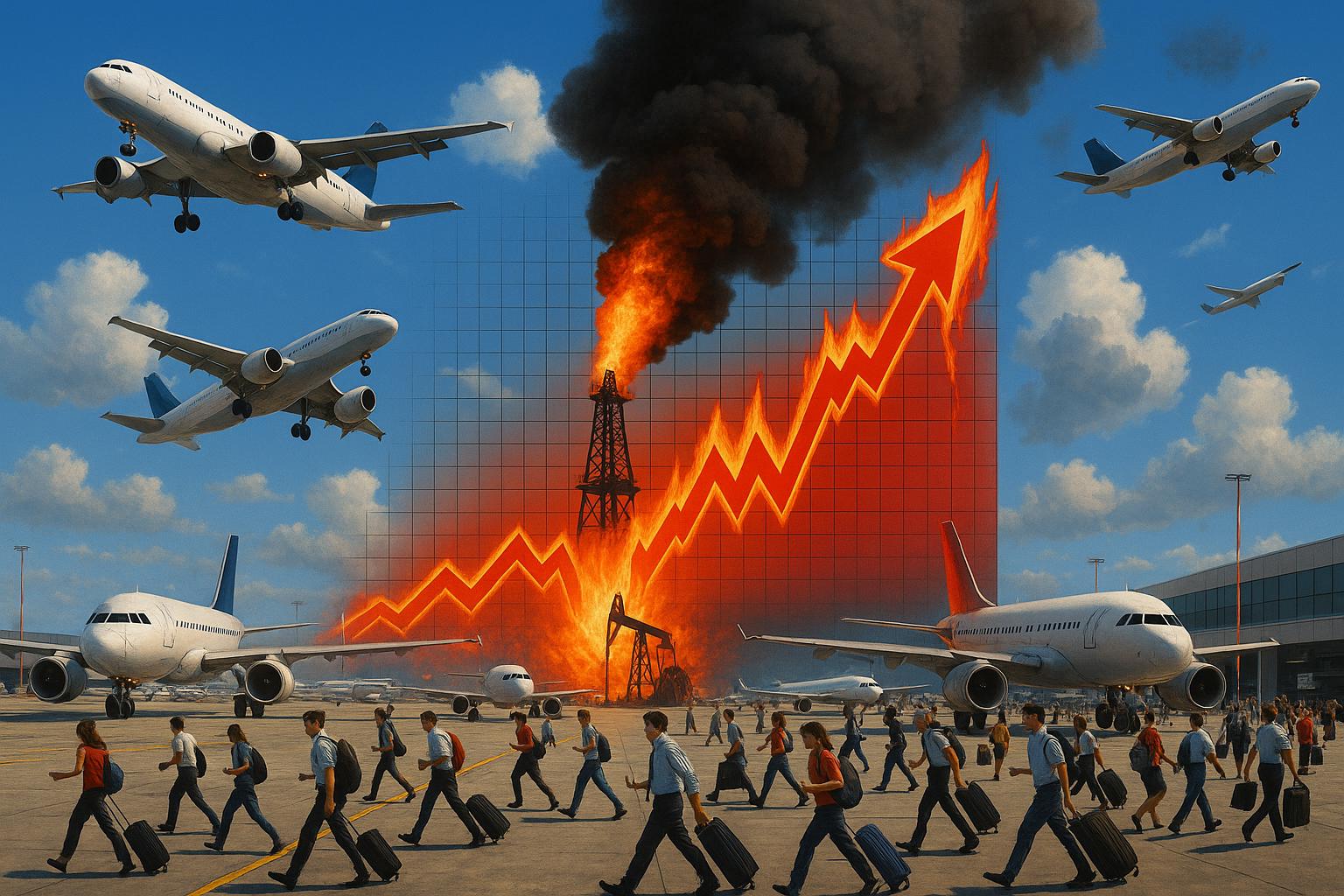
Ryanair warns that ongoing conflict centred on Iran could lead to significant flight cancellations this summer, as rising oil prices and supply disruptions threaten European airline schedules amid geopolitical tensions.
Ryanair has warned that a prolonged conflict centred on Iran could force substantial cuts to European flight schedules this summer, with the airline’s chief executive saying up to a tenth of services might be axed if jet‑fuel supplies tighten.
Speaking to ITV News, Michael O’Leary said: "We're all facing an unknown scenario. And we are certainly looking at maybe having to cancel 5%, 10% of flights through May, June and July." He repeated similar concerns on Sky News, adding: "Fuel suppliers are constantly looking at the market. We don't expect any disruption until early May, but if the war continues, we do run the risk of supply disruptions in Europe in May and June, and we hope the war will finish sooner than that and the risk to supply will be eliminated." He also said: "If the war finishes by April and the Strait of Hormuz reopens, then there is almost no risk to supply."
Industry observers say the disruption stems from rising oil prices and restricted tanker movements after the Strait of Hormuz , a conduit for roughly one fifth of global seaborne oil , was effectively closed. According to analysis in The Irish Times, Ryanair has hedged about 80% of its fuel requirements at lower rates, leaving roughly 20% exposed to market volatility, while the company has opted to postpone further hedging decisions until the end of June in the hope of greater price clarity.
The move to delay new hedges reflects a wider caution within aviation. The Irish Times reported that several carriers are holding off fresh fuel‑price protection amid highly unpredictable markets, and other low‑cost airlines have already started trimming schedules. Spanish news outlet AS noted capacity reductions and cancellations at rivals including Wizz Air, easyJet and Volotea as operators respond to mounting costs.
Smaller operators have felt the impact sooner. According to reporting in the Mirror, regional carrier Skybus cancelled all scheduled services from 3 April citing the spike in fuel costs and a decline in bookings, describing the combination as an "insurmountable barrier" to continuing flights on a publicly funded route.
Ryanair has urged travellers to book early to avoid higher fares if capacity is cut. Fortune quoted O’Leary advising passengers to secure summer trips promptly to lock in lower prices, while stressing that most flights would still operate even if some reductions are needed.
The situation presents a delicate balancing act for airlines: passing higher costs to customers risks depressing demand further, but absorbing price rises would hit margins already under pressure. Government figures and market data will be watched closely in the coming weeks as carriers decide whether to adjust timetables for May and June, or to accept steeper ticket prices to maintain schedules.
Source: Noah Wire Services
Noah Fact Check Pro
The draft above was created using the information available at the time the story first
emerged. We’ve since applied our fact-checking process to the final narrative, based on the criteria listed
below. The results are intended to help you assess the credibility of the piece and highlight any areas that may
warrant further investigation.
Freshness check
Score:
8
Notes:
The article presents recent statements from Ryanair CEO Michael O'Leary regarding potential flight cancellations due to the Iran conflict. Similar reports have appeared in reputable sources such as The Irish Times ([irishtimes.com](https://www.irishtimes.com/business/2026/04/01/will-the-supply-shock-to-jet-fuel-drive-up-air-fares-this-summer/?utm_source=openai)) and Fortune ([fortune.com](https://fortune.com/2026/04/04/ryanair-ceo-airline-booking-summer-trips-airfares-fuel-shortages-flight-cancelations/?utm_source=openai)) within the past week, indicating freshness. However, the Mirror article was published on April 1, 2026, which is slightly over a week ago, raising minor concerns about freshness.
Quotes check
Score:
7
Notes:
The article includes direct quotes from Michael O'Leary. These quotes are consistent with those reported in other reputable sources, such as The Irish Times ([irishtimes.com](https://www.irishtimes.com/business/2026/04/01/will-the-supply-shock-to-jet-fuel-drive-up-air-fares-this-summer/?utm_source=openai)) and Fortune ([fortune.com](https://fortune.com/2026/04/04/ryanair-ceo-airline-booking-summer-trips-airfares-fuel-shortages-flight-cancelations/?utm_source=openai)). However, the Mirror article was published on April 1, 2026, which is slightly over a week ago, raising minor concerns about freshness.
Source reliability
Score:
6
Notes:
The Mirror is a well-known UK tabloid newspaper. While it has a large readership, it is often considered less reliable than broadsheet newspapers. The article cites statements from Michael O'Leary, which are consistent with those reported in other reputable sources. However, the Mirror's reputation for sensationalism and occasional inaccuracies warrants a reduced score.
Plausibility check
Score:
8
Notes:
The claims made in the article align with the current geopolitical situation and the potential impact on jet fuel supplies. Similar concerns have been reported by other reputable sources, such as The Irish Times ([irishtimes.com](https://www.irishtimes.com/business/2026/04/01/will-the-supply-shock-to-jet-fuel-drive-up-air-fares-this-summer/?utm_source=openai)) and Fortune ([fortune.com](https://fortune.com/2026/04/04/ryanair-ceo-airline-booking-summer-trips-airfares-fuel-shortages-flight-cancelations/?utm_source=openai)). The information appears plausible and consistent with the broader context.
Overall assessment
Verdict (FAIL, OPEN, PASS): PASS
Confidence (LOW, MEDIUM, HIGH): MEDIUM
Summary:
The article presents information on potential summer flight cancellations due to the Iran conflict, citing statements from Ryanair CEO Michael O'Leary. While the content is consistent with reports from other reputable sources, the Mirror's reputation for sensationalism and occasional inaccuracies raises concerns about the reliability of the information. Given these factors, the overall assessment is a PASS with MEDIUM confidence.