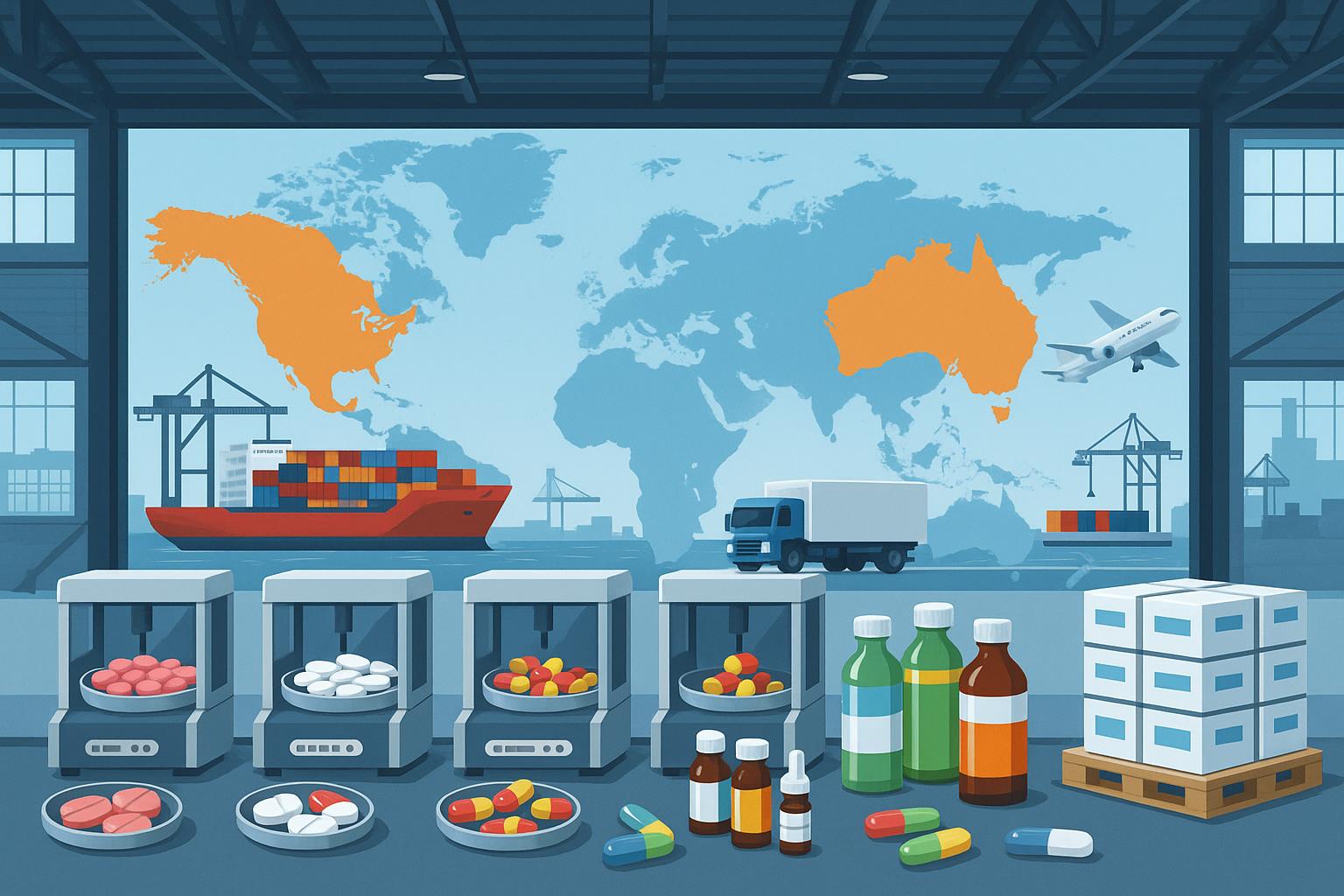
The White House has unveiled sweeping new measures aimed at shifting the production of patented medicines back to US soil, a move that threatens to hit Australian exporters among others.
According to the Associated Press, President Donald Trump on April 2, 2026 signed an executive order imposing tariffs that can reach 100% on certain branded pharmaceuticals manufactured abroad if companies do not secure pricing deals with his administration. The order sets out a tiered regime: companies that both agree to preferred pricing arrangements and build domestic manufacturing could avoid the levy entirely, those that commit to onshore production but not the pricing deals would face a reduced 20% tariff, and the full 100% rate would apply to firms that neither strike an agreement nor begin building in the United States. The AP reported that large drugmakers will have 120 days to present “reshoring” plans, with smaller firms given 180 days before duties take effect.
The policy is being defended by the administration as addressing a national security risk created by heavy reliance on foreign drug-supply chains. The move follows earlier Trump pressures that led a group of manufacturers to accept “most-favoured-nation” pricing arrangements, Axios notes, and aims to further leverage import taxes to force lower US prices and domestic investment. Axios also reported the campaign will primarily target production hubs such as China, India and Singapore, while other jurisdictions have already negotiated lighter levies.
Australian industry faces immediate exposure. Government data and reporting show Australian pharmaceutical shipments to the United States amount to roughly US$1.6 billion annually. Australian-made medicines will therefore be among those most affected unless their producers either relocate manufacturing to the US or secure the price concessions the administration is seeking. ABC News documented earlier threats from the administration that the levy would apply from October 1 and recalled prior warnings that punitive duties might be as high as 200% if companies did not move production.
Not all countries are treated the same under the new measures. The White House has carved out lower tariff rates for some partners: the lead reporting and subsequent coverage indicate Japan, South Korea, Switzerland and the United Kingdom have negotiated reduced levels in the low teens, and European Union countries may also see preferential treatment, depending on existing trade arrangements.
The Australian government has pushed back on suggestions that it will relax domestic medicine-price protections to placate the United States. According to The Guardian, Health Minister Mark Butler has said Canberra will not remove the Pharmaceutical Benefits Scheme’s negotiating protections for consumers. SBS reported similar sentiments, warning the tariffs will create uncertainty for exporters but stressing there is no intention to weaken price controls that keep medicines affordable in Australia.
The White House framed the tariffs as part of a broader effort to rebalance global pharmaceutical pricing, arguing that many foreign purchasing systems, where governments negotiate directly with manufacturers, mean US patients pay more. Industry groups and exporting nations are likely to contest the policy on legal and economic grounds; observers note that the administration is relying on trade-law provisions tied to national security rather than the emergency powers the Supreme Court recently constrained in litigation over prior tariff actions.
If companies respond by relocating production or by striking the pricing deals the administration demands, the policy could reshape global supply chains and pricing models. If they do not, Australian exporters and others that rely on foreign production will face steep barriers to the US market.
Source: Noah Wire Services