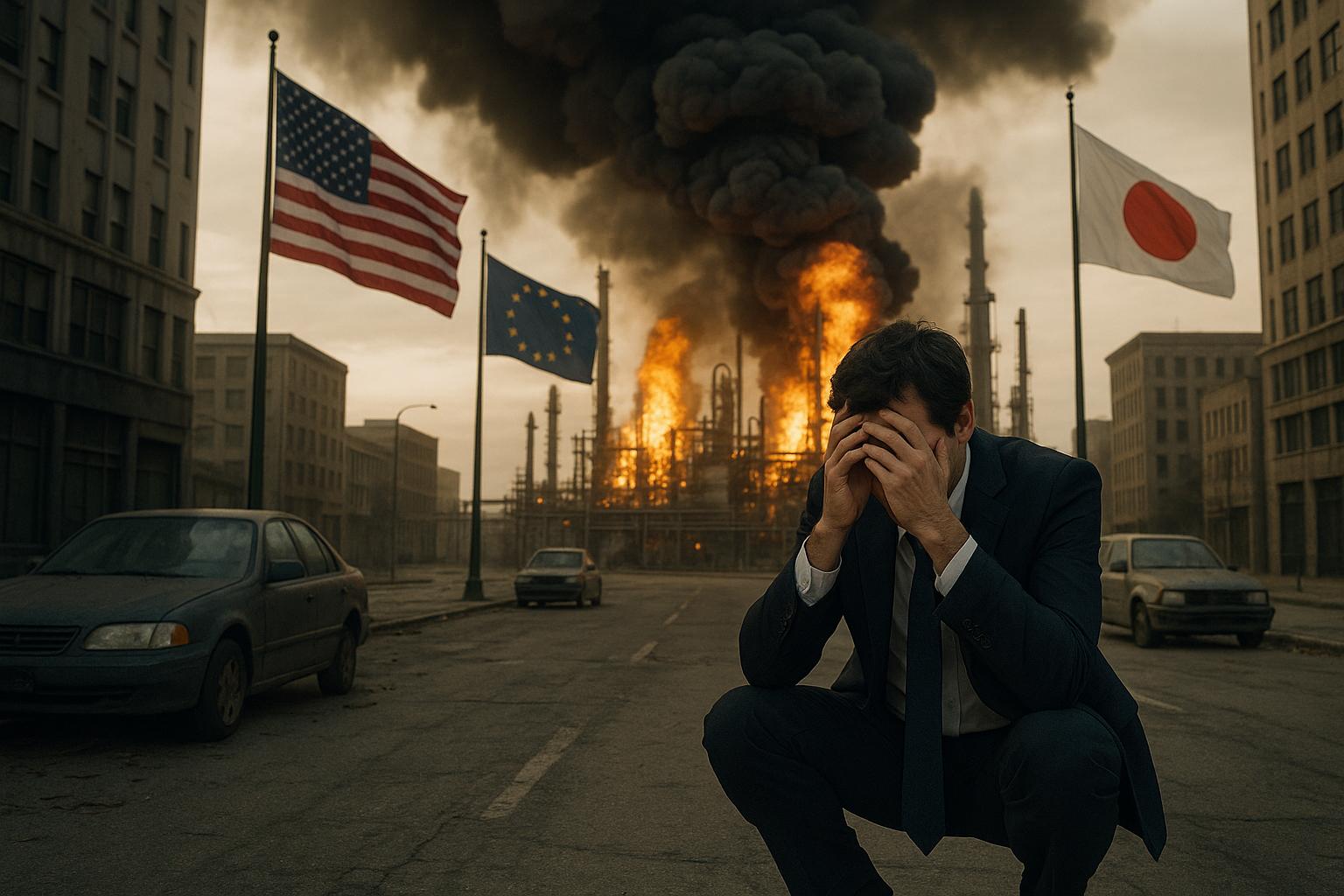
At the Washington meetings, policymakers express concern over the combined effects of Iran conflict, rising energy costs, and market volatility on vulnerable economies, highlighting the urgent need for coordinated support.
The IMF and World Bank meetings in Washington have been dominated by the fallout from the war in Iran, with policymakers treating the conflict less as a distant geopolitical shock than as an immediate economic threat. According to a joint statement released on 13 April by the heads of the International Energy Agency, the IMF and the World Bank Group, disruption in oil, gas and fertiliser markets is already raising concerns about food security, inflation and job losses, especially in poorer countries that depend heavily on imported energy.
The sharpest anxiety centres on the Strait of Hormuz, through which a large share of global energy supplies move. The institutions said uncertainty over the normalisation of shipping routes is adding to market volatility, while higher fuel and fertiliser costs are feeding through to food prices and worsening conditions for energy-importing low-income economies. That is particularly painful for countries in sub-Saharan Africa and South Asia, where external financing pressures and heavy debt burdens have left governments with little room to absorb another terms-of-trade shock, according to reports from the meetings.
For the World Bank, the crisis has also sharpened its argument that energy access is not just a climate issue but a development one. At a spring meetings event focused on growth and jobs through energy, the bank said reliable and affordable power is essential for business activity, productivity and employment. It has been promoting projects to modernise grids and diversify energy systems, including its Mission 300 effort to connect 300 million Africans to electricity by 2030.
Yet the conflict has complicated the climate debate rather than settled it. Higher fossil-fuel prices can make renewable energy look more competitive, but they also make investment conditions more uncertain and raise the cost of capital across emerging markets. Semafor reported that some discussions in Washington turned to whether financial institutions should soften restrictions around fossil-fuel lending, reflecting pressure from the United States to rethink how climate risk is weighed in debt sustainability and fiscal policy.
For the IMF and World Bank, the immediate task is to keep countries afloat while the shock works its way through global markets. In their joint statement, the three institutions said they will monitor developments closely and coordinate responses to support a resilient recovery. For now, the mood in Washington is one of caution: energy security, inflation and debt distress are no longer separate files, but part of the same crisis.
Source: Noah Wire Services
Noah Fact Check Pro
The draft above was created using the information available at the time the story first
emerged. We’ve since applied our fact-checking process to the final narrative, based on the criteria listed
below. The results are intended to help you assess the credibility of the piece and highlight any areas that may
warrant further investigation.
Freshness check
Score:
8
Notes:
The article references a joint statement issued on April 13, 2026, by the heads of the International Energy Agency (IEA), International Monetary Fund (IMF), and World Bank Group, which is consistent with the publication date of April 14, 2026. ([imf.org](https://www.imf.org/en/news/articles/2026/04/13/pr26117-joint-statement-by-the-heads-iea-imf-wbg?utm_source=openai)) However, similar reports have appeared in other reputable sources, such as The Washington Post, which published an article on April 14, 2026, discussing the IMF's warning about the Iran war's impact on the global economy. ([washingtonpost.com](https://www.washingtonpost.com/business/2026/04/14/imf-global-economic-forecast-war/?utm_source=openai)) This suggests that the narrative is not entirely original and may have been republished across multiple platforms, potentially reducing its freshness score.
Quotes check
Score:
7
Notes:
The article includes direct quotes from the joint statement issued by the IEA, IMF, and World Bank Group. ([imf.org](https://www.imf.org/en/news/articles/2026/04/13/pr26117-joint-statement-by-the-heads-iea-imf-wbg?utm_source=openai)) These quotes are consistent with those found in other reputable sources, such as the joint statement reported by the IEA. ([iea.org](https://www.iea.org/news/joint-statement-on-13-april-by-the-heads-of-the-international-energy-agency-international-monetary-fund-and-world-bank-group?utm_source=openai)) However, the exact wording of the quotes varies slightly between sources, which raises concerns about the accuracy and consistency of the reported statements. Additionally, the article does not provide direct links to the original sources of the quotes, making independent verification more challenging.
Source reliability
Score:
6
Notes:
The article originates from a source that appears to be a niche publication, which may not have the same level of credibility as major news organizations. ([globalbankingandfinance.com](https://www.globalbankingandfinance.com/iran-war-weighs-global-economy-imf-meeting-starts/?utm_source=openai)) The lack of a clear, verifiable source for the article's content raises concerns about its reliability. While the article references a joint statement from reputable organizations, the absence of direct links to the original statement and the presence of similar reports in other sources suggest that the content may have been aggregated or republished without independent verification.
Plausibility check
Score:
8
Notes:
The claims made in the article align with reports from other reputable sources, such as the IMF's warning about the economic impact of the Iran war. ([washingtonpost.com](https://www.washingtonpost.com/business/2026/04/14/imf-global-economic-forecast-war/?utm_source=openai)) However, the article lacks specific details and supporting evidence, which makes it difficult to fully assess the plausibility of the claims. The absence of direct links to the original sources and the presence of similar reports in other publications suggest that the content may have been aggregated or republished without independent verification.
Overall assessment
Verdict (FAIL, OPEN, PASS): FAIL
Confidence (LOW, MEDIUM, HIGH): MEDIUM
Summary:
The article references a joint statement from the IEA, IMF, and World Bank Group, which is consistent with the publication date of April 14, 2026. ([imf.org](https://www.imf.org/en/news/articles/2026/04/13/pr26117-joint-statement-by-the-heads-iea-imf-wbg?utm_source=openai)) However, similar reports have appeared in other reputable sources, such as The Washington Post, which published an article on April 14, 2026, discussing the IMF's warning about the Iran war's impact on the global economy. ([washingtonpost.com](https://www.washingtonpost.com/business/2026/04/14/imf-global-economic-forecast-war/?utm_source=openai)) This suggests that the narrative is not entirely original and may have been republished across multiple platforms, potentially reducing its freshness score. The article includes direct quotes from the joint statement, but the exact wording varies slightly between sources, raising concerns about the accuracy and consistency of the reported statements. Additionally, the article does not provide direct links to the original sources of the quotes, making independent verification more challenging. The article originates from a source that appears to be a niche publication, which may not have the same level of credibility as major news organizations. ([globalbankingandfinance.com](https://www.globalbankingandfinance.com/iran-war-weighs-global-economy-imf-meeting-starts/?utm_source=openai)) The lack of a clear, verifiable source for the article's content raises concerns about its reliability. While the article references a joint statement from reputable organizations, the absence of direct links to the original statement and the presence of similar reports in other sources suggest that the content may have been aggregated or republished without independent verification. The claims made in the article align with reports from other reputable sources, such as the IMF's warning about the economic impact of the Iran war. ([washingtonpost.com](https://www.washingtonpost.com/business/2026/04/14/imf-global-economic-forecast-war/?utm_source=openai)) However, the article lacks specific details and supporting evidence, which makes it difficult to fully assess the plausibility of the claims. The absence of direct links to the original sources and the presence of similar reports in other publications suggest that the content may have been aggregated or republished without independent verification. No paywalled content was detected in the article or its sources. The article appears to be a factual news report summarizing a joint statement from the IEA, IMF, and World Bank Group. ([imf.org](https://www.imf.org/en/news/articles/2026/04/13/pr26117-joint-statement-by-the-heads-iea-imf-wbg?utm_source=openai)) However, the lack of direct links to the original statement and the presence of similar reports in other sources suggest that the content may have been aggregated or republished without independent verification. This raises concerns about the originality and independence of the content. The article references a joint statement from the IEA, IMF, and World Bank Group, but does not provide direct links to the original statement. ([imf.org](https://www.imf.org/en/news/articles/2026/04/13/pr26117-joint-statement-by-the-heads-iea-imf-wbg?utm_source=openai)) Similar reports have appeared in other reputable sources, such as The Washington Post, which published an article on April 14, 2026, discussing the IMF's warning about the Iran war's impact on the global economy. ([washingtonpost.com](https://www.washingtonpost.com/business/2026/04/14/imf-global-economic-forecast-war/?utm_source=openai)) This suggests that the content may have been aggregated or republished without independent verification, raising concerns about the independence of the verification sources.